

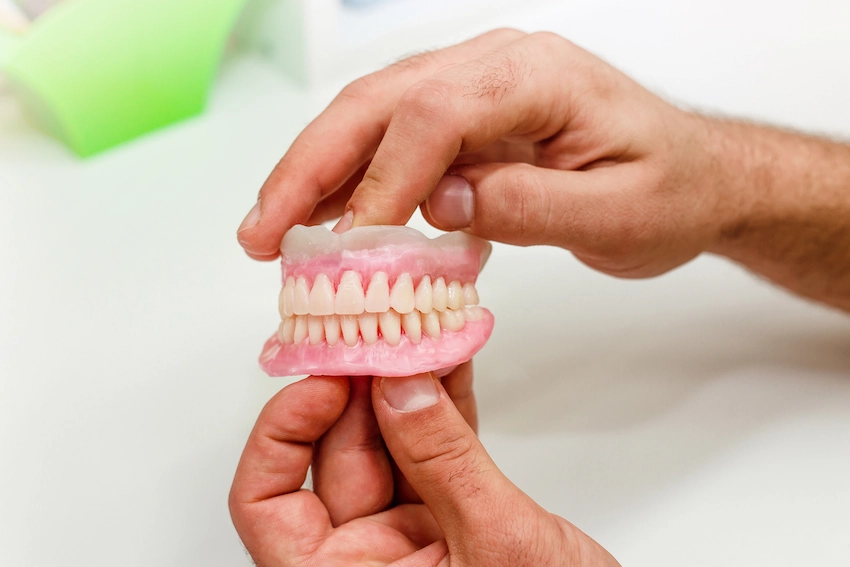
Може ли да развиете алергия към зъбни протези?
Да, някои хора могат да развият алергия или чувствителност към материалите за протези, причинявайки дразнене или подуване на венците.
Каква е причината за алергия към зъбни протези?
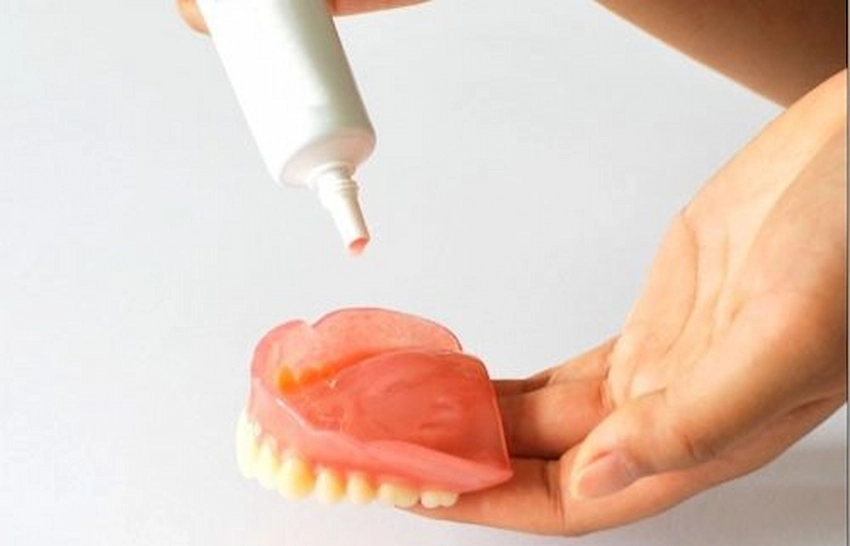
Разпознаване на симптомите: Алергия или лошо прилягане?
Първо, нека разгледаме по-отблизо симптомите. Тогава, как да различите истинска алергия от просто лошо прилягане? Лошото прилягане при нещо като обувка е много тясна обувка. Тя притиска плътта и след това ви причинява само един мехур на мястото, където триенето е най-силно. Алергичната реакция, от друга страна, не се появява само на едно място, а обикновено обхваща цялата област. Внимание трябва да се обърне на следните симптоми:- Зачервяване и подуване на лигавицата на устата или венците.
- Усещане за парене по езика, устните или венците (Синдром на парещата уста).
- Лющене на тъканта на венците: Подобно на връщане от слънцето след ден, прекаран без защита, външният слой на венците ви може да се обели.
- Неприятен вкус: Горчив или метален вкус в устата, който не изчезва.
Иновативни зъби за чувствителни усмивки
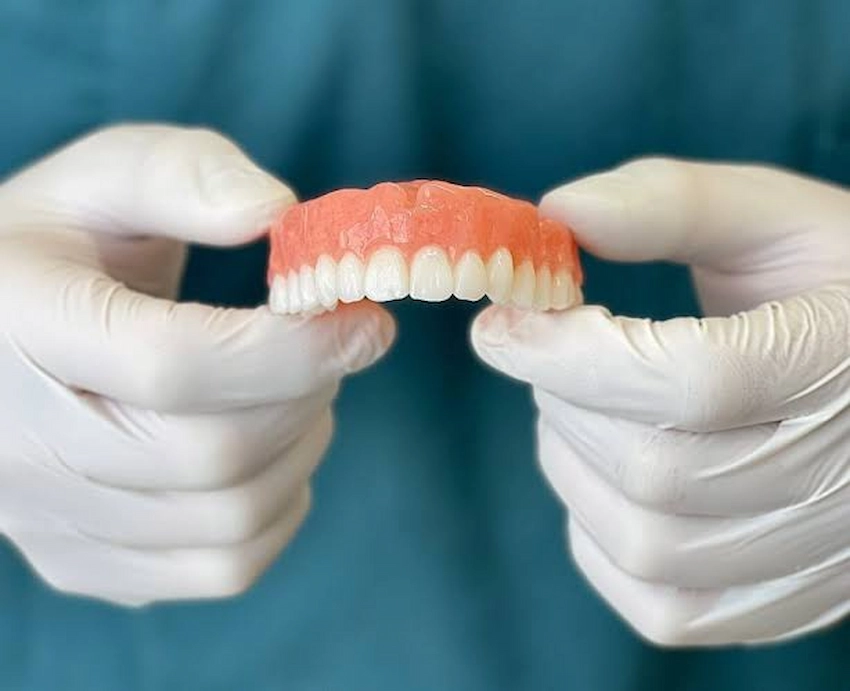
| Вид протеза | Материал | Вероятност за алергия | Клинична полза |
| Стандартна протеза | PMMA, кобалт-хром | Умерена до висока | Икономически изгодна, но изцяло разчита на венците за опора. |
| Гъвкава протеза | Найлон (напр. Valplast), без мономер | Много ниска | Издръжлива и елиминира излагането на мономер и метална токсичност. |
| Циркониева протеза, поддържана от импланти | Титанови импланти, плътен цирконий | Почти нулева | Здраво закрепване към костта с луксозна естетика и без дразнене на венците. |
Често задавани въпроси
Академични препратки
- Ali, A., Bates, J. F., Reynolds, A. J., & Walker, W. A. (1986). The influence of the curing cycle on the residual monomer levels of acrylic resin denture base polymers. Journal of Dentistry, 14(5), 237-241.
- Leggat, P. A., & Kedjarune, U. (2003). Toxicity of acrylic resin dental materials. International Dental Journal, 53(2), 63-68.
- Syed, M., Chopra, R., & Sachdev, V. (2015). Allergic reactions to dental materials: a systematic review. Journal of Clinical and Diagnostic Research, 9(10), ZE04-ZE09.
- Tosti, A., Peluso, A. M., Fanti, P. A., & Zucchelli, G. (1993). Contact stomatitis due to polymethyl methacrylate. Contact Dermatitis, 28(2), 112-113.
- Weaver, R. E., & Goebel, W. M. (1980). Reactions to acrylic resin dental prostheses. The Journal of Prosthetic Dentistry, 43(2), 138-142.
Често задавани въпроси
For how much time can a soft liner fit well before it starts feeling loose?
A properly fitting soft liner will fit you comfortably anywhere from two to six months. But this also depends on the rate at which your gums shrink. Do not glue it when you find it loose after two weeks; rather, call a dentist to get it safely adjusted.
In the case of soft liners, are there adhesives that are safe and effective?
In case of emergency, an extremely light application of an adhesive powder is somewhat better than applying a thick paste. Powders can be rinsed off more easily. However, this should never be a regular practice, but just a temporary trick.
What is the best method to clean the soft liner without damaging it?
Think of it as a piece of delicate fabric. Do not press with a hard brush or use harsh toothpaste on the soft material,l as in most cases. Wash with warm water. Use a very soft brush or your fingers only to remove food particles.
How come my gums keep shrinking all the time?
The stimulation of natural tooth roots is required by the jawbone for it to stay strong. When you lose your teeth, the body starts absorbing the bone. This will change the shape of your mouth entirely, and in the end, your denture loses its fit.
Are hard reline or implants the only options eventually for me?
Of course, a soft liner is a step only. After the healing of your gums, the soft material is replaced with a hard acrylic resin. A slip-free, non-permanent, bone-loss-stopping solution is a dental implant, and it is a gold standard.