

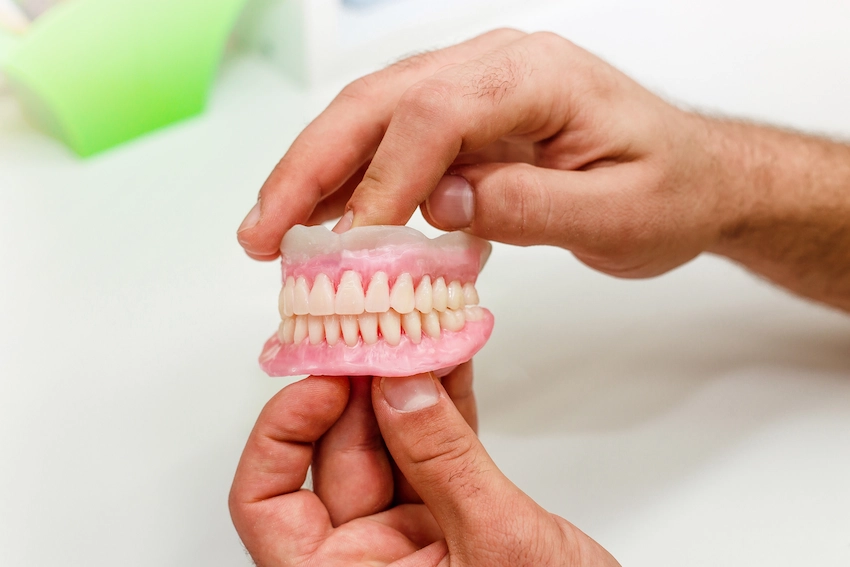
Puteți deveni alergic la proteze dentare?
Da, unele persoane pot deveni alergice sau sensibile la materialele protetice, cauzând iritații sau umflături ale gingiilor.
Care este motivul din spatele unei alergii la proteză?
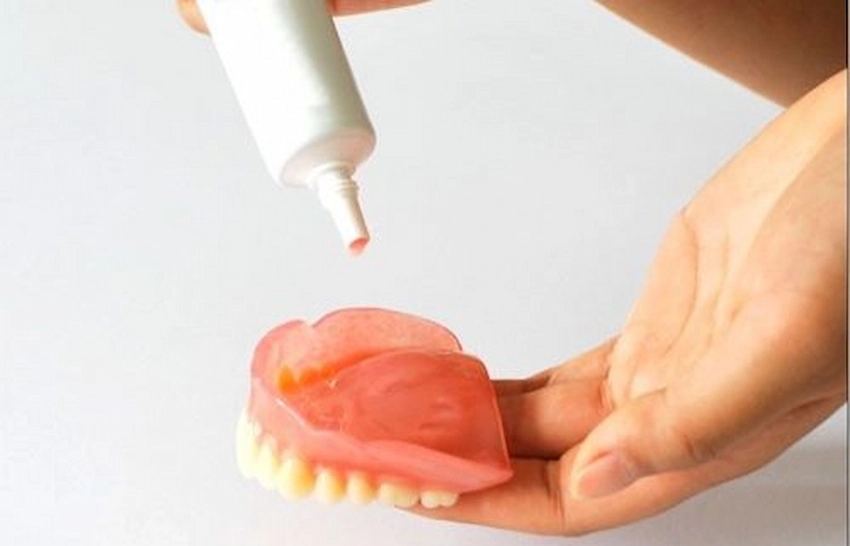
Recunoașterea simptomelor: Alergie sau potrivire slabă?
Mai întâi, să aruncăm o privire mai atentă la simptome. Apoi, cum faceți diferența între o alergie reală și o simplă potrivire slabă? O potrivire slabă, ca la un pantof, înseamnă un pantof foarte strâmt. Acesta strânge carnea și apoi vă provoacă o singură bășică în locul unde frecarea este cea mai puternică. O reacție alergică, pe de altă parte, nu apare doar într-un singur loc, ci de obicei acoperă întreaga zonă. Ar trebui să acordați atenție următoarelor simptome:- Roșeață și umflături ale mucoasei bucale sau ale zonelor gingivale.
- Senzație de arsură pe limbă, buze sau gingii (Sindromul gurii arzătoare).
- Descuamarea țesutului gingival: Ca după o zi petrecută la soare fără protecție, stratul exterior al gingiilor se poate descuama.
- Gust neplăcut: Un gust amar sau metalic în gură care nu dispare.
Dinți de ultimă generație pentru zâmbete sensibile
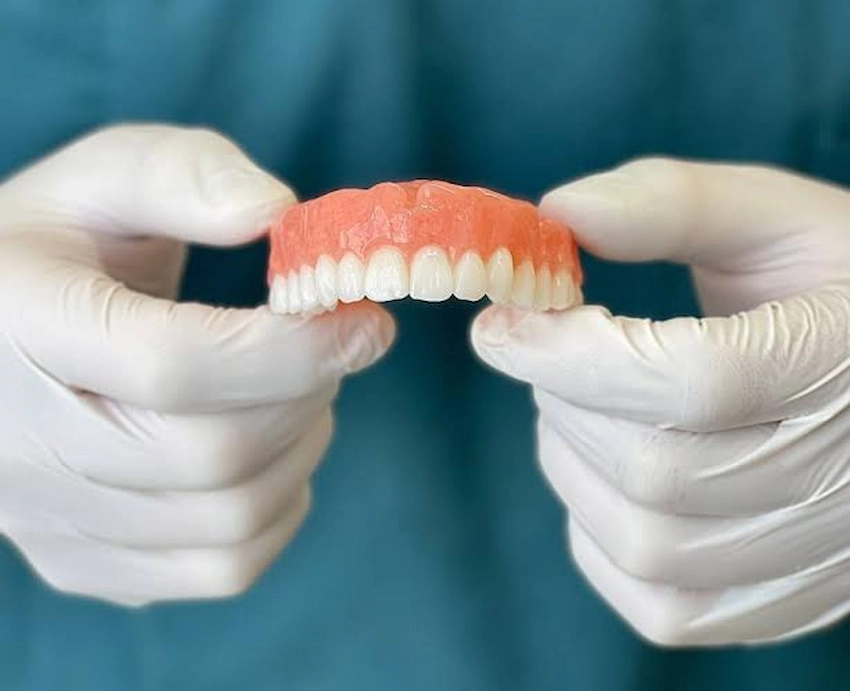
| Tip de proteză | Material | Probabilitatea unei alergii | Beneficiu clinic |
| Proteză standard | PMMA, Cobalt-Crom | Moderată spre ridicată | Benefică economic, dar se bazează în întregime pe gingii pentru susținere. |
| Proteză flexibilă | Nylon (ex. Valplast), fără monomer | Foarte scăzută | Rezistentă și elimină expunerea la monomer și toxicitatea metalelor. |
| Zirconiu susținut de implant | Implanturi de titan, Zirconiu solid | Aproape zero | Ancorare fermă la os cu o estetică de lux și fără iritații gingivale. |
Întrebări Frecvente
Referințe Academice
- Ali, A., Bates, J. F., Reynolds, A. J., & Walker, W. A. (1986). The influence of the curing cycle on the residual monomer levels of acrylic resin denture base polymers. Journal of Dentistry, 14(5), 237-241.
- Leggat, P. A., & Kedjarune, U. (2003). Toxicity of acrylic resin dental materials. International Dental Journal, 53(2), 63-68.
- Syed, M., Chopra, R., & Sachdev, V. (2015). Allergic reactions to dental materials: a systematic review. Journal of Clinical and Diagnostic Research, 9(10), ZE04-ZE09.
- Tosti, A., Peluso, A. M., Fanti, P. A., & Zucchelli, G. (1993). Contact stomatitis due to polymethyl methacrylate. Contact Dermatitis, 28(2), 112-113.
- Weaver, R. E., & Goebel, W. M. (1980). Reactions to acrylic resin dental prostheses. The Journal of Prosthetic Dentistry, 43(2), 138-142.
Întrebări frecvente
For how much time can a soft liner fit well before it starts feeling loose?
A properly fitting soft liner will fit you comfortably anywhere from two to six months. But this also depends on the rate at which your gums shrink. Do not glue it when you find it loose after two weeks; rather, call a dentist to get it safely adjusted.
In the case of soft liners, are there adhesives that are safe and effective?
In case of emergency, an extremely light application of an adhesive powder is somewhat better than applying a thick paste. Powders can be rinsed off more easily. However, this should never be a regular practice, but just a temporary trick.
What is the best method to clean the soft liner without damaging it?
Think of it as a piece of delicate fabric. Do not press with a hard brush or use harsh toothpaste on the soft material,l as in most cases. Wash with warm water. Use a very soft brush or your fingers only to remove food particles.
How come my gums keep shrinking all the time?
The stimulation of natural tooth roots is required by the jawbone for it to stay strong. When you lose your teeth, the body starts absorbing the bone. This will change the shape of your mouth entirely, and in the end, your denture loses its fit.
Are hard reline or implants the only options eventually for me?
Of course, a soft liner is a step only. After the healing of your gums, the soft material is replaced with a hard acrylic resin. A slip-free, non-permanent, bone-loss-stopping solution is a dental implant, and it is a gold standard.