


Oral bacteria cause cavities and gum disease by forming plaque and damaging teeth and gums.
It is very normal for you to unconsciously compare your teeth to fragile stones – hard, dead objects that only require to be occasionally polished. But, the reality is very different. Your mouth can be considered a biological city where thousands of cells of different types are simultaneously performing vibrant activities.
At Lema Dental Clinic Turkey, we almost make it a habit to tell our patients that actually, they are never really alone when they eat a meal. With every mouthful, they are, without knowing, sharing the food with billions of tiny living creatures. That is what their oral microbiome is. Most of these microbes, however, are entirely harmless, and a few are even helpful symbionts that aid in digestion. Only a very few smart malicious cells are waiting to use your body’s defense system if it gets compromised.”
The Biofilm: A Sticky City
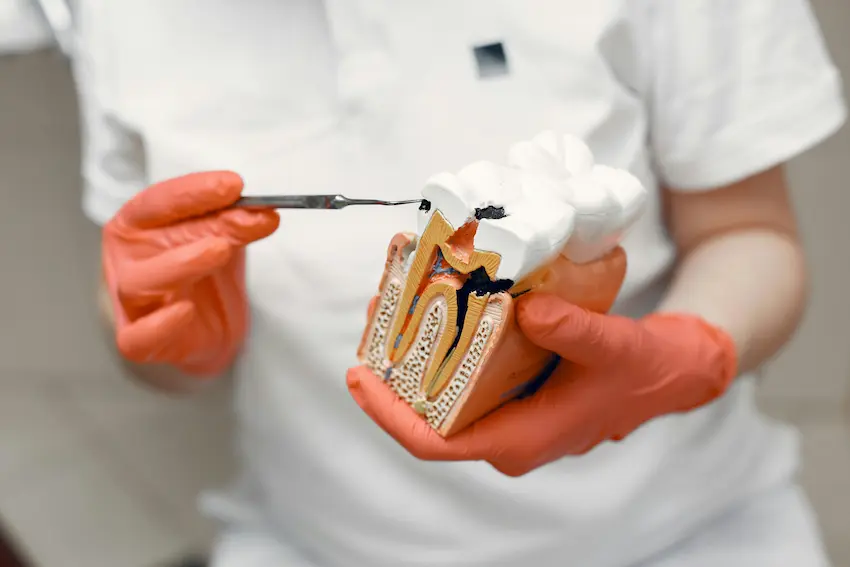
Imagine teeth as a sea pier. Just like algae, barnacles, and slime naturally stick to the pillars of the pier, plaque builds up on the teeth. This layer of material in your mouth is biofilm or plaque.
The plaque is not simply “dirt”; the bacteria there can live and hide, explained Dr. Polen Akkılıç and her team to their patients. The fuzzy film that you sense on your teeth when you wake up in the morning is not dust or dirt but bacteria that have laid down a protective shield against your saliva.
However, bacteria enclosed within these walls like Streptococcus mutans among others, take sugar from the diet. The acid that they produce as a by-product of sugar metabolism attacks the dental surface and enamel, which is the outermost layer, and gets demineralized in the same manner that rust gradually destroys a metal surface.
Gingivitis vs. Periodontitis: Understanding Gum Disease Stages
While it is true and understandable that pain caused by cavities might make you focus overly on tooth damage, a cavity is actually just one side of the story. On the other hand, the damage being done to your gums by those bacteria can sometimes be quite silent and can only be noticed when the disease has reached a very advanced stage. This is the aspect of dental care that causes us at the clinic the greatest concern and sorrow.
It is the early stage of the gum disease called gingivitis. The infection-causing bacteria produce toxins that irritate and infect the gum surface. As a result, the gums become red, swollen, and occasionally may bleed a bit during flossing. Most of the patients overlook these signs.
Gum infection (periodontitis) starts when the bacterial fortress i.e. tartar is not removed even through professional cleaning, and hence the bacteria penetrate more deeply into the soft tissues. The consequence of the continuing infection is not only the destruction of the ligaments and bones that support teeth, but also the gums become so loose that in conjunction with the first two symptoms the patient experiences floating teeth (periodontitis symptoms).
Prof. Dr. Coşkun Yıldız often compares saving a patient through surgery who has been suffering from an advanced gum disease to rescuing a house whose foundation is getting washed away. You may talk about renovation (fillings) or new roofing (crowns) but if the ground underneath (jawbone and gums) is infected by bacteria, the structure will definitely collapse.
The 4 Stages of Tooth Decay: A Timeline of Bacterial Damage
What follows is a description of the four stages of bacterial attacks on your mouth tissues that Lema Dental Clinic identifies as clinical treatments and interprets each stage.
| Stage | Bacteria Actions | Symptoms | Treatment in Turkey |
| Stage 1: Plaque Formation (Initial Stage) | Bacteria release a sticky extracellular matrix (dental plaque biofilm), allowing other microorganisms to adhere to the enamel and form a multilayered bacterial structure. | Coated or furry feeling on teeth or tongue; mild bad breath. | Professional tooth scaling and polishing performed by a dental hygienist during routine check-ups in Turkey. |
| Stage 2: Gingivitis | Bacterial toxins irritate the gingiva at the tooth–gum junction, causing inflammation of the gum tissue. | Red, swollen gums; bleeding during brushing. | Deep professional cleaning by Dentist Polen Akkılıç and her team, including mechanical debridement and antimicrobial irrigation. |
| Stage 3: Early Periodontitis | Bacteria produce proteolytic enzymes that break down collagen and connective tissue, forming periodontal pockets where anaerobic bacteria multiply rapidly. | Gum recession, persistent bad odor, tooth sensitivity. | Scaling and root planing, laser-assisted periodontal therapy, and targeted antibiotic treatment in Turkey. |
| Stage 4: Advanced Periodontitis | Ongoing infection destroys the periodontal ligament and alveolar bone, leading to tooth mobility. | Loose teeth, pus discharge, severe pain, changes in bite. | Advanced periodontal surgery or tooth extraction. Professor Doctor Coşkun Yıldız may provide All-on-4 dental implants to restore chewing function and comfort. |
Systemic Health
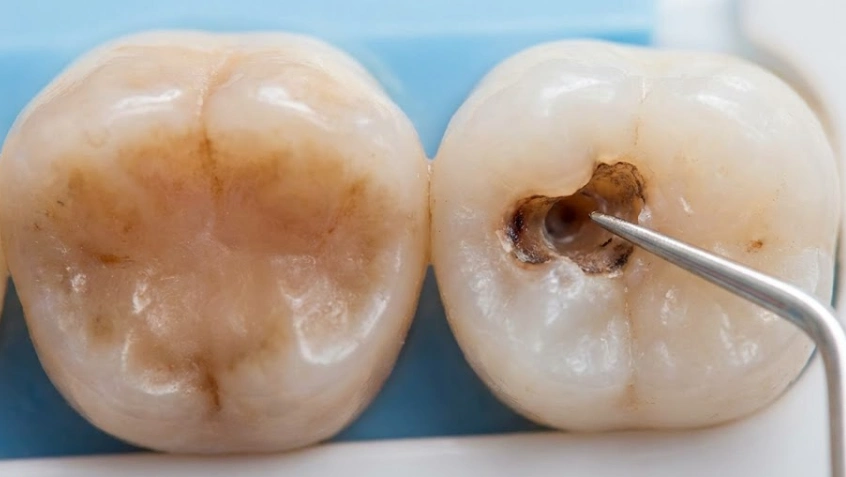
Lema patients benefit from dental treatment and from medication that helps systemic functioning as well. There is no doubt that oral bacteria can give rise to serious health problems outside the mouth, such as heart disease and diabetes, if they gain access to your blood.
Apart from being able to give you a “Hollywood Smile” while you are in Turkey, we at Lema Dental Clinic would like to take your oral ecosystem back to its original state where your mouth will be in perfect harmony. It will thus be of no consequence whether you are here to see Dentist Polen Akkılıç for a smile makeover or to Professor Doctor Coşkun Yıldız for a surgical treatment, the very first step will always be securing a sterile, healthy base, free from destructive bacteria.
FAQ
It is a common question posed to us. Honestly, a little is a boring fact that the answer is no, and maybe it is even better not to do so. Oral microbiota provides several benefits. So, here we are. Our aim is not to eliminate your mouth bacteria (for example, if a mouth is sterile it can be a nice haven for fungal infections such as thrush), but to keep a good balance. Such a balance will be re-established by promoting good bacteria and limiting bad ones via diet and hygiene.
That is understandable. I can imagine you are very disappointed. Actually, it is quite astonishing how much difference little things such as brushing technique and even the “quality” of your saliva can make in terms of your gums healing or becoming more inflamed. So, even though you may be brushing thoroughly in every area, the only place you forgot might be the gumline (which area is the one bacteria love most), or you are feeding your mouth with a diet full of snacks (which is the major reason why your mouth stays acidic for most of the day). In the end, bacteria will be the winners if they are regularly given sugar as food. Last but not least, it is also a fact that one mostly controls the strength of his or her enamel.
Definitely. The thing is if your eyes were constantly bleeding every time you washed your face, you would be utterly shocked, right? I mean, you wouldn’t expect a miracle and just wait but rather you’d be in the hospital as soon as possible. Bleeding gums are quite similar to that. In fact, it is a type of mouth ulcer which is one of the most bacteria-laden environments. More significantly, it is your body’s “Check Engine” light. So, please don’t ignore it.
We adopt the latest diagnostic methods and treatments both non-invasive and aggressive. Examples of such therapies are deep scaling, laser bacterial reduction (this treatment kills bacteria deep in the pockets without using scalpels), and in the case of the most severe condition of tooth loss, disinfection of the area before implant insertion.
Yes, absolutely. Apples and carrots which are hard and fibrous have been known to have the mechanical effect of a toothbrush. Additionally, probiotic foods such as yogurt are highly efficient in decreasing harmful bacterial populations. On the flip side, sugar is like giving the enemy an extremely powerful weapon.
- Loesche, W. J. (1986). Role of Streptococcus mutans in human dental decay. Microbiological Reviews, 50(4), 353–380.
- Pihlstrom, B. L., Michalowicz, B. S., & Johnson, N. W. (2005). Periodontal diseases. The Lancet, 366(9499), 1809–1820.
- Marsh, P. D. (2006). Dental plaque as a biofilm and a microbial community—implications for health and disease. BMC Oral Health, 6(1), S14.
- Hajishengallis, G. (2015). Periodontitis: from microbial immune subversion to systemic inflammation. Nature Reviews Immunology, 15(1), 30–44.
- Kantarci, A., & Hasturk, H. (2010). Anti-inflammatory and resolving therapies for periodontal disease. Periodontology 2000, 54(1), 164-184.

