


Bone loss can begin within weeks after a tooth extraction.
Finally, you endured the dreadful ordeal of having that ugly tooth pulled out. A wave of relief washes over you; the pain has disappeared, and maybe, the only person who sees the gap in your smile as a minor cosmetic imperfection is you. But were you aware that a biological timer has already been set under your gums and is running?
We at Lema Dental Clinic often juxtapose the jawbone with other organs, and hence, pinpoint the phrase “use it or lose it” to the jawbone. In fact, one key function of the jawbone is to provide the framework for the teeth. Consequently, after the tooth removal, the bone gradually becomes less functional as it has no reason to support any more.
What is the Bone Resorption Sequence: When and What?
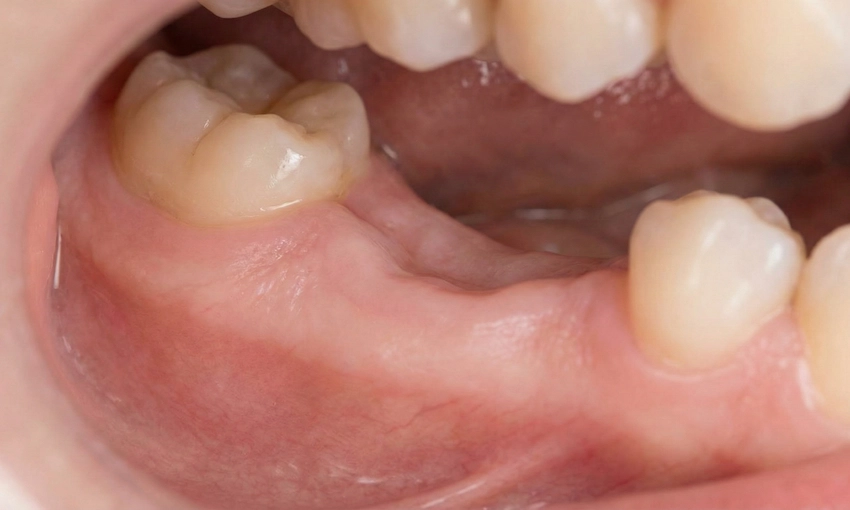
It is worth mentioning that bone loss is not a phenomenon that “waits” for a week or several weeks to start the process. It is so natural that the minute you take the tooth out of the socket, the bone layer starts to shrink. During the first 24-48 hours, a blood clot is formed; however, it is mainly the lack of mechanical stimulation through chewing that signals the body to initiate the process of mineral resorption in the jaw.
The Critical First Six Months
We should, however, dive into the specifics and check the numbers. Studies and clinical experience reveal that substantial changes mostly occur during the early stage. Six months after tooth extraction, the bone width of the area can decrease by as much as 40-60%.
Prof. Dr. Coşkun Yıldız says that most of the time, he has to deal with patients surprised at how fast the “ridge” of their jaw is getting thinner. He compares the jawbone to a garden wall with mortar beginning to crumble; if a new wall is not built soon, the entire structure will progressively lose its solidity.
When the Jawbone Foundation Shrinks?
You can imagine the jawbone as the foundation of a skyscraper. Your teeth are just the steel rods that give the foundation its function and strength. When one rod is removed, the concrete gets the message that it can no longer withstand the “stress” it had been built for. So the body, in its clever way, decides to “recycle” that bone tissue somewhere else.
Resorption is the natural process through which bone tissue loses height and, at the same time, the width decreases. The biggest challenge for us in bone reconstruction is the fact that our patients come from Russia and the US to Turkey for the dental implant procedure, which means the bone volume. If you leave it for a very long time, the “foundation” in the jaw might become so weak that it is unable to support a dental implant.
Delay Pricing: Comparing Your Options
| Timeline | Bone Condition | Clinical Outcome | Suggested Measure |
| 0–3 Months | Nearly no bone loss; rapid socket healing | Ideal window for immediate implant placement | Immediate implant consultation |
| 3–12 Months | Significant reduction in bone width (up to 50%) | Minor bone grafting or socket preservation may be required | Delayed implant planning |
| 1–3 Years | Noticeable loss in both bone height and width | Sinus lift or block bone grafting is often needed | Advanced reconstructive planning |
| 5+ Years | Severe jawbone atrophy with knife-edge ridge formation | Complex cases requiring zygomatic or pterygoid implants | Comprehensive surgical consultation |
How Does Lema Prevent Bone Resorption?
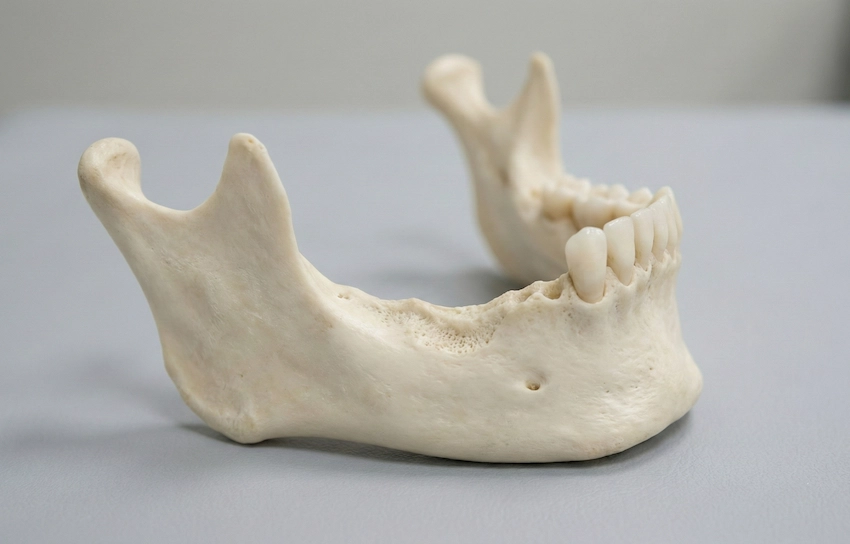
According to Dentist Polen Akkılıç and her team, the biggest point is action beforehand. In our opinion, tooth extraction is not a mere procedure. Even when we plan on extracting a tooth, we think about the next dental implant placement beforehand.
- Socket Preservation: In some cases, we may place a bone graft right at the time of tooth extraction. Think of it as a temporary scaffold that holds the space open until the permanent implant is installed.
- Immediate Implants: If it is biologically allowed, we place titanium posts on the same day as the tooth is being taken out. In this way, the bone remains “awake,” and the resorption, which is the beginning of the bone loss, is stopped.
- Advanced Imaging: Our patients who visit us from abroad, in order to ensure the success of their treatment, we perform a 3-dimensional localization of the bone density point and the exact spot of its highest concentration with 3D Tomography.
FAQ Session (Directly from the Doctor)
Actually, it is quite the reverse: the problem is that it is below the surface. You are not going to notice your jawbone shrinking because it is a hidden process. In time, the effect will be visible in your reflection – the lips first, and when the chin looks more pointed the bone structure has collapsed last of all.
Almost always. Here in Turkey, our basic training was done at clinics that are the European leaders in grafting, as you will notice on our site. Even if the bone is extremely thin and fragile, like eggshell, the well-trained team in terms of skills and knowledge can treat the area and prepare it for the desired smile.
The straightforward response is no. The most significant reason is that a bridge is only supported by the gums, so the jawbone beneath is refined progressively as it is not stimulated. Hence, a dental implant alone can prevent bone loss as it functions just like a natural root.
When you come for a consultation with the oral surgeon at Lema Dental Clinic, we take a CBCT scan. Thus, we are able to create a 3D model of the landscape of your jaw. There is really no other way of verifying your bone volume with absolute certainty.
Yes, we do the so-called “atraumatic extractions.” It means that, with the help of specialized tools, we can keep the maximum amount of the tooth holder by being very gentle and careful. When this bone is later checked after the implant has been set, the implant stability will be mhigherfor it.
- Atieh, M. A., et al. (2015). Socket preservation for implant marginal bone loss: A systematic review and meta-analysis. Journal of Periodontology.
- Hämmerle, C. H., et al. (2012). Evidence-based knowledge on the biology and treatment of extraction sockets. Clinical Oral Implants Research.
- Pietrokovski, J., & Massler, M. (1967). Alveolar ridge resorption following tooth extraction. The Journal of Prosthetic Dentistry.
- Tan, W. L., et al. (2012). A systematic review of post-extractional alveolar hard and soft tissue dimensional changes in humans. Clinical Oral Implants Research.
- Araújo, M. G., & Lindhe, J. (2005). Dimensional ridge alterations following tooth extraction. An experimental study in the dog. Journal of Clinical Periodontology.

