


Designed to last a lifetime.
There is a sense of weariness among patients who show up at Lema Dental Clinic in Turkey. It’s a weariness of slipping dentures, a weariness of hiding their smiles, and a general weariness of temporary solutions. When we discuss the “All-on-X” option with patients (be it All-on-4, 5, or 6), their first question is almost always about how long the solution will last.
“Doctor, is this going to be my whole life? Or is it likely that in five years I’ll be back to have the same thing done?”
For us to answer this question, we need to get really detailed about anatomy and mechanics. If you want to get the gist of longevity, you need to realize that the treatment shouldn’t be considered as a single entity, but rather two separate components: the Implant (the root) and the Prosthesis (the teeth that you can see).
Titanium Root: Eternal Design
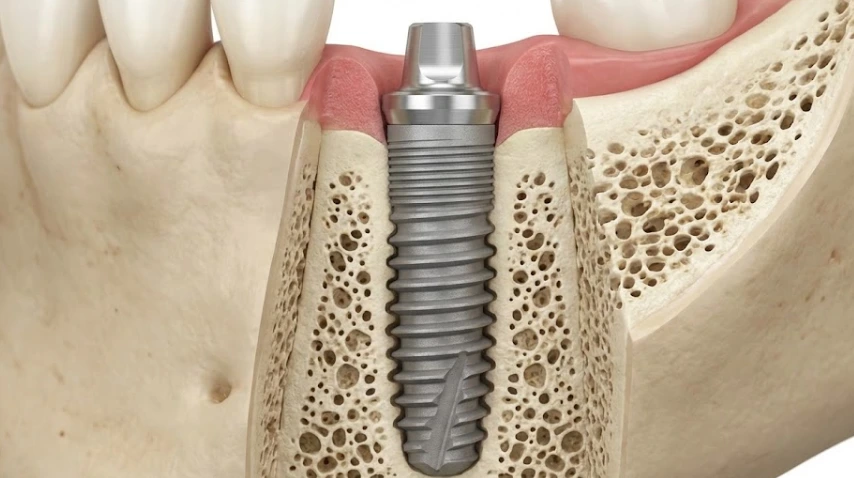
Our dental implants, which are titanium screws placed inside the jawbone of the patient are designed to be a lifetime part of a person’s body.
Professor Doctor Coşkun Yıldız likes to tell this to our patients: “You may well imagine the implants as being like a house’s concrete foundation. Once the concrete hardens and forms a bond with the earth, it just isn’t going to go anywhere.”
The name of this bonding process is osseointegration. According to our experience in the clinic, the survival rate of titanium screw implants that have been implanted can reach over 95-98% after 20 years if the patient maintains a perfect oral hygiene routine and therefore does not develop peri–implantitis, which is a condition similar to gum disease, or if the patient does not have uncontrolled diabetes. For nearly all of our patients, the screws that we put in their jaws while they are here in Istanbul will be there for their entire lives.
The Prosthesis: Tires of the Vehicle
The story of the “bridge” or the arch of teeth, which is fixed onto those screws, is a completely different tale. While the foundation is indestructible, the teeth that you can see have to face the constant impacts of chewing food, biting, and grinding.
You can consider a dental prosthesis as being somewhat similar to the tires of a luxury car. The car’s engine (the implant) will of course last indefinitely, but your tires (the teeth) definitely will wear out sooner or later and will have to be changed or at least retreaded.
Below is a list of the different materials that we usually handle in our clinic:
- Acrylic (PMMA): Generally used as a temporary healing bridge. Being soft, it is going to get worn out within 3 to 5 years.
- Zirconia (The Gold Standard): This is the material of choice for final restoration as suggested by Dt. Polen Akkılıç and her team. Zirconia has excellent properties of density and strength, yielding renditions that are highly resistant to chipping. With proper care, a Zirconia bridge can last 15 to 20 years or even longer before it needs to undergo major maintenance or replacement.
Factors That Shorten the Lifespan
The truth is that implants don’t simply “fail” ipso facto; an external factor causes them to give up. In the course of our clinical operations, we detect just three main they are:
- “Force” Factor: Say you are a nocturnal grinder (bruxism) and you don’t wear a night guard resulting in the application of thousands of pounds of pressure to the system. This may cause the screw to pop off or the glaze to chip.
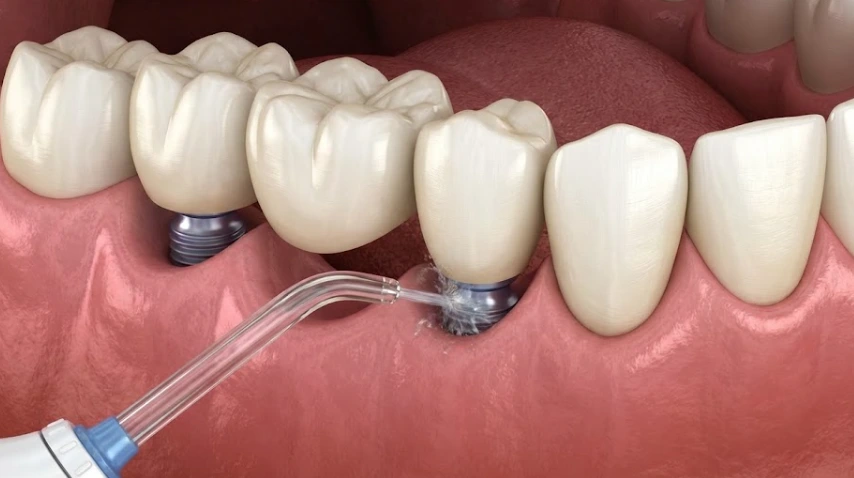
- Peri-Implantitis: This is a gum infection that along with dental implants. If you happen to cease brushing because “dummy teeth don’t get cavities,” you are allowing bacteria to have a feast on the gum and bone around the titanium implant. When bone loss occurs, the implant gets loose.
- Surgical Engineering: The positioning angle is very important. This is basically why it is very important to consult a specialist like Dr. Yıldız in Turkey if you want to get this done. We make use of the “All-on-X” method to tilt posterior implants, thus increasing the bone contact area and evenly spreading the forces.
Comparative Lifespan of Arch Materials
Here is a table showing you the settings that each of the different elements of your new smile will take over time so you can make a plan for your future.
| Component | Estimated Lifespan | Primary Cause of Failure | Maintenance Required |
| Titanium Implant (Root) | 25+ Years (Lifetime) | Peri-implantitis (Gum disease) | Daily cleaning & Annual X-ray |
| Zirconia Bridge (Teeth) | 15–20+ Years | Heavy grinding / Accidental trauma | Night guard helps extend life |
| Acrylic / Hybrid Bridge | 5–7 Years | Staining, wear, or fracture | Polishing every 6 months |
| Prosthetic Screws | 5–10 Years | Loosening or metal fatigue | Replaced by dentist during checkups |
Critical Queries on Full Arch Restoration Longevity
True “rejection” (like an organ transplant) is virtually non-existent with titanium because it is biocompatible. However, “late failure” can happen due to biology. If you develop a systemic illness, start smoking heavily, or lose bone density due to poor hygiene years down the line, the bone holding the implant can weaken. It is not the body rejecting the metal; it is the bone retreating from the infection.
This is the beauty of the “All-on-6” over the “All-on-4.” If you have six implants and one fails after a decade, Dt. Polen Akkılıç can often put the bridge to sleep on the remaining five implants while the failed one is treated. The redundancy provides a safety net. With All-on-4, losing one implant usually requires a more complex intervention.
No. All-on-X systems are fixed. You cannot take them out. You clean them just like natural teeth—brushing, water flossing (essential for cleaning under the bridge), and regular checkups. Only your dentist removes them once a year for a deep “under-the-hood” cleaning.
If you choose a high-grade full Zirconia bridge at Lema Dental Clinic, the answer is no. Zirconia is non-porous and highly resistant to staining from coffee, tea, or wine. Acrylic bridges, however, will gradually yellow and absorb odors over 3-5 years.
Speed does not mean rushing. In Turkey, we often complete the placement in one visit, but the healing cannot be rushed. Biology takes time. We place the implants, give you temporary teeth, and wait 3-6 months for osseointegration before placing the heavy, permanent Zirconia teeth. This waiting period is the secret to a lifetime result.
- Maló, P., de Araújo Nobre, M., Lopes, A., et al. (2019). The All-on-4 treatment concept for the rehabilitation of the completely edentulous mandible: A longitudinal study with 10 to 18 years of follow-up. Clinical Implant Dentistry and Related Research, 21(4), 565-577.
- Buser, D., Sennerby, L., & De Bruyn, H. (2017). Modern implant dentistry based on osseointegration: 50 years of progress, current trends and open questions. Periodontology 2000, 73(1), 7-21.
- Papaspyridakos, P., et al. (2018). Rates of Chip and Fracture of All-Ceramic and Metal-Ceramic Implant-Supported Fixed Dental Prostheses. Clinical Oral Implants Research, 29(S16), 289.
- Straumann Group. (2021). Long-term survival rates of dental implants: A systematic review. Journal of Evidence-Based Dental Practice.
- Albrektsson, T., & Donos, N. (2012). Implant survival and complications. The Third EAO consensus conference. Clinical Oral Implants Research, 23(Suppl 6), 63-65.

