


Prevent alveolar osteitis by avoiding suction, smoking, and aggressive rinsing.
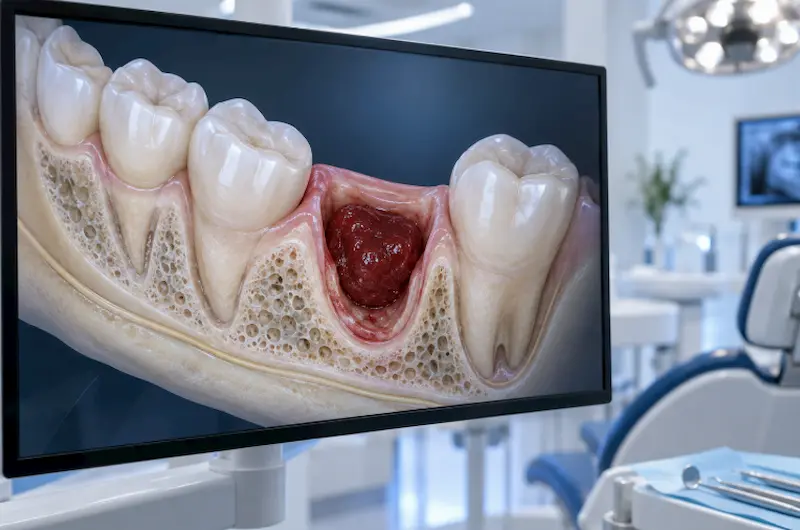
The surgical extraction of impacted third molars (wisdom teeth) initiates a complex physiological cascade of hemostatic and inflammatory responses. The immediate biological objective of post-operative recovery is the formation, stabilization, and eventual organization of a fibrin coagulum (blood clot) within the empty alveolar socket. This coagulum acts as a biological matrix, shielding the exposed neurovascular structures and serving as the scaffolding for future osteogenesis (bone formation).
1. Suction or Negative Intraoral Pressure
The generation of negative pressure in the mouth is the most dreadful mechanical mistake one can make in the first 72 hours. Using a drinking straw or vaping too forcefully produces a very big difference in pressure in the oral cavity. As a result, the fibrin clot may be completely removed from the alveolus, and only a small part may be left behind by a vacuum-like effect.
After losing the coagulum, the underlying alveolar bone and the terminal nerves become susceptible to the oral bacteria, which results in an immediate painful sensation and radiation of pain, along with a local necrotic area requiring quick professional intervention.
2. Smokers’ Chemical and Thermal Effects (Smoking)
Smoking is known to cause two types of problems for a surgical wound: on one hand, breathing in the hot smoke damages the healing of cells at the mouth and, on the other hand, nicotine is the strongest known vasoconstrictor. It constricts very quickly all capillaries at the surgical site leaving neither food and blood nor oxygen that coagulum requires. This local ischemia not only delays fibroblast growth and proliferation but significantly increases the likelihood of alveolar osteitis. Smoking reduces oxygen and blood flow to the surgical site which are essential for the healthy clot.
3. Introducing the Teeth To a Premature Load
Muscling the extraction site after such operation, that is, loading it with hard things to bite like chips, nuts, and seeds, will definitely damage the wound. Those sharp and large hard food particles can easily cut off the sututure or they can get stuck between the bone and the socket which leads to a serious infection and also interferes with the epithelialisation or healing of epithelia cells. Hard foods are likely to tear the suture line or become lodged in the socket which can cause infection and interfere with the wound愈 process.
4. Mechanical and Chemical Rinsing
Even if keeping the oral cavity clear and sterile is absolutely necessary, aggressive mechanical rinsing tears away the cellular adhesion of clot. As a rule of thumb, the first 24 hours after surgery are the times when you cannot allow any kind of aggressive gargling nor mouthwash use nor even water. The clinic Dentist Polen Akkılıç recommends that the patients after the 24 hours of the hemostatic phase, the coagulum is fully fixed to the bone walls of the alveols, are supposed to tilt their heads with a hypertonic saline so that the rinse doesn’t physically disrupt the coagulum.
5. Wrong Pharmacological Regime
Swelling (edema) the second symptom besides the inflammatory one, must be dealt with chemically because the inflammatory cell response is a necessary stage towards cell repair. When there is a failure to adhere to one pre-surgery Non-Steroidal anti-inflammatory drugs (NSAIDs) dose, this leads to a peak in the biosynthesis of prostaglandins uncontrolled. At Professor Doctor Coşkun Yıldız, the protocol of giving NSAIDs immediately after extraction is one of the ways to keep the patient from getting very much in pain. This suppression of the acute inflammatory surge greatly limits the extent of perapical edema and trismus (jaw stiffness).
Physiological Consequences of Recovery Errors
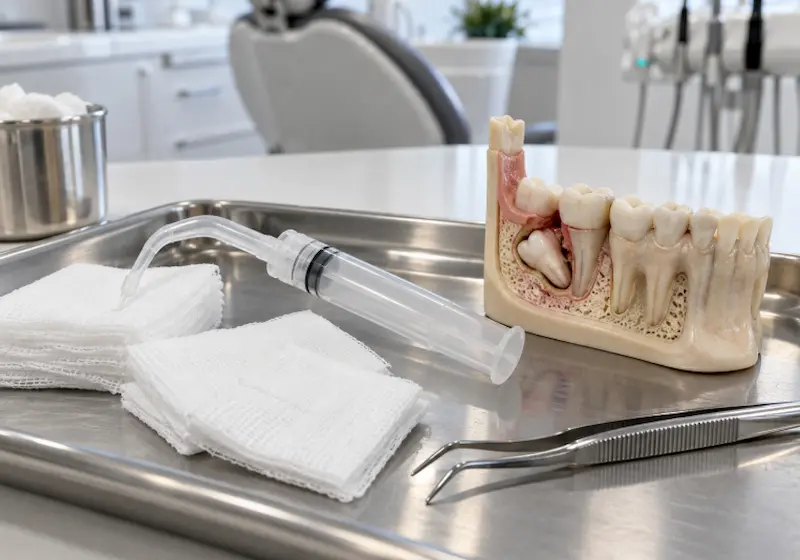
| Post-Operative Error | Biomechanical Mechanism | Clinical Pathophysiology |
| Using a Straw (Suction) | Negative pressure differential. | Mechanical avulsion of the fibrin coagulum (Alveolar Osteitis). |
| Smoking / Nicotine | Chemical vasoconstriction; thermal burn. | Localized tissue ischemia; delayed fibroblast proliferation. |
| Chewing Hard Foods | Masticatory shear force trauma. | Gingival laceration; introduction of foreign bodies into the socket. |
| Vigorous Spitting | High-velocity fluid disruption. | Premature dissolution of the hemostatic seal. |
Frequently Asked Questions
1. What exactly is alveolar osteitis (dry socket)?
Alveolar osteitis is a painful post-operative complication that occurs when the blood clot at the site of the tooth extraction fails to develop, or is mechanically dislodged or dissolved before the wound has healed. This leaves the underlying alveolar bone and nerve endings completely exposed to air, fluids, and food debris.
2. How long does the fibrin coagulum take to fully organize into tissue?
The initial hemostatic clot forms within the first 24 hours. Between days 3 and 7, granulation tissue begins to replace the clot as fibroblasts migrate into the matrix. Complete epithelialization (gum tissue closure) over the socket typically requires 14 to 21 days.
3. Are systemic antibiotics required after a routine third molar extraction?
Routinely, no. Prophylactic antibiotics are not indicated for standard extractions in healthy individuals, as they do not significantly reduce the incidence of alveolar osteitis and contribute to antimicrobial resistance. Antibiotics are strictly reserved for patients with active purulent infections or significant systemic immunocompromise.
4. When is it physiologically safe to resume intense cardiovascular exercise?
Intense aerobic activity elevates systemic systolic blood pressure. If performed within the first 48 to 72 hours, this increased hemodynamic pressure can cause the delicate capillaries within the surgical site to rupture, leading to secondary hemorrhage and severe localized edema. Exercise should be paused for a minimum of three to four days.
Academic References
-
- Blum, I. R. (2002). Contemporary views on dry socket (alveolar osteitis): a clinical appraisal of standardization, aetiopathogenesis and management: a critical review. International Journal of Oral and Maxillofacial Surgery, 31(3), 309-317.
- Bisk, P. N., & Jenkins, M. A. (1992). The physiology of wound healing following third molar surgery. Oral Surgery, Oral Medicine, Oral Pathology, 73(2), 253-257.
- Meechan, J. G., Macgregor, I. D., Rogers, S. N., Hobson, R. S., Bate, J. P., & Dennison, M. (1988). The effect of smoking on immediate post-extraction socket filling with blood and on the incidence of painful socket. British Journal of Oral and Maxillofacial Surgery, 26(5), 402-409.
- Hupp, J. R., Ellis, E., & Tucker, M. R. (2013). Contemporary Oral and Maxillofacial Surgery (6th ed.). Mosby Elsevier.

