


Replace fillings when they crack, leak, hurt, or wear down.
Most likely, you still vividly recall how wonderful it was to have the source of the pain (a cavity) completely removed and fixed. The pain had gone away, and you came back to enjoying the foods you love most. Because of the immense relief, a dental filling is that people usually treat it as a permanent solution.
Actually, no dental filling can last forever.
According to our hands-on work at Lema Dental Clinic in Turkey, not only first but even subsequent restorations that fail are among the most common problems we face. People think that their old fillings will probably work just fine when in reality, a filling is just like the weather-stripping that is placed around a window. It both protects and seals your vulnerable tooth against the harmful bacteria in the mouth. With the daily activity of chewing, the protective seal is gradually broken.
Let us, however, find out more about the reasons why such materials fail. At the same time, we will consider the signs that point to the need for a dental re-treatment without you properly noticing them.
The Lifespan of a Dental Filling

Whenever you clench your teeth or open your mouth wide, you put a lot of force on your teeth. Eating, clenching the jaw, and drinking hot and cold beverages can all cause stress on the teeth and restorations. Such a high level of everyday stress is what wears down dental materials.
Professor Doctor Coşkun Yıldız points out that many patients do not realize this fact until we tell them. In other words, the silver and composite fillings really aren’t going to last forever, are they? This is where our experts come in.
Silent Signs of Failure
Waiting until a toothache is unbearable to get treatment is not a wise decision by any means. In fact, this is the scenario that often unfolds in the clinic: A patient visits us complaining of a severe toothache. We examine the patient’s tooth and discover that the tooth with an old filling has not only broken, but the patient has actually been unaware of it for several months. The decay that has developed as a result is so severe that the tooth nerve is already involved.
Going for a dental exam becomes even more crucial if these are some of the signs that you experience:
- Floss Catching: Your floss tends to tear or become stuck on a particular tooth, which means that the edge of the filling is getting lifted.
- Temperature Shock: You experience a sharp and sudden pain when drinking hot or cold beverages.
- Dark Shadows: A gray or black spot is seen on the tooth under the white filling.
- Rough Edges: The tongue can sense rough or sharp edges of the tooth.
The Danger of Microleakage
To a degree, a question that persists is what exactly is the condition of a filling after it has broken down? A broken filling is characterized by a microscopic separation or gap between the filling material and the wall of the tooth. “Microleakage” is the technical name dentists give to this phenomenon. Envision the tooth enamel as a mighty and solid castle wall. A filling that fails is equivalent to a broken gate. It is through this gate that food residues and bacteria find their way inside quite unnoticed.
Brushing or flossing under the filling is simply not feasible. The intimate, bacteria-friendly environment therein allows for their growth and propagation. This is the main reason why secondary decay w, which can be highly dangerous, occurs inside the tooth very fast.
Dentist Polen Akkılıç and her team put a lot of emphasis on detecting microleakage soon after it causes damage. We do believe that restoring a compromised filling will be sufficient to stop decay from reaching the pulp chamber. In other words, it is possible to save the tooth and spare the patient from getting root canal treatment or complete tooth loss.
Replacement Options for Failing Fillings
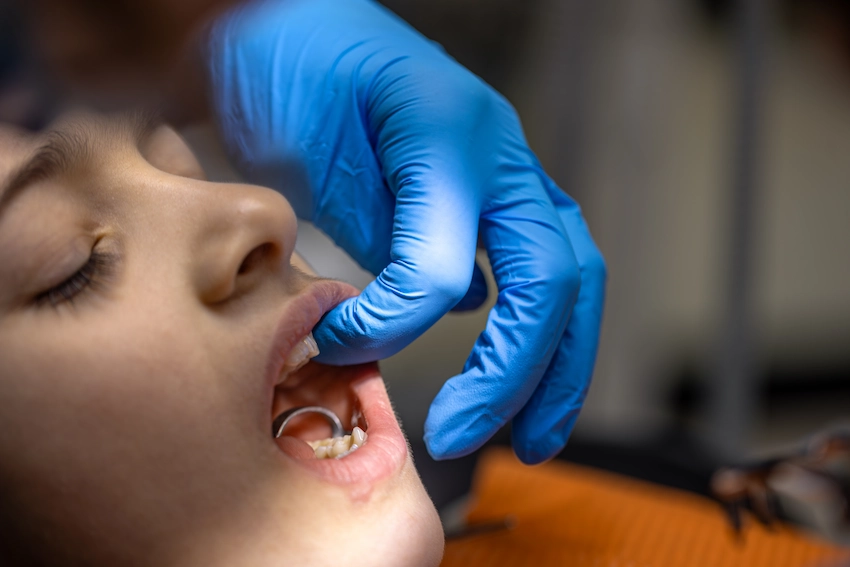
If it is getting near the end of a restoration’s lifespan, you are mainly wondering if it really is a good idea to get it replaced with a new one. Nowadays, there are plenty of options in terms of materials so that you can get restorations that are not only very strong but also beautiful.
| Material Type | Average Lifespan | Common Signs of Wear | Replacement Difficulty |
| Amalgam (Silver) | 10–15 years | Cracking, gaps at the edges | Moderate |
| Composite Resin | 5–7 years | Staining, chipping, rough spots | Low |
| Porcelain Inlay | 15+ years | Very rare chipping or cracking | High (Requires custom milling) |
| Zirconia Onlay | 15–20+ years | Almost no wear, extreme strength | High (Requires advanced tools) |
At Lema Dental Clinic, it is not unusual for us to work daily on replacing old fillings that are still failing. In addition, we often use the opportunity of a filling removal to transform a very outdated and, from a material perspective, weak restoration into a highly esthetic custom porcelain inlay or zirconia onlay. These are more than just visually pleasing options that mimic the characteristics of enamel perfectly; they are also solutions of the highest level in terms of durability.
Frequently Asked Questions
No. In order to make sure that you are not feeling anything, we use very effective local anesthesia that completely numbs the tooth for the entire time we work. You might notice pressure and vibration while we are cleaning and removing the old material, but overall, it is a very controlled process that causes you no real discomfort.
You should never do this. Usually, pain is the very last warning sign. Crack leaves a way for bacteria to leak into your tooth.
This is to some extent a treatment decision that should be based solely on the individual condition of each tooth. In the event that an older silver filling is totally sound and sealed well, then our approach is simply to keep an eye on it. On the other hand, if it is leaking, expanding, or giving rise to micro-cracks, then we need to make a move. It is great that you have made up your mind to upgrade to a modern composite or porcelain restoration.
Usually, replacing the existing composite with a new one takes approximately 30 to 45 minutes per tooth. When the situation calls for a really fine, custom ceramic inlay, things change slightly. After using digital scanners to design and make your new restoration, it is absolutely perfect.
For a good reason, people travel to Lema Dental Clinic from different parts of the world. A mixture of highly competent clinical specialists together with world-class dental technology gives you the best of both worlds. On top of the excellent service paired with highly aesthetic results delivered in a luxurious environment, the treatment process in Turkey is also very efficient and affordable.
- Alvanforoush, N., Palamara, J., Wong, R. H., & Burrow, M. F. (2017). Comparison between published clinical success of direct resin composite restorations in vital posterior teeth in the 1995–2005 and 2006–2016 periods. Australian Dental Journal, 62(2), 132-145.
- Bernardo, M., Luis, H., Martin, M. D., Leroux, B. G., Rue, T., Leitão, J., & DeRouen, T. A. (2007). Survival and reasons for failure of amalgam versus composite posterior restorations placed in a randomized clinical trial. The Journal of the American Dental Association, 138(6), 775-783.
- Demarco, F. F., Corrêa, M. B., Cenci, M. S., Moraes, R. R., & Opdam, N. J. (2012). Longevity of posterior composite restorations: not only a matter of materials. Dental Materials, 28(1), 87-101.
- Ferracane, J. L. (2011). Resin composite—state of the art. Dental Materials, 27(1), 29-38.
- Moraschini, V., FaiCK, C. G., Franca, R. M., & Dos Santos, G. O. (2015). Amalgam and resin composite longevity of posterior restorations: A systematic review and meta-analysis. Journal of Dentistry, 43(9), 1043-1050.

