Your smile has a lot to do with your teeth, but the truth is, it’s also about your tongue. Yes, that little muscle that you normally just take for granted has a whole lot to say in terms of your dental health. Changes in color, strange coatings, bumps, your tongue is a health monitor, just like that. And if you don’t take care of it, you might lose important signs of your oral hygiene, or even worse, health issues.
If you are yearning for veneers, implants, or a complete Hollywood Smile, then Lema Dental Clinic is the place you should come to. With the help of skilled dentists, the latest technology, and a love for perfection, your radiant smile journey begins here.
Honestly, it turned out to be quite a deep and interesting walk-through your mouth when checking what your tongue has to say about it. Whether you noticed a weird white coating or you just ask yourself if tongue brushing is really necessary, we know the truth.
Why Your Tongue Is So Important in Keeping Your Mouth Clean

Alright, what is it that makes your tongue so important and at the same time, the enemy of your dental care? Simply put, your tongue is a heavyweight champion in the health game of your mouth. It lets you taste, eat properly, and even talk in a more articulate way. But other than these obvious functions, it is also a place where bacteria dwell if you don’t clean.
The fact of the matter is that the top part of a tongue is composed of these little bumps called papillae. These bumps will attract germs, dead cells, food that you ate, and even particles from drinks such as coffee or soda. In case this accumulation is not cleaned off, it can cause halitosis (morning breath, anyone?) and may make the gums infected or cavities develop.
Actually, research has indicated that an unclean tongue can be the cause of bad breath in 90% of cases. So, if you brush and floss daily, but you still experience unusual odors from your mouth, then the tongue might be the missing part in your oral care routine.
What Different Tongue Colors Might Mean
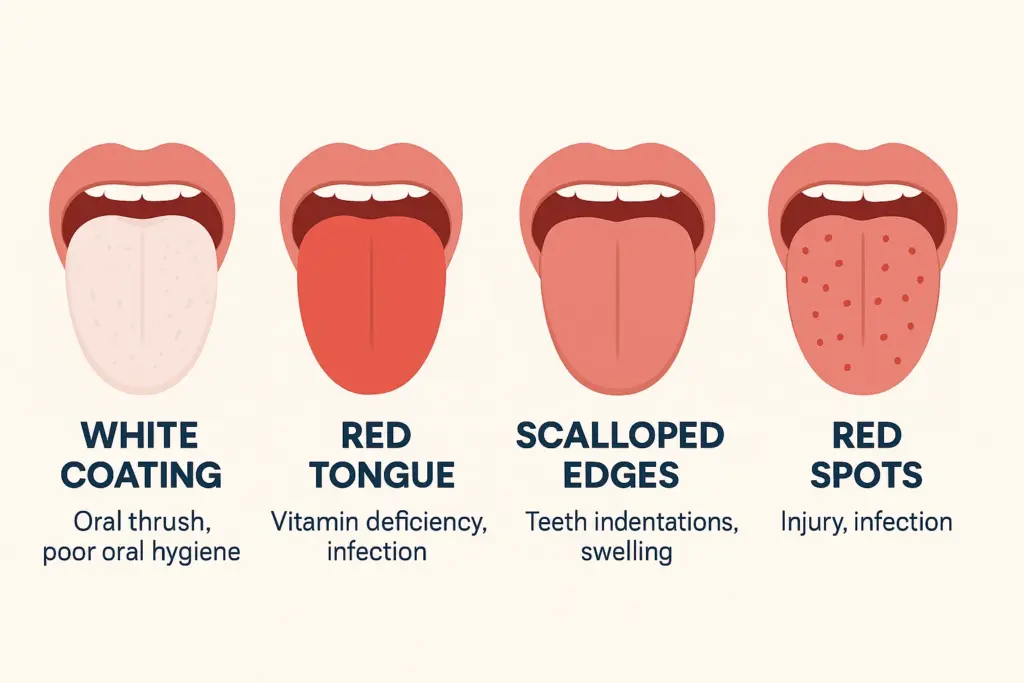
The color of the tongue is a little thing that we often overlook. The health of the tongue is its color, which can also tell us a lot of things about our health. A healthy tongue should be light pink with a slight white film. Any change in the color of the tongue can be a sign of something inappropriate.
One of the frequent symptoms that people find is a white tongue. It can be caused by oral thrush (a yeast infection), leukoplakia (white patches that are likely to turn into cancer), or simply poor hygiene and dehydration. The thick white coating on your tongue can even be a sign that you have been neglecting your tongue cleaning.
The red color of the tongue can indicate a lack of vitamins, especially B12 and iron. It is also possible that this symptom is related to Kawasaki disease in children or scarlet fever, if accompanied by fever and sore throat. A yellow tongue may be a sign of bacterial infection, acid reflux, or a side effect of smoking or poor oral hygiene.
A black or brown tongue is a very rare case, but it is usually caused by the use of certain drugs, smoking, or mouthwashes. It can be scary at first, but most of the time it is not dangerous, and it disappears with better cleaning of the mouth.
What I mean to say is that? Don’t let the very different colors go unnoticed—that is your tongue telling you that something is wrong.
Bumps, Patches, or Coating: What’s Normal and What’s Not?

Have you just found a bump on your tongue or a strange patch? Or maybe a coating that keeps coming back? Some of these changes in the mouth are absolutely normal, while other may be an indication that you need to visit your dentist.
Not to mention the small bumps that you can feel on the underside of your tongue when you run it along your teeth. They are in no way dangerous—taste buds. On the contrary, if they turn into a big size, become painful, or red, it may be a sign of irritation, an allergic reaction, or even a viral infection.
Geographic tongue is another fairly frequent oral disorder. The reason for the symptoms is smooth, red patches that shift from one place to another on the tongue after some time, just like a map of a country. The condition is not dangerous, but it may make the tongue too sensitive to spicy or acidic food.
A coated or hairy tongue is mainly caused by bacteria, dehydration, or improper brushing. Should you notice a white spot on the tongue that does not fall off when brushing, it could be leukoplakia, which is sometimes precancerous.
Very painful ulcers or sores that do not heal in 7-10 days are an absolute must for a check-up. They could actually be canker sores, herpes simplex virus, or something else that is more severe. At a similar time, those lumps that are here today, gone tomorrow? The point is, those lumps can be the sign of something really bad, and that’s why doctors should always be involved in the checking process to eliminate the possibility of oral cancer.
How to Keep Your Tongue Clean and Healthy
Since we have found out that our tongue carries all those secret things, how can we keep it fresh and healthy? Luckily, it’s not hard—it only requires a few seconds of daily effort.
First off, make tongue cleaning part of your regular brushing routine. You can use a soft toothbrush to brush your tongue gently, or even better, get a tongue scraper, a tool specifically made to clean the surface of the tongue. Scrape or brush from back to front (never the other way around) to remove bacteria and food debris.
Moreover, keep in mind the fundamentals as well. Sank water through your system to remain hydrated and stimulate the production of saliva in a natural way. Saliva is a kind of defense system for your mouth—it rids it of bacteria and keeps your tongue fresh and healthy. Do not smoke, take alcohol in moderation, and try to consume a rich diet in vitamins and minerals.
And quite so, flossing and brushing are still a must if you want your teeth to stay in the perfect shape, because what happens on your tongue can affect your gums and teeth as well. A healthy tongue is part of the full picture.
When to See a Dentist About Tongue Changes

The fact is: your tongue is sometimes the one that shows the warning signs long before any other symptoms. Thus, if you feel that something is wrong and it still persists, do not just wait it out, but get a dental appointment as soon as possible.
Right in case you see white or red patches that do not go away, ulcers that are painful, a painful tongue that lasts for more than a week, or lumps that are persistent, getting professional help is what you need to do immediately. These symptoms can be indicative of infections, vitamin deficiency, allergic reactions, or, in some cases, oral cancer.
During a check-up, dentists are not only thoroughly examining your teeth—they are also visually checking your tongue, gums, throat, and other parts of your mouth for any signs of disorder. Hence, regular dental visits every 6 months are very significant, even if there is no pain or any other issues.
Look at your tongue as one of the silent messengers—sometimes it is very subtle, sometimes it is very loud. In any case, you are not at all supposed to ignore it.
FAQ: What Your Tongue Says About Your Dental Health
A white or coated tongue is often caused by bacteria buildup, poor oral hygiene, or dehydration. In some cases, it could be due to oral thrush or leukoplakia, which require treatment.
Absolutely. Changes in tongue color can signal issues like infection, vitamin deficiency, poor oral hygiene, or other health conditions. A consistently pink, moist tongue is ideal.
Red or sore spots might be caused by spicy foods, burns, vitamin deficiencies, or conditions like geographic tongue or canker sores. If pain lasts longer than 10 days, see a dentist.
You should clean your tongue at least twice a day, right after brushing your teeth. Using a tongue scraper or toothbrush helps keep bacteria in check and improves breath.
Not always. Taste buds create natural bumps on the tongue. But if they’re enlarged, painful, or unusually colored, it may signal poor hygiene or an underlying health issue.