


Your comfort dictates the choice.
From a very young age, we are trained to associate a clean mouth with a healthy mouth. We brush, we polish, and we even go for the most powerful toothbrushes out there.But here is what we see in the clinic: sometimes, you can love your teeth too much. At Lema Dental Clinic in Turkey, we frequently treat patients who are surprised to learn that their “perfect” hygiene habit is actually the cause of their pain.
In fact, tooth enamel, being the hardest substance in the human body, is still not indestructible. Professor Doctor Coşkun Yıldız frequently points out that enamel is analogous to the high-quality transparent coating on a luxury car; it is meant to safeguard the layer underneath. However, if you vigorously brush it with a rough brush and excessive force, you will soon wear it down to the primer.
So, how do you know if you’ve crossed the line from a thorough clean to “toothbrush abrasion”?
1. Receding gums: The exposed base
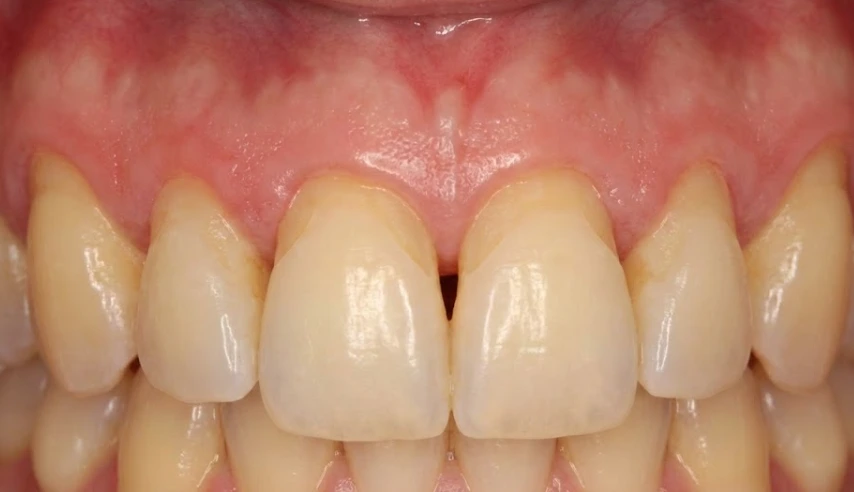
Probably the earliest sign of over-brushing that you see is your gums receding. Think of your tooth as a building – gums are the foundation and soil that protect the building. When you brush too hard, it’s like you’re “washing the soil away,”
Dentist Polen Akkılıç and her team have observed that over-brushing leads to gums becoming receded and therefore the root of the tooth, which is darker and more sensitive, is exposed. You might even feel like your teeth are “longer” than before. In fact, teeth are not growing; the protective gum layer, the blanket, is just being taken away.
2. The Sharp “Zing” of Sensitivity
Let us break down the cause of morning coffee suddenly hurting your teeth. The enamel serves as a shield. However, the layer under it is the dentin, a kind of soft tissue, which has been provided with very small channels that run straight to the nerve.
So why does over-brushing cause problems? If you wear down the enamel or if the gums recede, then these tunnels become exposed. A reaction similar to an electric shock to the nerve can be felt when you drink cold water or hot soup. If temperature changes make you recoil, it is a clear signal that your brushing method is very harsh.
3. Yellowing Near the Gums
The truth is that over-brushing can lead to your teeth getting even more yellow. Strange, isn’t it? Because the dentin beneath the enamel is naturally yellow, when you thin the white enamel layer, you are effectively making the darker core more visible.
At Lema Dental Clinic, our clinical experience has shown that many of our patients who see yellowing in their teeth try to “whiten” them with more intense brushing. This, however, creates a vicious circle in which enamel gets lost more quickly, the color of the tooth gets more yellow, and the damage gets accelerated.
4. The Frayed Bristle Test
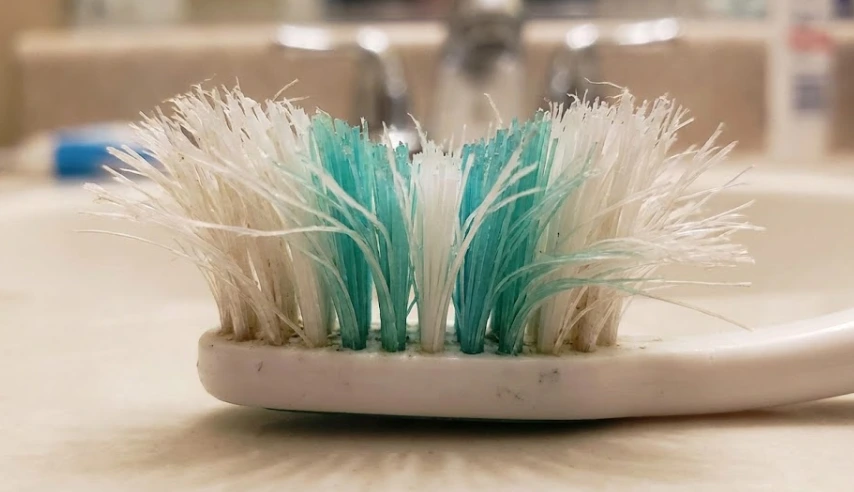
Sometimes, the most obvious sign is not in your mouth, but rather on the bathroom shelf. Check your toothbrush. If the bristles are bent, flattened, or, after only a month of use, look like a “crushed flower,” then it is certain that you are brushing with too much pressure. For the whole duration of its three-month life, your toothbrush should be relatively tidy.
Healthy vs. Over-Brushed Teeth: A Quick Guide
| Feature | Healthy Brushing | Over-Brushing Signs |
| Gum Position | Firm, pink, and covering the root. | Red, swollen, or receding away from the tooth. |
| Tooth Color | Uniformly white/off-white. | Yellowish tint appearing near the gums. |
| Sensitivity | Minimal or none to hot/cold. | Sharp, sudden pain with temperature changes. |
| Enamel Surface | Smooth and lustrous. | Visible “notches” or grooves near the gumline. |
| Bristle Condition | Holds shape for 3 months. | Fraying or splaying within 4-6 weeks. |
Fixing the Damage in Turkey
What happens if you’ve already caused damage? The question remains: can it be reversed? While you cannot regrow gum tissue or enamel, Dentist Polen Akkılıç and her team utilize advanced restorative techniques.
At our facility in Turkey, we use composite bonding to fill the “notches” left by abrasive brushing, effectively acting as an artificial shield for the exposed nerve. For more severe recession, Professor Doctor Coşkun Yıldız may recommend gum grafting or porcelain veneers to restore the structural integrity and aesthetic beauty of your smile.
FAQ: Direct Answers from the Surgeon
Actually, the reality is that many electric toothbrushes help prevent it. Most high-end models have pressure sensors that light up red or stop vibrating if you press too hard. They do the work for you, so you don’t have to “scrub.”
But let’s look closer—bleeding can be a sign of gingivitis (not enough brushing) or trauma (too much brushing). If you are brushing hard and they bleed, lighten your touch and switch to an ultra-soft brush.
Yes. Some whitening toothpastes are highly abrasive (high RDA value). If you are already showing signs of wear, we recommend a sensitive-formula toothpaste with low abrasivity to protect what’s left of your enamel.
In our clinical experience at Lema Dental Clinic, we rarely recommend anything other than “Soft” or “Extra Soft.” Medium bristles are often too stiff for delicate gum tissue, even with a light hand.
It doesn’t happen overnight. It’s like a river carving a canyon; it takes months or years of consistent, high-pressure brushing to create visible notches and recession.
- Addy, M., & Hunter, M. L. (2003). Can tooth brushing damage your health? Effects on oral and dental tissues. International Dental Journal, 53(S3), 177-186.
- Lussi, A. (2000). Progression of and risk factors for dental erosion and toothbrush abrasion. Schweizer Monatsschrift für Zahnmedizin.
- Absi, E. G., Addy, M., & Adams, D. (1987). Dentine hypersensitivity: A study of the patency of dentinal tubules in sensitive and non-sensitive cervical dentine. Journal of Clinical Periodontology.
- Dzakovic, V. M., & Murphy, R. A. (1977). Pathological effects of excessive brushing of teeth. Journal of the American Dental Association.
- Rajapakse, P. S., et al. (2007). Does tooth brushing frequency and duration influence gingival recession? Journal of Clinical Periodontology.

