


Brush longer, not harder.
We see it every day in our clinical practice: a patient arrives at Lema Dental Clinic with pristine-looking white teeth, only to complain of agonizing sensitivity to cold water or a “notching” sensation near the gum line. When we examine them, the culprit isn’t usually decay. It is effort—specifically, misplaced effort.
During a first meeting with patients in Turkey, one of the main issues that Professor Doctor Coşkun Yıldız comes across regularly is whether it’s better to brush for a longer time or harder. The response is quite straightforward but to some extent, it means forgetting bad habits that have been kept for years.
The Myth of the “Scrubbing” Power
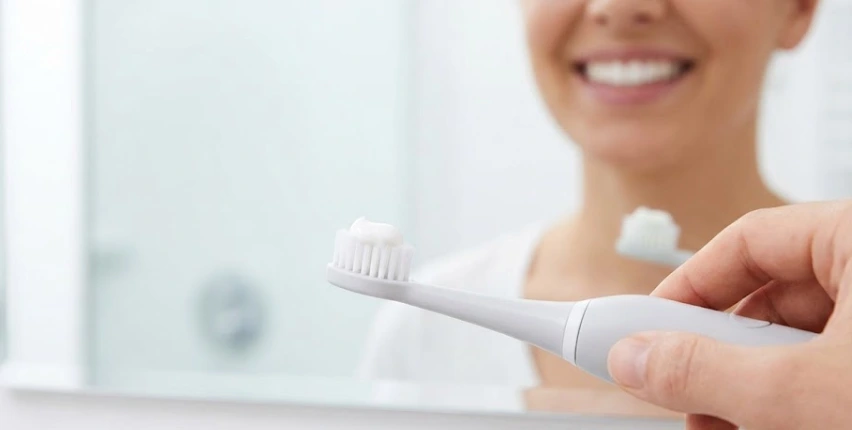
When we were children, most of us had this idea that teeth are just like a dirty kitchen floor — if you scrub them harder, they will become cleaner. This is a very misleading idea. Actually, your tooth enamel is comparable to fine porcelain or the paint of a luxury car. If you put a wire brush and a lot of pressure on a Ferrari, you won’t be cleaning it; you will be damaging the surface.
When you brush too hard, you are performing what we call “toothbrush abrasion.” You are literally sanding down your enamel. Dentist Polen Akkılıç and her team often point out that once enamel is gone, it doesn’t grow back. It is gone forever, leaving the yellowish, sensitive dentin underneath exposed.
Why Time is Your Smile’s Best Friend
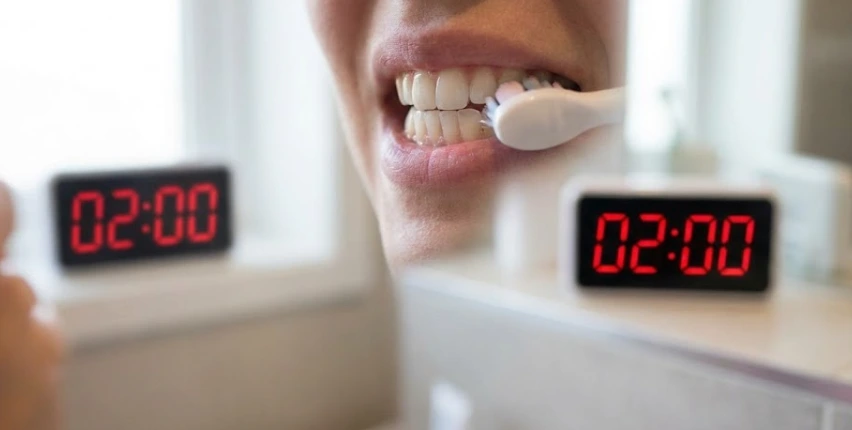
When it comes to oral hygiene, duration can be your best friend, especially if the enemy is force. Dental plaque isn’t actually a loose powder; it’s more like a “biofilm.” You can think of it as a thin layer of jelly that has dried on a plate. So, it is not a necessity to be very harsh to get it off, but you certainly need to keep it wet and gently rub it for a certain amount of time to break the bond.
In our Turkey clinic, the clinical gold standard we promote is a two-minute brushing session, twice a day. This period has not been randomly chosen. It takes about 120 seconds of gentle, circular motions to make sure the bristles have physically disrupted the biofilm on the front, back, and chewing surfaces of all 32 teeth.
Comparison: Brushing Hard vs. Brushing Long
| Feature | Brushing Hard (Aggressive) | Brushing Longer (2+ Minutes) |
| Plaque Removal | Moderate (often misses hidden spots) | High (comprehensive disruption) |
| Enamel Impact | Causes permanent wear/abrasion | Safe and preservative |
| Gum Health | Leads to recession and bleeding | Stimulates blood flow safely |
| Sensitivity | Increases significantly | Reduces by protecting enamel |
| Recommended? | Strictly No | Yes, the Gold Standard |
The Lema Clinic Perspective: Technique Over Tension
But let’s look closer at the mechanics. If you brush for five minutes but use a “sawing” horizontal motion, you are still doing damage. Professor Doctor Coşkun Yıldız often notes that the way you spend those two minutes is just as vital as the timer on your phone.
We recommend the Modified Bass Technique. Instead of scrubbing, you aim the bristles at a 45-degree angle toward the gum line and use tiny, vibrating circles. It’s a massage, not a workout. At Lema Dental Clinic, we often tell our patients that if the bristles of your toothbrush are splayed out and flattened after only a month of use, you are treating your mouth like a construction site rather than a sanctuary.
The Risk of Over-Engineering Your Routine
Some people think they can simply “hack” their dental health by brushing their teeth nonstop for ten minutes. Here is what we observe in our clinic: even the duration of brushing has a point of diminishing returns. After about three minutes, you stop getting rid of plaque and start bothering your gingival tissues unnecessarily.
The target is regularity rather than power. If you have a gentle two-minute brush in the morning and a thorough one at night, it is actually the best way to guarantee that you will not have to get dental veneers or gum grafts when you get older.
FAQ: Expert Advice from the Lema Team
Dentist Polen Akkılıç: This is a sensory habit. That “squeaky” feeling often comes from stripped enamel. Switch to an electric toothbrush with a pressure sensor. It will literally stop moving or flash a red light if you press too hard, retraining your hand to be gentle.
Professor Doctor Coşkun Yıldız: Absolutely. Always choose “soft” or “extra-soft” bristles. Medium and hard bristles should honestly be removed from the market; they are far too abrasive for human gum tissue.
It is never too late to stop the damage. While we can’t “regrow” the gums naturally, we provide advanced gum grafting and laser treatments here in Turkey to restore what was lost. The first step, however, is changing your technique today.
Dentist Polen Akkılıç: Most electric brushes have built-in haptic timers that vibrate every 30 seconds. This is incredibly helpful for ensuring you spend equal time in each “quadrant” of your mouth. It takes the guesswork out of the two-minute rule.
Professor Doctor Coşkun Yıldız: Yes, significantly. Many whitening toothpastes contain abrasive particles. When you combine those “sand-like” particles with heavy brushing pressure, you are essentially power-sanding your teeth.
- Addy, M., & Hunter, M. L. (2003). Can tooth brushing damage the soft and hard tissues of the mouth? International Dental Journal, 53(S3), 177–186.
- Heasman, P. A., et al. (2003). Toothbrushing and gingival recession: A systematic review. Journal of Clinical Periodontology, 30(s4), 13–22.
- Niemi, M. L. (1987). Gingival abrasion and plaque removal with manual versus electric toothbrushing. Journal of Clinical Periodontology, 14(4), 213–216.
- Van der Weijden, F. A., & Slot, D. E. (2015). The effectiveness of quaternary ammonium salts as an additive to toothpastes. International Journal of Dental Hygiene, 13(1), 1–10.
- Zhu, L., et al. (2014). Effects of different toothbrushing forces on enamel wear. Journal of Dentistry, 42(11), 1459–1464.

