


Denture adhesive is not always necessary if dentures fit properly.
Every week, we get the same question. While sitting in the chair, one of our patients will actually complain. Looking at their hands, you can see that they have a tube of sticky denture adhesive, and their first question is: Is it really a permanent thing for me that I have to use this?
To summarize, the answer is definitely no. I mean, you really shouldn’t have to glue your teeth to your mouth just so you’d be able to eat an apple.
However, the connection between dentures, your gums, and that adhesive is a complex one. For many years, various pastes have been marketed as unbeatable solutions for loose teeth.
The truth is far from it. At Lema Dental Clinic in Turkey, we think of adhesive as a temporary solution. It is not a permanent requirement. Actually, if you are experiencing the following, then the paste is just masking a more serious issue:
- You have to resort to applying adhesive more than once each day to keep your teeth in place.
- You have changed your diet to avoid hard, crunchy foods.
- You have sore, raw gums by the end of the day.
What Dentures are Intended to Do
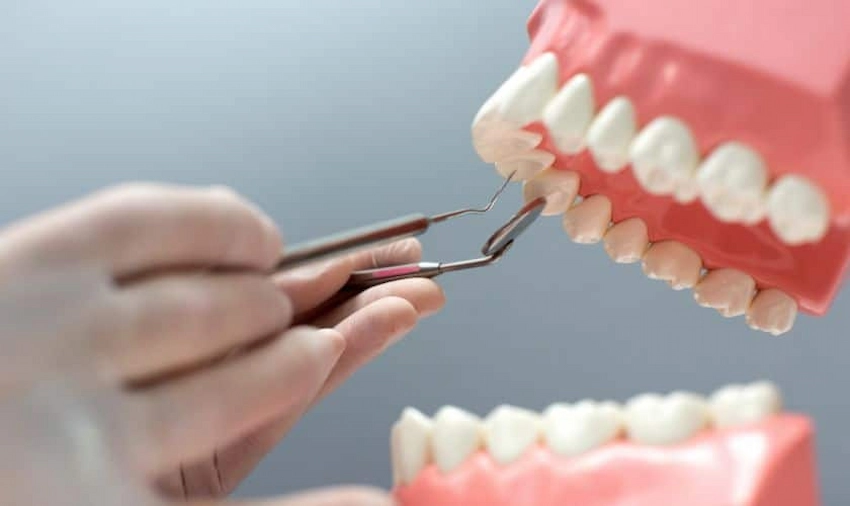
Imagine a traditional upper denture as a suction cup pressed onto glass. Your palate is a large, stable area. A very thin layer of your natural saliva acts as the seal. When a denture is an exact match to your anatomy, the natural suction is very strong.
Lower dentures are a different matter. The lower jaw resembles a thin horseshoe. The tongue, cheeks, and lips are constantly moving around it. There is no big palate to create the suction needed for the denture to stay in place.
The question is: why is it that so many patients depend on adhesives if the natural seal is intended to work?
A new prosthesis should be well-fitting. Paste might be used in the early stages for encouragement. It gives confidence while the facial muscles get used to the plastic base. After this period, a good-fitting denture does not need any paste.
Potential Negative Effects of Long-Term Adhesive Use
This is a common scenario at our clinic. Patients use a small amount of paste first. Time passes, and they go on to applying thick, heavy strips of adhesive three times a day.
They assume that the plastic denture is getting smaller. But it is the bone that is.
Prof. Dr. Coşkun Yıldız frequently compares the human jawbone to a building’s foundation. Natural tooth roots are like pillars. As long as these pillars are deeply rooted, the bone remains dense and strong.
However, once the teeth have been removed, the bone’s function is lost. The body ceases the supply of calcium to the jawbone. Bone resorption literally occurs. It is the melting of the bone.
With the bone decreasing in size, the denture will become loose. The patient naturally uses more adhesive to cover the gap that is created between the denture made of plastic and the shrinking gums. The paste disguises the bone loss that is always progressing.
The Point Where Paste Does Not Work Anymore
Eventually, you will reach the point where the lower denture cannot be held in place by any amount of adhesive. Patients no longer dare to eat a steak. They talk differently. They don’t laugh out loud in public in case their teeth fall out.
Every single day, Dentist Polen Akkılıç and her team remind you that this is not the way you have to live. If traditional dentures stop working, we turn the discussion from pastes to structural options.
Here is the introduction to the best dental rehabilitation today: implant-supported overdentures.
An Even Stronger Foundation
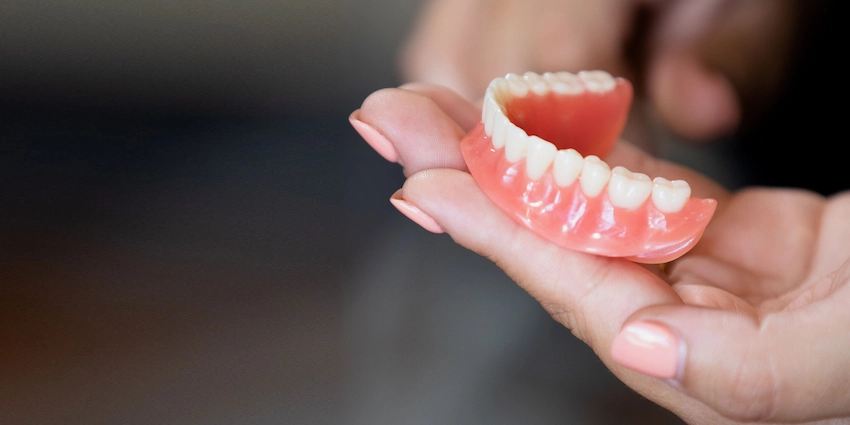
Overdentures are a completely different concept from traditional dentures, which just rest on the gums. By contrast, this type of dental appliance closes together with the titanium implants that are inserted into the jawbone.
It is only if the bone is greatly reduced due to the resorption process that we resort to bone grafting in a very precise manner. Likewise, internal delicate structures are managed very carefully; e.g., sinus membrane lifting is done as gently as peeling the skin off an eggshell. Once the implants are healed and have become fused to the bone, the denture will be locked in without the use of paste. No paste. No movement. No worry.
How to Choose Between Different Solutions
Here is some information that will help you make up your mind. We will start by analyzing the pros and cons of both conventional dentures with adhesives and the implant-supported approach that we carry out every day.
| Feature | Conventional Denture + Adhesive | Implant-Supported Overdenture |
| Retention | Suction, saliva, and chemical pastes | Titanium implants snapped to attachments |
| Bone Health | Rapid bone loss (resorption) over time | Implants stimulate and preserve jawbone |
| Bite Force | About 20% of natural chewing capacity | Restores up to 80-90% of chewing power |
| Maintenance | Requires scraping paste off gums nightly | Brush normally; no messy adhesives needed |
| Fit Longevity | Needs professional relining every 1-2 years | Stable, long-term fit anchored to the bone |
Frequently Asked Questions
Is it safe to swallow a little denture adhesive every day?
A tiny bit accidentally swallowed will not hurt you. Most modern pastes are free of toxins and also zinc-free. However, if paste is constantly trickling down your throat, then your dental appliance is ill-fitting. We are going to correct the fit, not add more paste.
Why does my lower denture always float, even with heavy paste?
The anatomy of the lower jaw is, frankly, completely different from that of the upper jaw. Your tongue and cheeks are muscular and really contest the space. Adhesive is also washed away by saliva quite quickly. This exactly explains why we recommend implant placement so the lower denture can be securely snapped down.
Can I get implant-supported dentures if I have worn regular ones for 10 years?
Certainly, yes. You have likely suffered some bone loss for the past 10 years. Even so, you are not out of options just because of that. At Lema Dental Clinic, we build the foundation using bone grafting techniques quite often before placing implants.
How long does the transition to implant-supported dentures take in Turkey?
A two-visit procedure is the norm. We lay down the titanium implants on the first day gently. You will have to wear a temporary denture for the next 3-4 months while your bone is fusing to the titanium. On the next trip, we are ready to give you your final, custom-made teeth.
Will I ever need adhesive again after getting implants?
Not at all. That is the real charm of this solution. The implant attachments are like those heavy metal push-buttons on winter coats. Once you hear the click, it means it is locked in for good.
Academic References
- Adell, R., Lekholm, U., Rockler, B., & Brånemark, P. I. (1981). A 15-year study of osseointegrated implants in the treatment of the edentulous jaw. International Journal of Oral Surgery, 10(6), 387-416.
- Awad, M. A., Lund, J. P., Dufresne, E., & Feine, J. S. (2003). Comparing the efficacy of mandibular implant-retained overdentures and conventional dentures among middle-aged edentulous patients: satisfaction and functional assessment. International Journal of Prosthodontics, 16(2), 117-122.
- Feine, J. S., Carlsson, G. E., Awad, M. A., Chehade, A., Duncan, W. J., Gizani, S., … & Thomason, J. M. (2002). The McGill consensus statement on overdentures. Mandibular two-implant overdentures as first choice standard of care for edentulous patients. Gerodontology, 19(1), 3-4.
- Kapur, K. K. (1967). A clinical evaluation of denture adhesives. Journal of Prosthetic Dentistry, 18(6), 550-558.
- Thomason, J. M., Kelly, S. A., Bendkowski, A., & Ellis, J. S. (2012). Two implant-retained overdentures—a review of the literature supporting the McGill and York consensus statements. Journal of Dentistry, 40(1), 22-34.

