


Wisdom teeth removal usually takes 20–60 minutes, depending on tooth position and case complexity.
Considering dental surgery can make even the bravest person feel uneasy, the majority of patients wonder whether the surgery will be short or not as their primary question.
This difference in patients is quite common for us in a dental clinic. Some cases require a surgery that is completed so fast one could almost count to ten while watching a short movie. However, some procedures need to be performed carefully; therefore, time-wise they take longer. At Lema Dental Clinic in Turkey, we focus on performing surgery swiftly and safely; however, the duration of the surgery will ultimately depend on the shape of your jaw.
The Hidden Shape: Why the Surgery Time Varies
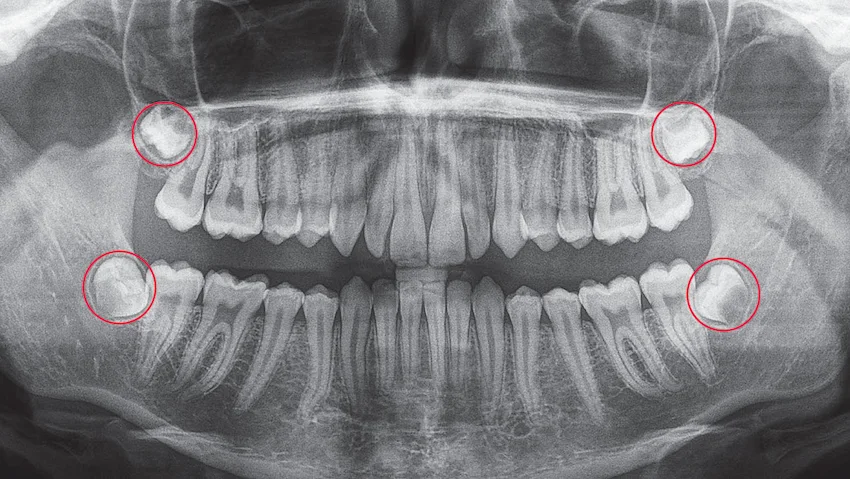
Envision a wisdom tooth as the part left behind after a tree is cut down, like a stump. If that stump has straight roots and is lying fully on the ground surface, we gently pull it out in no time.
But we need to go into more detail. What if the tree is hidden under the ground? What if its roots are winding around rocks or the tree is planted next to the water pipe? Taking it out would require very precise and slow work. In your mouth, the stones are actually jawbone. The water pipes are the sensitive nerves. The handling of such a complex anatomical structure decides how fast the surgery will be.
Occlusal Position of the Wisdom Tooth
Occlusion is one of the factors that dentists like Dr. Polen Akkılıç have to consider before you start getting your dental work done. They take the X-ray scan and then decide which type of work it’ll be:
- Fully Erupted: This type is quite easy, as the entire tooth has broken through the gum.
- Partially Impacted: The tooth may be visible but is half-buried, and it is often stuck at a very awkward angle.
- Fully Impacted Tooth (Bony): If a tooth is completely stuck in a jawbone, then dentists must carefully remove the part of the bone until they see the tooth. In such a case, bone grafting and a dental implant are the most likely solution.
Estimated Surgery Time
For clarity, let’s look at the following examples, assuming you are thoroughly numb after anesthesia.
| Tooth Positions | Time (Each Tooth) | Total Surgery Time |
| Fully erupted teeth | 3 to 5 minutes | 20 to 30 minutes |
| Partially impacted teeth | 10 to 20 minutes | Approximately 40 minutes |
| Teeth fully blocked by bone | 15 to 30 minutes or more | More than an hour |
The Surgical Experience in Turkey
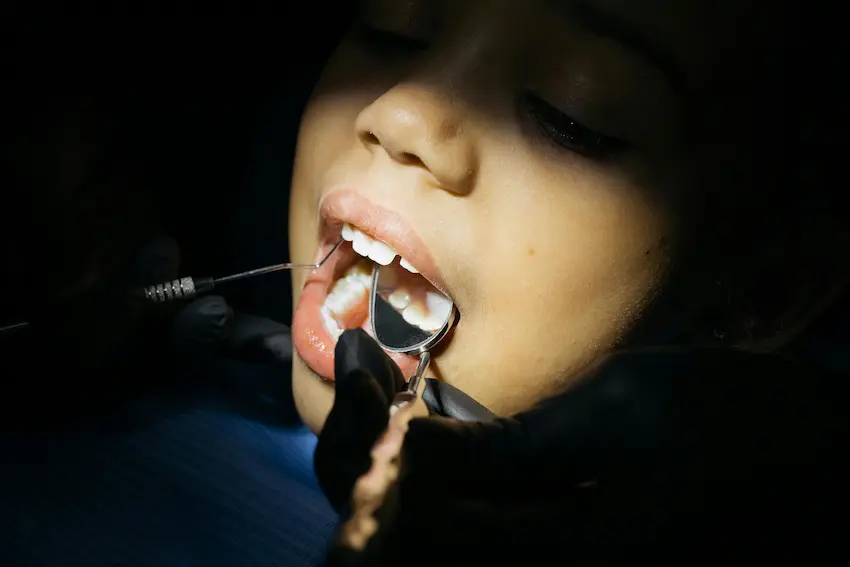
Lema Dental Clinic is the best dental clinic in Turkey; however, our reputation is not based solely on our patients’ time management skills.
Professor Dr. Coşkun Yıldız often states, “A fast surgery will only be a good surgery when it is the least painful surgery.”
Patients flying in from other countries choose to have their dental work done in Turkey for its excellent service and high level of professionalism. We use a method called piezosurgery, which consists of gentle vibration of surgical instruments and therefore causes minimal trauma to the surrounding area. It results in a much shorter surgery duration as compared to the traditional methods and also minimizes post-operative swelling.
The area is thoroughly cleaned after the removal of the tooth. A biological membrane is applied in place of simple sutures. This technique offers various advantages, such as reduced discomfort and faster healing, since the tissue is fixed and secured without sutures.
Frequently Asked Questions
Do I have to take the whole day off for the surgery?
That would be great. If you leave the surgery in about 40 minutes, you are still going to feel the numbness as well as have somewhat dull vision. We recommend that you not go back to work directly but spend the rest of the day recovering, for example, by resting on the couch with ice application.
How long will my mouth be numb?
Achieving complete numbing is one thing; returning to one’s normal condition is an entirely different process. Your numbness from the anesthetic will last for approximately 4 hours so that you can comfortably talk to the dentist when you return to the clinic for your regular follow-up after the anesthesia wears off completely. That’s why dentists recommend a pill in the patient’s hand and tell the patient to take the first one as soon as they feel numb, because that will help relieve the pain once the numbness disappears.
Will I be conscious the entire duration of the surgery?
This decision entirely rests with the patient, who can opt for either having a local anesthetic or sedation. Local anesthesia ensures that you remain awake, but you may feel your mouth as you do so, although all movements to your mouth are painless. Sedation is available, and we provide it only when a patient requests it, as it helps the patient relax and sleep during the procedure if that is the case.
What is the procedure if the tooth is lying very close to an important nerve?
To prevent such problems, we use a 3D scan, which is the only way to see exactly where each tooth is positioned relative to the important nerves. This is done for a short time after the surgery only if the roots contact the nerve. We move very carefully so that no pressure is applied to the nerve. In addition, by dividing the tooth into pieces, we can reach the nerve and still remove the entire tooth.
Approximately, how long will a wound take to heal?
You can get an appointment in no time, and the actual time for your jawbone to fill the gaps is 3-6 months. You will know the result of the operation only after the first X-ray, which you will get after three or six weeks.
Academic References
- Bouloux, G. F., Steed, M. B., & Perciaccante, V. J. (2007). Complications of third molar surgery. Oral and Maxillofacial Surgery Clinics of North America, 19(1), 117-128.
- Coulthard, P., Bailey, E., Esposito, M., Furness, S., Renton, T. F., & Worthington, H. V. (2014). Surgical techniques for the removal of mandibular wisdom teeth. Cochrane Database of Systematic Reviews, (7).
- Dodson, T. B., & Susarla, S. M. (2014). Impacted wisdom teeth. BMJ Clinical Evidence, 2014, 1302.
- Haug, R. H., Perrott, D. H., Gonzalez, M. L., & Talwar, R. M. (2005). The American Association of Oral and Maxillofacial Surgeons age-related third molar study. Journal of Oral and Maxillofacial Surgery, 63(8), 1106-1114.
- Renton, T., & McGurk, M. (2001). Evaluation of factors predictive of lingual nerve injury in third molar surgery. British Journal of Oral and Maxillofacial Surgery, 39(6), 423-428.

