


No, laminate veneers need only minimal enamel reduction (about 0.3–0.5 mm).
Let’s talk about the scary pictures first. When you see people praising their new changes on Instagram, you will notice in the photos a post smile with tiny peg-like stumps – only the final crowns have yet to be fixed. It is a very frightening image and stops many people from getting the smile they want since they think the price is to demolish their natural teeth.
But, the truth of the matter is Lema Dental Clinic in Turkey is quite different.
There is a huge clinical difference between a crown preparation (which is a very extensive treatment that covers the whole tooth like a helmet) and a laminate veneer preparation (which covers only the front, like a contact lens). We often have to explain to patients after continuous worries about getting their teeth “shaved down to nothing” that this is not the way modern cosmetic dentistry works.
The Biology of Conservation
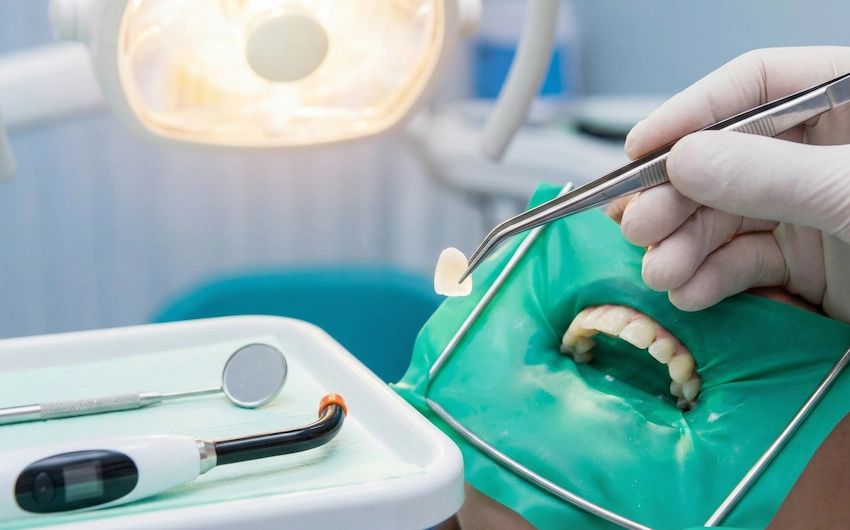
Try to picture tooth enamel as the protective layer of a ceramic tile. It is very tough, shiny, and unique, so the same product cannot be purchased again. We and our doctor, Coşkun Yıldız, are on the same page about how to eliminate, to the maximum the least possible amount of the ”glazing”.
Obtaining a laminate veneer essentially does not involve the tooth losing its strength. We are just carving out a route for the insertion and making sure the outcome isn’t heavy visually. Gluing a new layer directly on a tooth without any preparation would make it look thick and unnatural hence you’d be unable to close your lips in a comfortable way and gum inflammation would occur over time as a result of lead formation between the porcelain and the tooth.
So, in most cases, a little reduction is inevitable. But do we mean “heavy” reduction? Certainly, not.
How Much Enamel Actually Goes?
At our clinic, Dentist Polen Akkılıç and her team members use a microscopic magnifier to perform with such accuracy that their level works every a fraction of a millimeter. Normally, the enamel removed ranges from 0.3mm to 0.5mm. To help you visualize this better, that corresponds to the thickness of a fingertip or a contact lens.
Just as a carpenter carefully sands a piece of wood before staining, we only mildly treat the surface of the tooth. We are not cutting the wood; on the contrary, we are simply getting the surface ready to ensure that the new layer will be really bonded. The adhesion between porcelain and enamel is the strongest bond in dentistry—much stronger than the bond to the softer dentin layer underneath. For this reason, preserving your enamel is not only a matter of health but also of the longevity of your veneers.
The Lema Approach: Minimally Invasive by Design
In Turkey, we have hundreds of international patients who come to see us expecting a painful invasive surgery only to be surprised by the gentleness of the veneer procedure.
Dr. Coşkun Yıldız oftentimes emphasizes that great dental work is that which goes unnoticed. Usually, if a tooth needs a significant reduction, it is because it was heavily misaligned beforehand. In such cases, a short orthodontic treatment to get the teeth straight might be more appropriate so that alignment won’t have to be ‘corrected’ with a drill, which is our first choice.
Comparing Preparation Styles
Veneers aren’t all the same. We may take different routes according to the situation of your teeth. This is how they compare:
| Features | No-Prep Veneers (Lumineers) | Minimal-Prep Laminate Veneers (Standard) | Full Crowns (The “Shark Tooth” Myth) |
| Reduction Depth | 0 mm (None) | 0.3 mm – 0.5 mm | 1.5 mm – 2.0 mm (Heavy) |
| Anesthesia? | Usually not necessary | Local anesthetic recommended | Required |
| Reversibility | Fully reversible | Not reversible (enamel permanently altered) | Not reversible |
| Ideal For | Small teeth, gaps, adding volume | Discoloration, minor chips, shape correction | Severe decay, root canal cases, structural damage |
| Risk of Sensitivity | Extremely low | Low to moderate (temporary) | Moderate |
| Aesthetics | May appear slightly bulky or opaque | Natural, translucent, lifelike | More opaque, may look overly uniform |
Why “Turkey Teeth” is a Misnomer
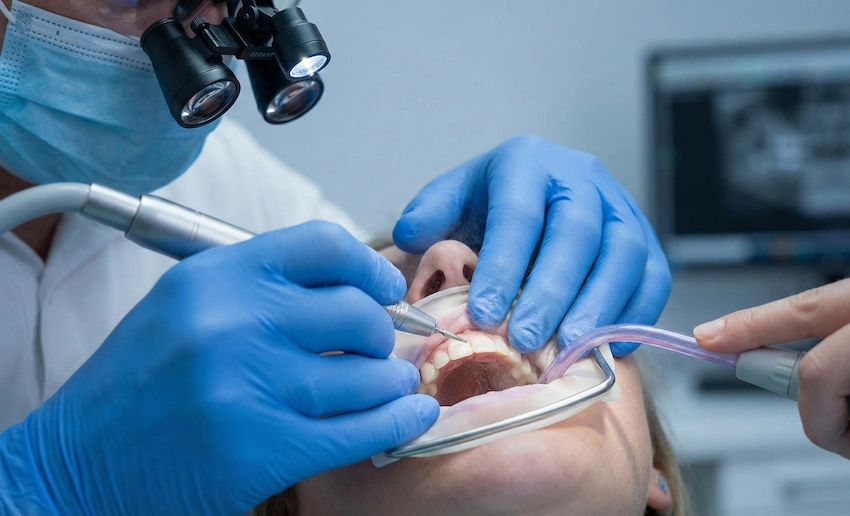
The idiom “Turkey Teeth” has unfortunately been associated with the overzealous use of crown preparations for aesthetic purposes. We need to be clear: performing full crowns on perfectly healthy teeth simply for aesthetics is generally considered aggressive treatment. At Lema Dental Clinic, we emphasize the ethical aspect of dentistry. We do not crown a healthy tooth when a laminate veneer—which preserves 90% more of the tooth structure—can provide the same outcome.
When you sit with Dentist Polen Akkılıç, the discussion centers on biomimetics—nature imitation. Nature doesn’t create square or opaque white blocks. Nature creates translucent and textured layers. By only removing a small amount of enamel, the natural color of the underlying tooth will be reflected through the porcelain, hence giving that depth and life that stands for a really fancy smile.
Frequently Asked Questions
Expectedly, a patient might have some tooth sensitivity especially to cold or air for several days even after the bonding of veneers, maybe only a very short time after the preparation. It’s simply like a sunburn – the skin becomes really sensitive, the nerve gets over-sensitive for a moment. On the other hand, because veneers cover only the enamel layer, the extent of sensitivity is usually very minimal and it goes away very fast.
It would be a lie if I said “yes”. Because before laying veneers, we trim a tiny layer of enamel to make them fit like a glove and avoid them from looking bulky, it’s an irreversible treatment. However, you’ll still need to constantly keep your teeth safe from any damage with a covering at all times. Yet, veneers are a perfect, solid option – if taken good care of, they may even last 15-20 years – for your smile makeover.
We do the treatment under local anesthesia so it is not feasible to experience any pain throughout the process. Most individuals claim that the only thing they perceive is the device’s vibration. But once the anesthetic wears off, you might feel a slight discomfort similar to bruising a knee; however, this kind of feeling is hardly ever considered “pain”.
There are times when the strength of the veneers may not be enough to cover a tooth that has a big filling, undergone a root canal, or is very crooked. Then, a crown that would provide the tooth with complete support is required. Nevertheless, if you are merely making cosmetic changes to healthy teeth, then veneers are definitely the right choice.
Since we have a digital laboratory right here at the clinic, we are extremely quick. Usually, the consultation and preparation happen on the first day, and the complete smile is often done within 3 – 5 days. Hence, you get to merge the designing of your new smile with a short holiday in Turkey.”
- Gurel, G. (2003). The Science and Art of Porcelain Laminate Veneers. Quintessence Publishing.
- Magne, P., & Belser, U. (2002). Bonded Porcelain Restorations in the Anterior Dentition: A Biomimetic Approach. Quintessence Publishing.
- Peumans, M., Van Meerbeek, B., Lambrechts, P., & Vanherle, G. (2000). Porcelain veneers: a review of the literature. Journal of Dentistry, 28(3), 163-177.
- Layton, D. M., & Walton, T. R. (2013). An up to 16-year prospective study of 304 porcelain veneers. International Journal of Prosthodontics, 26(4).
- Edelhoff, D., & Sorensen, J. A. (2002). Tooth structure removal associated with various preparation designs for anterior teeth. The Journal of Prosthetic Dentistry, 87(5), 503-509.

