


Zirconia is stronger than natural enamel.
The human jaw is a true work of art in terms of engineering. Each time you gum a juicy steak or smash an almond with your teeth, you create a lot of pressure. It’s only natural that when patients come to our clinic in Turkey, their first question is: “If I replace my teeth with Zirconia, won’t I have to watch out for the rest of my life?”
The quick reply is no. In fact, you could even be less concerned.
At Lema Dental Clinic, we have seen that natural enamel is extremely valuable and should be preserved at all costs-it is the hardest material in the human body by a wide margin. Nevertheless, Zirconia works on an entirely independent level. It is the “ceramic steel” of the dental industry, acting as an armored cover for your occlusion.
The Physics of the Bite: MPa Matters
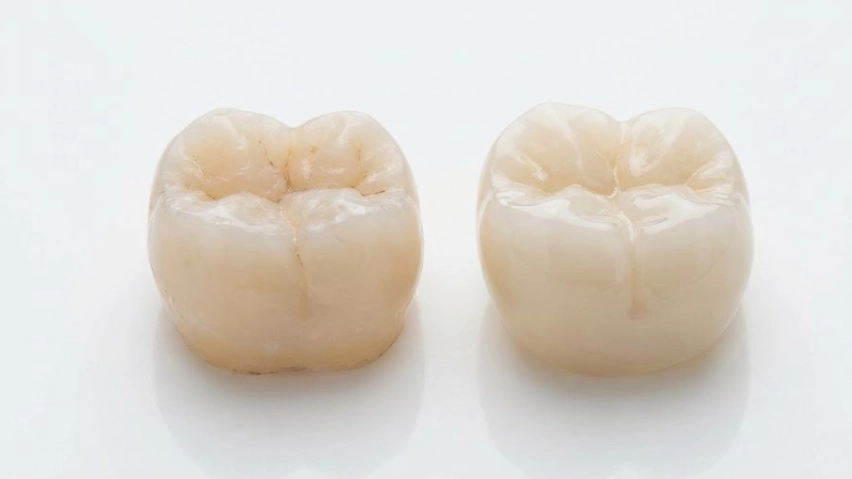
We measure flexural strength in Megapascals (MPa) to reflect how strong a material really is. Picture it as the exact point where a material finally gives in and breaks under pressure.
Comparing measurements from the clinic:
- Natural Enamel: Usually falls between 200 and 400 MPa levels. It is quite durable but enamel can be damaged by acids in food and grinding at night.
- Traditional Porcelain: Usually has 300 to 500 MPa; hence, over time, it may chip.
- Lema Dental Zirconia: Has a wide range from 900 to 1200 MPa.
Professor Doctor Coşkun Yıldız agrees with the surgical teams at Lema Dental Clinic that monolithic Zirconia is about three or four times stronger than natural teeth.
Why Hardness Isn’t Everything
You wonder, “If it is so hard, won’t it harm my opposite natural teeth?”
But if we dissect the problem from a mechanical point of view, the previous generation of dental materials used a lot of abrasives and the level of wear that they caused to the opposing teeth was the same as the effect of sandpaper. The use of modern materials changes the story completely.
The finishing procedures are of utmost importance to Dentist Polen Akkılıç and her aesthetic team, who pay a lot of attention to polishing and bite alignment. Because today’s Zirconia is polished to a microscopic level of smoothness, it provides the following advantages:
- Less Friction: It wears down opposing natural teeth to a much lesser extent than unpolished porcelain.
- Plaque Resistance: The bacteria find it almost impossible to cling to the crown due to the smooth surface.
- Biocompatibility: The gums heal beautifully around the margins without any of the dark lines that result from older metal crown technology.
The “Turkey Teeth” Myth vs. Reality
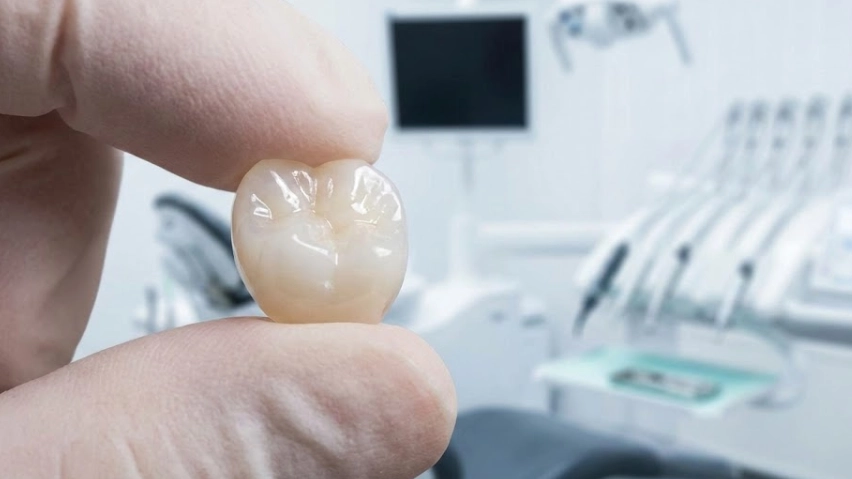
Many people believe that to get a full smile makeover, one must undergo the traumatic process of having their teeth excessively shaved. The truth is far from that when we are talking about treatment with high-quality materials.
Since Zirconia has a dense structure, crowns can be manufactured to an almost invisible thickness. Here are the reasons why it should matter to you:
- Tissue Preservation: Before the treatment, there was more of your healthy, natural tooth left which we try to preserve.
- Better Fit: With thinner margin lines, the integration with your natural gum line is almost flawless.
- Long-Term Durability: Not only are you getting a cosmetic upgrade in Turkey, but we are also reinforcing the structural foundation of your mouth.
| Material | Flexural Strength (MPa) | Fracture Risk | Aesthetics | Best Used For |
| Natural Enamel | 200 – 400 MPa | Moderate | Natural | The biological standard |
| Zirconia (Lema Std) | 900 – 1200 MPa | Extremely Low | High | Full sets, Molars, Grinders |
| E-Max (Lithium Disilicate) | 360 – 500 MPa | Low | Very High | Front teeth (Veneers) |
| Porcelain-Fused-Metal | 300 – 500 MPa | High (Chipping) | Low (Opaque) | Outdated restorations |
Critical Questions on Zirconia Mechanics and Longevity
Absolutely. Once the bonding cement has fully cured (usually within 24 hours), your Zirconia teeth function just like natural teeth, only stronger. You can bite into an apple or chew nuts without the fear that plagues denture wearers. However, we always advise against using your teeth as tools—opening bottles or tearing packages is a bad idea, whether your teeth are real or Zirconia.
This is a common misconception. While Zirconia is a dense material, the crowns are crafted with such precision that the weight difference is imperceptible in the mouth. Most patients report that after the initial adjustment period of a few days, they completely forget which teeth are crowns and which are natural.
In materials science, hardness can sometimes equal brittleness (like glass). But Zirconia is unique because of a property called “transformation toughening.” If a microscopic crack begins to form, the crystal structure of the material actually expands to pinch the crack shut. It stops the fracture before it spreads. This self-healing characteristic is why we see so few failures in our clinic.
Zirconia used to be chalky white and opaque, which is why some people avoided it. Today, we use multi-layered Zirconia blocks that have a gradient—more opaque at the gum line and more translucent at the biting edge, mimicking the optics of natural pearl enamel. Dentist Polen Akkılıç hand-selects the shade gradient to ensure it blends seamlessly with your complexion and any remaining natural teeth.
Natural enamel has microscopic pores that absorb pigments from dark liquids. Glazed Zirconia is virtually non-porous. It is incredibly resistant to staining from coffee, red wine, or tobacco. While your natural teeth might yellow over five years, your Zirconia crowns will likely remain the exact shade they were on the day you left our clinic in Turkey.
- Denry, I., & Kelly, J. R. (2008). State of the art of zirconia for dental applications. Dental Materials, 24(3), 299-307.
- Miyazaki, T., Nakamura, T., Matsumura, H., Ban, S., & Kobayashi, T. (2013). Current status of zirconia restoration. Journal of Prosthodontic Research, 57(4), 236-261.
- Guess, P. C., Zhang, Y., & Thompson, V. P. (2009). Effect of veneering techniques on damage resistance of Y-TZP frameworks. Operative Dentistry, 34(3), 233-242.
- Stawarczyk, B., Keul, C., Eichberger, M., Figge, D., Edelhoff, D., & Lümkemann, N. (2017). Three generations of zirconia: From veneered to monolithic. Part I. Quintessence International, 48(5), 369-380.
- Özcan, M., & Bernasconi, M. (2015). Adhesion to zirconia used for dental restorations: A systematic review and meta-analysis. Journal of Adhesive Dentistry, 17(1), 7-26.

