


Apply denture adhesive in small dots on clean, dry dentures and use only a small amount.
Have you ever really thought deeply about what it would be like? Just imagine yourself having dinner with your family members. In front of you, there’s a plate of juicy apples. Suddenly, you get an uncomfortable feeling in your gut. Is it possible that the dentures would fall out?
In addition to physical discomfort, a denture slipping down causes a great deal of emotional disturbance as well. Picture this: you trying to chew with wobbly teeth – it’s just like a man wearing shiny shoes trying to walk on ice. You will be constantly fighting to maintain your balance.
At Lema Dental Clinic, we communicate with patients who have been relying solely on store-bought pastes. They come to us looking exhausted and annoyed. Most of their gums are sore, and their breath is not fresh.
The truth is, making use of denture adhesive accurately is quite a difficult task. If you nail it, it becomes a very useful and dependable tool. If you mess it up, you may put yourself at risk of a big, messy, uncomfortable situation.
Here is the closest thing to a clinical procedure that you may follow.
Step-by-Step: The Clinical Method for Application
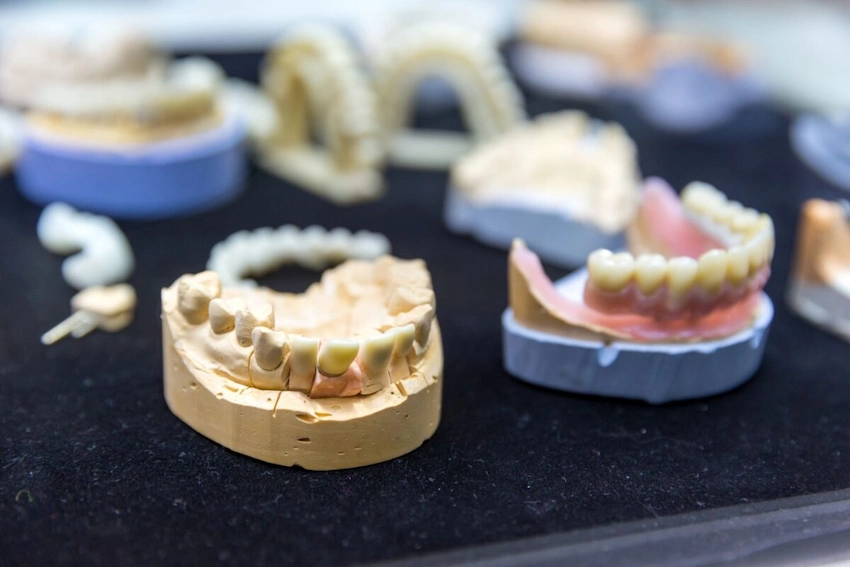
It’s a pretty common blunder to overuse the paste, and it’s in fact the first thing that we notice patients doing during our examinations. They end up squeezing a very thick strip of the adhesive onto their whole denture while hoping very tightly that it will be a perfect hold. Here is the truth: you are merely destroying the grip that you are so eagerly wishing for. Adhesives need some of the natural moisture in your mouth to swell and form a seal. Too much of the paste actually disrupts that minuscule vacuum.
These are typically the safest and most effective steps that, at the clinic, we consider:
- Clean and Dry Thoroughly: Just as a building needs a strong foundation, so does your jawbone. The denture is the house built on top. If the foundation is wet or dirty, the house will slide. Brush your gums well. Then, take a soft, clean, and dry towel and dry the pink plastic base. Nothing that glues will stick well to a surface that is still wet.
- The “Pea-Sized Dot” Rule: It is a good idea, in general, to perform the paste application in very small isolated dots. For an upper denture, 3 points are enough to distribute the paste: the front end and the two back corners. For a lower denture, place small dots along the curve.
- Keep away from the edges: Put the dots deep inside the groove of the denture. If the dots are too close to the edges, it will be spilled out in the mouth upon biting down.
- Seat and Hold: First, put the denture in your mouth. Then, bite down tightly for 1 minute. The gluing is achieved more effectively under heavy pressure.
The Hidden Dangers of Over-Application
The reason why the amount applied is so little is worth sharing as well. Considering that plenty of the commercially available products contain zinc in their composition as the component that enables obtaining a stronger grip. Zinc in very small quantities is perfectly safe. However, regularly (daily) overapplying thick layers of zinc paste may, over time, constitute a danger to one’s body. It is, in particular, the nervous system that can be affected, and it is not impossible to experience a loss of sensation as well.
There will be a very important clinical rule, points out Prof. Dr. Coşkun Yıldız. If one requires glue more than once a day, then one’s denture simply no longer fits one’s mouth. The jawbone tends to shrink naturally once tooth roots are missing. It would be dangerous to keep filling that space with glue. It will be like repairing a door that keeps on getting loose with a coat of paint. Sure, it may cover up the gap for a while, but it is totally ignoring the fact that the structure is broken.
Evaluating Your Options: Adhesives vs. Permanent Solutions

When adhesive becomes too weak, many of our international patients traveling to Turkey decide to change the situation with better alternatives.
| Stabilization Method | Daily Maintenance | Bone Preservation | Chewing Force (Bite Strength) |
| Denture Adhesive Paste | High (requires frequent cleaning of sticky residue) | None (bone shrinks) | Weak |
| Denture Adhesive Strips | Moderate (simpler to remove) | None (bone shrinks) | Weak |
| All-on-4 / All-on-6 Implants | Low (need regular brushing like natural teeth) | Excellent (implants maintain the strength of bone) | Strong (comparable to natural teeth) |
Dentist Polen Akkılıç and her team are often supporting patients in the transition from messy pastes to powerful implants. For patients with so much bone loss that they wouldn’t even be eligible for the traditional choices, exceptional techniques such as Zygomatic implants provide a permanent fixed smile.
Frequently Asked Questions (From the Doctor’s Desk)
Just how much adhesive is required?
Just buy a new eraser for your pencil, and think of the size of the eraser’s one end. That is the maximum quantity that you may be using. One may be wrong if there are more than four dots.
Even with the strongest glue, the denture sometimes remains loose. Why is that?
The jawbone isn’t a dead bone – it is alive, changing all the time. In contrast, the plastic denture is a fixed object. When the mouth changes and is no longer a fit for the denture, no amount of paste can work. It is time for you to contact a dental clinic for a denture reline or implants that are permanent.
I have swallowed a very small portion of the paste accidentally; can it cause me any harm?
It is normal in certain situations to swallow some paste, especially in case of accidental swallowing. On the other hand, the daily ingestion of a large quantity of zinc on the basis of a paste remains a very dangerous situation. This is exactly the reason why our “pea-sized dot rule” is so essential.
How can I remove the denture paste that is sticky from my gums after bedtime?
Prevent the paste from remaining on the gums overnight, as it is not a good thing. The paste may become a breeding ground for bacteria that are very harmful and can cause painful infections. You should do your mouth a favor with a saltwater rinse that will dislodge the paste. Then, it is advisable to take a soft toothbrush or a wet cloth and very gently wipe the paste away from the gums.
When is the right time to say no to gluing completely?
The question is: are you changing your lifestyle because of your teeth, or are your teeth simply there for you to lead your life? If you are giving up on hard foods, laughing loudly scares you, and you are gluing multiple times a day, then it is time for a change. Our firm recommendation is to regard fixed zirconium bridges as a permanent solution.
Academic References
- Felton, D., Cooper, L., Duqum, I., Minsley, G., Guckes, A., Haug, S., … & Sweitzer, B. (2011). Evidence-based guidelines for the care and maintenance of complete dentures: a publication of the American College of Prosthodontists. Journal of Prosthodontics, 20(s1), S1-S12.
- Nations, S. P., Boyer, P. J., Love, L. A., Burritt, M. F., Butz, J. A., Wolfe, G. I., … & Trivedi, J. R. (2008). Denture cream: an unusual source of excess zinc, leading to hypocupremia and neurologic disease. Neurology, 71(9), 639-643.
- Grasso, J. E. (2004). Denture adhesives: changing attitudes. The Journal of the American Dental Association, 135(1), 81-86.
- Coates, A. J. (2000). Usage of denture adhesives. Journal of Dentistry, 28(2), 137-140.
- Zarb, G. A., Hobkirk, J., Eckert, S., & Jacob, R. (2013). Prosthodontic Treatment for Edentulous Patients: Complete Dentures and Implant-Supported Prostheses (13th ed.). Elsevier Health Sciences.

