


Because infection returns due to incomplete cleaning or leakage.
I’m sure you still remember how relieved you were after your first root canal treatment. The pain was gone, the infection was treated, and the tooth was “saved”. Without a doubt, time will eventually take its toll on the tooth and the pain will return, maybe even a sharp pain when biting or a little lump on the gum.
At Lema Dental Clinic, such a question is frequently asked, “If the nerve was removed, how can the tooth hurt again?”
Root canal treatment is usually very successful however, a tooth being a living biological structure can still get infected. In such cases, only a new attempt which in clinical terms is called endodontic retreatment can save your natural smile.
A Metaphor of the “Hidden Room”: Why Initial Treatments Can Fail
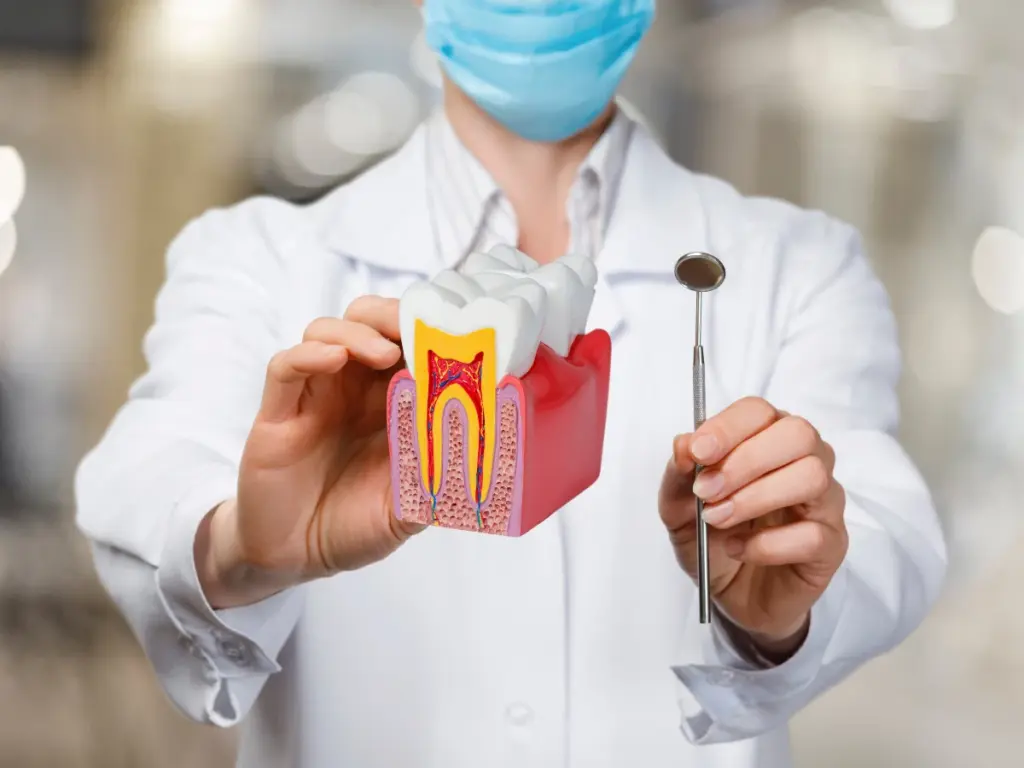
Think of the roots of a tooth not as a simple straight pipe but more like the complex, twisting roots of a huge oak tree. Quite often a dentist tries to get hold of and clean every “branch” but a few of the tiny channels can be very difficult to find.
The main cause of secondary infection is the intricate nature of human anatomy, according to Professor Doctor Coşkun Yıldız. For example, a tooth could have calcified canals (i.e. the canal has slowly become narrow due to aging or trauma) or there could be “accessory canals” that are only a few microns wide and even a microscope cannot reveal them. If a tiny colony of bacteria stays undisturbed in one of these secret places, it will definitely cause an infection again.
The Role of Technology in Turkey
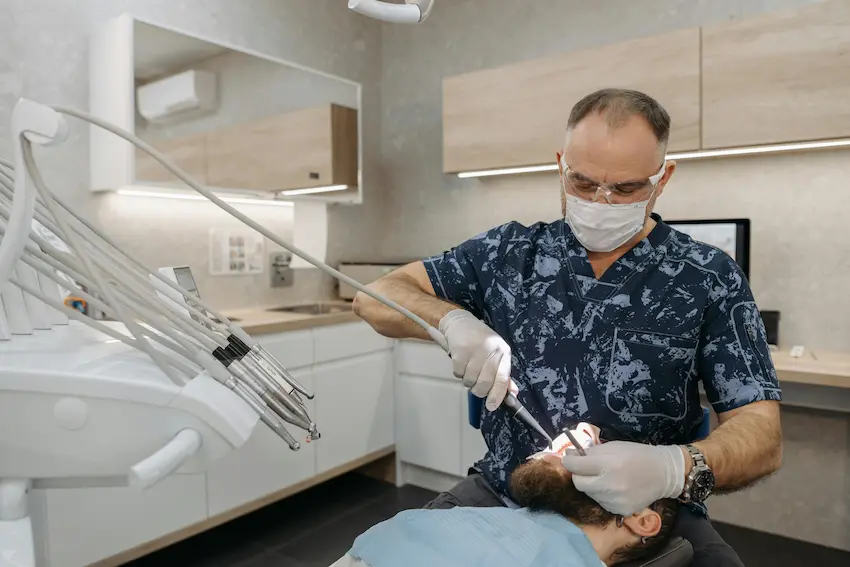
At Lema Dental Clinic in Istanbul, we have seen many cases where patients experienced relapse after undergoing a conventional treatment in another clinic. We believe that “seeing is healing” which is why we rely on our high-powered dental microscope and 3D CBCT imaging.
Anyway, let’s consider the factors that almost always cause a second treatment:
- Salivary Contamination: If the permanent crown or filling has not been put immediately after the first procedure, then saliva (a very bacteria-rich fluid) will find its way to the tooth through the crown/filling, thus contamination willoccure.
- New Dental Trauma: Once a tooth has had a crack or a cavity invasion, it will be easier for bacteria to find their way inside through the internal filling material; hence, the infection process will be repeated.
- A “Missed” Canal: At times a molar might have four or even five canals. The moment your dentist neglects to find the fourth canal during the first session is when the tooth will be incapable of self-healing any longer.
Comparing Your Options: Initial vs. Retreatment
The decision to undergo a second root canal is often weighed against the alternative: extraction and an implant. Here is how the two endodontic stages typically compare:
| Feature | Initial Root Canal | Endodontic Retreatment |
| Primary Goal | Remove infected pulp and save the tooth. | Remove old filling, find missed canals, and decontaminate. |
| Complexity | Standard anatomical navigation. | High; must navigate through old crowns and filling materials. |
| Technology Used | Standard X-rays and files. | Micro-endodontics and 3D imaging (CBCT). |
| Success Rate | Approximately 85-95%. | Approximately 75-85% (depending on the cause of failure). |
| Timeframe | 1 to 2 visits. | Often 2 visits to ensure complete disinfection. |
How Lema Dental Clinic Works?
Is Saving a Tooth for a Second Time Still a Question? We in our Turkey clinic completely back the idea that natural teeth are better than any prosthetics in the majority of cases.
Traveling to Istanbul for dental treatment doesn’t just mean indulging in the beautiful sights; rather, it is mostly about getting the quality of dental work that is so advanced and thorough that the tooth is even regarded as one of the most essential organs of your body’s health overall.
Frequently Asked Questions (FAQ)
Not really. Actually, lots of patients say the second time is easier because we give a very thorough local anesthesia. You will feel it somewhat the same as when you get a deep filling. The thing we aim at is your pain removal, not pain creation.
If the final restoration is done properly—like a good quality crown—a retreated tooth can still serve you well for the rest of your life. The secret is to keep up with good oral hygiene and regular visits to your dental team here in Turkey.
Indeed, we have extensive experience with implants but Professor Doctor Coşkun Yıldız keeps reminding us that we should preserve the natural tooth if it is still possible. It is the natural tooth that maintains the good shape of the jawbone and provides you with the ‘feel’ of the bite which an implant can never mimic 100%.
In most cases, we only allow a second root canal procedure. Following that, if it still doesn’t work, we will think of ‘apicoectomy’ (a surgical method to the tip of the root) or a dental implant. We do that to prevent the infection from spreading to the jawbone.
Delaying treatment is risky. The bacteria keep on destroying the bone around the root. Thus, waiting will lead to an increased loss of bone, which may cause problems for an implant in the future if retreatment can’t be done
- Abbott, P. V. (2002). The periapical status of teeth with post-retained crowns. International Endodontic Journal, 35(11), 946–952.
- Friedman, S., & Stabholz, A. (1986). Endodontic retreatment—Case selection and technique. Part 1: Criteria for case selection. Journal of Endodontics, 12(1), 28–35.
- Nair, P. N. (2006). On the causes of persistent apical periodontitis: A review. International Endodontic Journal, 39(4), 249–281.
- Salehrabi, R., & Rotstein, I. (2010). Endodontic treatment outcomes in a large patient population in the USA: An epidemiological study. Journal of Endodontics, 30(12), 846–850.
- Torabinejad, M., & Lemon, R. R. (2002). Procedural accidents. Endodontics, 6, 310–330.

