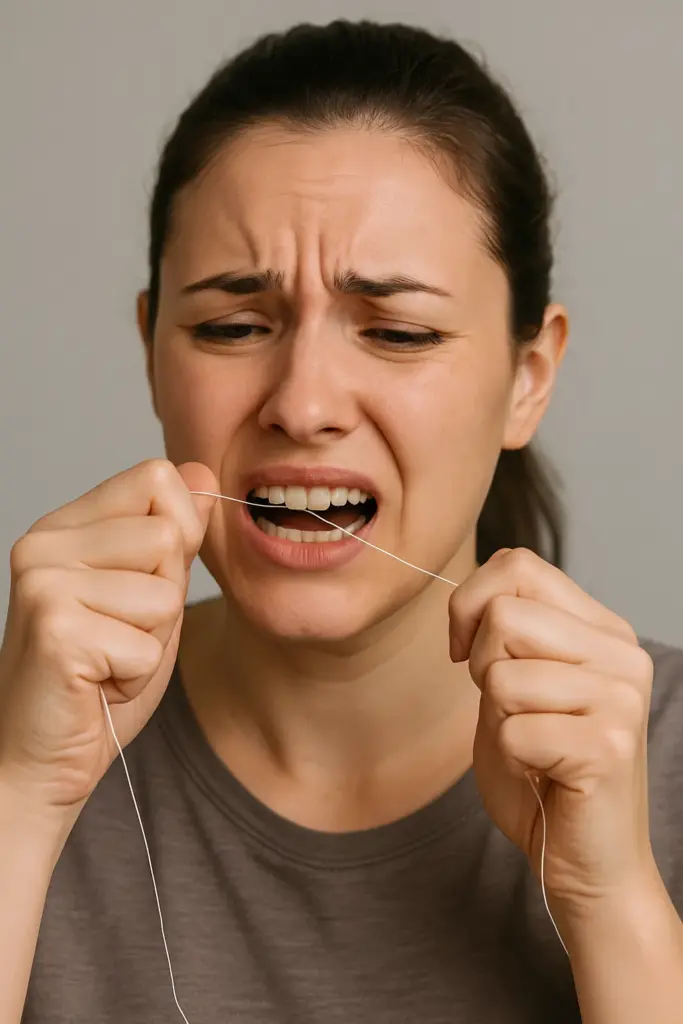
Flossing is the most important thing to do for dental care. This is a must for healthier teeth and gums. However, what shall one do if flossing causes not relief but discomfort or pain? If you have ever had a thought like that, wow! My teeth hurt after flossing. You are in the same shoes as many other people. Several people feel their teeth to be sore, tender, or even have blood on them when they first start flossing, and at times, even a little after. However, the matter is generally short-term and not a big deal.
In this post, we will look at the things that cause flossing-associated pain, we’ll do a flossing how-to, and we’ll see what you should do to keep your teeth both problem-free and shiny indeed.
Teeth Sore After Flossing: Is It Something to Worry About?
As you wake up with your teeth sore after flossing, you are not the only one who might feel worried about it. At the very beginning, get your mind at peace by realizing that such a slightly sore feeling is normally experienced when the oral care habits of a person are just being readjusted to a new daily routine. The symptoms are temporary and normal, and they will disappear as your oral cavity adapts to your more frequent daily practice. That’s one of the major culprits.
Imagine, though, that soreness is still on the scene after several days of your gentle treatment and it may be getting even more hurtful—then, the discomfort becomes unbearable and medical attention should be sought, as the matter may be indicative of a serious condition, e.g., gum disease, dental caries, or the wrong way of flossing. The first step you can take is to be gentle and switch to a floss that is not that rigid. Chances are, if the problem still exists after one week, make haste to your dentist for a check-up.
Common Reasons Why Your Teeth Hurt After Flossing
1. You’re New to Flossing
A sure sign that you haven’t previously been into flossing is certainly the initial slight pain that follows. This pain is totally outrageously normal. Here, the plaque or food particles between your teeth are the main sources of discomfort in the tissues of your mouth. After observing the habit of daily use of flossing, the recovery stage begins, and the soreness tends to disappear within a week.
2. Too Much Force During Flossing
Flossing isn’t necessarily about being fierce, so it can be efficient. If you put too much pressure or snap the floss into your gums, it can cause pain, swelling, and even damage to the gum line. Rather, soft, flowing movements remove more than enough of the dirt and bacteria from the teeth without being too aggressive with the gum.
3. Infectious Gums or Inflammation
Flossing, in case of having inflamed gums that are typically caused by gingivitis or periodontitis, as it is quite likely that the flossing could be the trigger for the pain or the bleeding. Then, flossing would not be the cause but the revealer of your issue. It’s your body’s way of saying to you that there is a problem with your oral hygiene. If the problem persists, you should seek advice from your dentist.
4. The Use of Dental Work or Crowded Teeth
In many cases, it may be difficult and even painful to floss the areas of sensitive gums that are often a result of dental procedures such as crowns, fillings, or tight spaces between teeth. The floss may stick or break, and exerting more force can lead to further irritation. In such cases, products like specifically designed flossers, the gentle floss, or water flossers can offer great advantages.
How to Floss Neglecting Pain
Pick the Right Floss
Not all sorts of floss have the same purpose. You should use soft, waxed floss or dental tape, particularly in case you have sensitive gums or narrow teeth. The reason for that is that they slide more conveniently inside the teeth with less resistance and rubbing.
Implement the Right Technique
- Make about 18 inches of floss by cutting it off.
- Take the two ends and wrap them around your middle fingers, leaving the middle 2 inches free for flossing.
- Move the floss in the middle of your teeth and very calmly, curve it into a half “C” shape and then move it up and down the side of each tooth.
- Do not strain the floss or force it into the gums.
Regularity and Not Forcefulness
It is recommended to floss your teeth at least once a day, but if you are regular, it is more important than the force since your gums are elastic and can tolerate it, and thus your pain should probably be gone in a few days.
In What Instances Should You Consult a Dentist?
If the symptom lasts for more than a week or worsens, seeking your dentist is the most appropriate action. Continual discomfort may indicate diseases like:
- A cavity that is located between the teeth
- Gum recession or infection
- Dental work that was not done properly
- Misaligned teeth or bite problems
Your dental check-up will help the dentist diagnose the problem and offer treatments like a professional cleaning, a gum treatment, or an alternative flossing technique.
Does Regular Flossing Have the Potential to Lower the Sensitivity over Time?
It does. As soon as the period for adjustment is over, the daily flossing averts the disease and decreases sensitivity, and also wipes out the microorganisms that are responsible for bad breath and tooth decay. It is far and away the best way to guard your own oral health in the long run.
Some Last Words: Keep on Flossing
If you are wondering, “Why do my teeth hurt after I floss?” it is important to remember that this discomfort is generally an indication that your gums are getting accustomed to better care, or it warns you of deeper trouble. Do not quit flossing altogether—be patient and visit your dentist if you feel the need. A small irritation today may result in a healthier, brighter smile in the future.
FAQ About Teeth Sore After Flossing
Yes, bleeding gums are quite common during the first attempts to floss. It typically stops in a couple of days of gentle and regular cleaning.
It is possible only when the flossing is not done properly. An aggressive way of flossing leads to gum damage, or the enamel can wear out. Always make sure to floss gently.
Flossing before brushing can help to remove the food and plaque. In such a way, your toothbrush and the toothpaste you are using will maintain the cleanliness of your teeth better.
Using interdental brushes, floss picks, and water flossers is all highly recommended options; however, the latter is the most suitable for those wearing dental implants or braces.
At least once a day is the best recommendation for keeping the gums healthier and keeping the decay at bay in the teeth.