


Brush gently around tooth gems and floss carefully to protect your enamel and gums.
A gorgeous smile is a beautiful way to showcase your personality. Nowadays, lots of people desire more than just perfectly aligned and bright teeth. They also want that little bling. At Lema Dental Clinic in Turkey, we get quite a few foreign visitors who are quite enamored with the premium diamond tooth gems. These minuscule stones introduce a dazzling sprinkle of light in your smile.
However, when you step out of our clinic in Istanbul, it will be your responsibility to maintain that sparkle.
The mystery remains: how can you maintain sparkling teeth without damaging or losing your diamond? In fact, it is way easier than you assume. All it requires is a gentle hand and a proper technique.
The Bond Mechanics: Why the Gem Remains Fixed
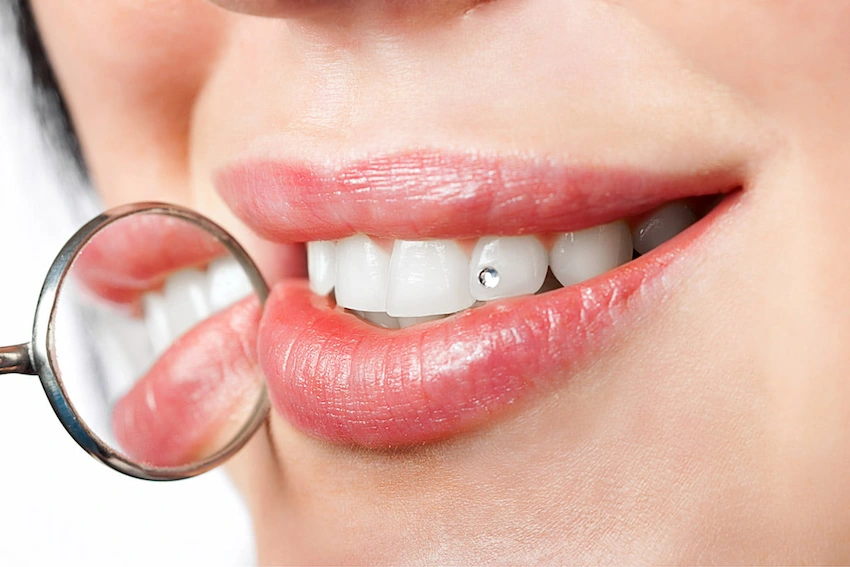
Actually, a professionally installed tooth jewel is unlikely to cause any harm to your tooth. Prof. Dr Coşkun Yıldız states that the method of attaching the jewel is quite similar to that of orthodontic brackets. First, the tooth surface is disinfected, and then the dental adhesive is applied, following which the small diamond is positioned. The adhesive is cured with a special light.
Picture it as if you are fixing a photograph to a piece of wood with a very strong glue. We do not drill any holes in your tooth.
But we can examine the strength of the attachment of the jewel. The adhesive is very strong to cope with direct force, such as your lips pressing against your teeth. However, if you scrape it in a sideways motion, the jewel may become detached. In general, this is the kind of force that a tough-bristle toothbrush can generate when you brush vigorously or when you jerk your floss out.
Brushing with Care: Use Gentle Circles
It is necessary to alter your brushing habits if you opt for a tooth gem. Your teeth can no longer be scrubbed as if you were cleaning a dirty kitchen counter.
Here is what we observe in our practice. Certain patients become so fearful of touching the gem that they permit the plaque surrounding it to get hard and sticky. Other patients brush with such vigor that they damage the smooth glue holding the stone.
The simplest and best procedure is this:
- Employ a toothbrush with soft bristles.
- Keep the toothbrush at a 45-degree angle, pointing at your gums.
- Use minute, light circular motions while brushing.
Dentist Polen Akkılıç and her team are eager to advocate the use of electric toothbrushes equipped with pressure sensors. This way, the plaque is removed from around the edges of the diamond, without any harm, due to the micro vibrations. The brushing is done entirely by the machine, so there is no need to manually scrub.
Flossing Safely Around Your Jewel
Flossing commandments are a bit complex. If your diamond is towards the side of your teeth, traditional floss may get stuck at the glue’s edge.
As per the visiting record, the best practice is to use either a smooth, unwaxed dental floss or a water flosser.
In case you opt for the traditional floss, please adhere to the following:
- Be gentle while sliding the floss between the teeth.
- Never snap the floss upwards or downwards at the gem.
- If the floss gets caught on the diamond, do not pull it upwards.
- Just release one side of the floss and remove it sideways.
This neat dodge prevents the floss from becoming a crowbar against your diamond.
Comparing Gem Types and Hygiene Risks
Understanding different kinds of jewels and their impacts on teeth is conducive to keeping your smile healthy and dazzling.
| Gem Type (Diş Taşı Türü) | Attachment Method (Yapıştırma Yöntemi) | Duration (Kullanım Süresi) | Main Risk (Ana Risk) | Cleaning Tips (Temizlik İpuçları) |
| Natural Diamond (Doğal Elmas) | The surface glue (Yüzey yapıştırıcısı) | 6 months to 2+ years | Edges attracting plaque (Kenarlarda plak birikimi) | Soft brush & pull floss sideways (Yumuşak fırça kullanın ve diş ipini yana doğru çekin) |
| Swarovski Crystal (Swarovski Kristali) | Adhesive with light cure (Işıkla sertleşen dolgu malzemesi) | 3 to 12 months | Glue weakening through acid (Asit yüzünden yapıştırıcının zayıflaması) | Rinse with water after soda (Asitli içeceklerden sonra ağzınızı suyla çalkalayın) |
| Gold Charms (Altın Figürler) | Orthodontic adhesive (Ortodontik yapıştırıcı) | 1 to 3 years | Plaque less accessible under large pieces (Büyük parçaların altında plağa ulaşmanın zorlaşması) | Water flossers and micro-brushes (Ağız duşu ve mikro arayüz fırçaları kullanın) |
Why You Have to Clean Around the Gem
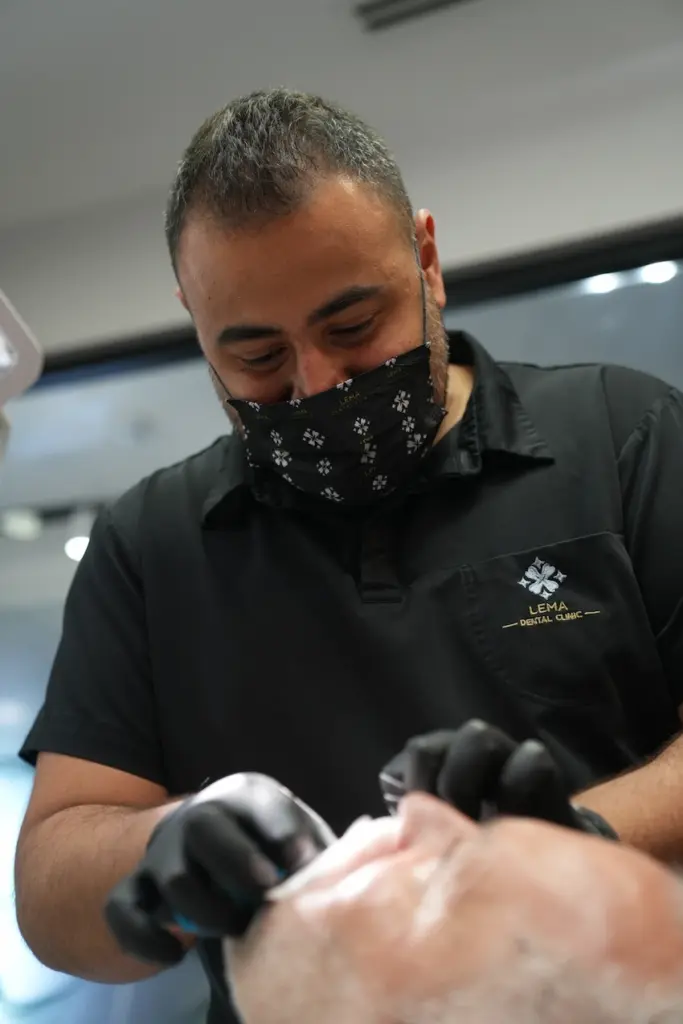
Tooth gems are an excellent niche for plaque buildup. The problem is, it treats those areas with your teeth like it’s little heaven spots. If you decide not to clean there because you are afraid that your gem will come off, then the bacteria will be given the chance to reproduce. A good thing about them is that they not only reproduce but also produce the acids that destroy the enamel.
Quite possibly, when the gem is removed, the skin under it will be discolored or will have a white spot – those spots that are still caused by the acids made by bacteria. After the tooth gem is removed, residue is one thing you seriously should not have. A proper daily cleaning through gentle brushing is vital.
If you can see that your gem has been chipped and the rough surface can be felt by your tongue, then you need to make a visit to a professional. Lema Dental Clinic in Turkey is the place where not only your well-being is taken care of, but also your fashion is looked after. Dentist Polen Akkılıç and her team emphasize that you should get high-quality cleanings at least twice a year. Our team knows how to clean around your gem in a way that the bonding is not damaged at all.
Frequently Asked Questions
The answer is no. If at all, only very rarely, use those whitening toothpastes. Since these contain abrasive ingredients, very fine particles are present, which perform the task of scrubbing off stains. These tiny abrasive particles can impair the smoothness of the dental glue, the surface upon which the diamond is bonded. The gem may even come off prematurely. That is why a regular fluoride toothpaste, which is gentler, is preferable.
There is no cause for alarm. Lema Dental Clinic uses only the safest crystals and diamonds of the highest quality for their work, and they do not contain lead or any other harmful substances. In case you swallow the gem unintentionally during a meal, it will be naturally excreted without any harmful effects. If you find it, you can bring it back to our clinic in Turkey; we will clean your tooth and reattach it.
Using water flossers is really a wonderful choice for maintaining cleanliness in that area. However, it is very important, or rather you must, operate them in low or medium pressure settings. A high-powered blast of water directed right at the gem every day could weaken the glue eventually. Aim just above the gem and allow the water to softly rinse the area.
The special dental light we use for the imprint and curing of the glue is very quick. It only takes seconds. On this basis, you can be sure that the gem is very tightly attached by the time you leave our clinic. However, the bond is not strong for the first few hours only, and therefore continues to strengthen. At our end, we also give it time and recommend that you wait at least two to four hours before consuming hard foods or brushing your teeth.
Scientific fact: a genuine diamond changes neither its color nor its shine. On the other hand, the constant exposure to coffee, tea, and food plaque can chemically launder the surface of your gem, putting a very thin layer on the eyes of onlookers and making the diamond lose its sparkle. To recover its brightness, your gem only requires a gentle cleaning. Bring out the shine easily by brushing it softly with your everyday toothbrush.
- Featherstone, J. D. (2000). The science and practice of caries prevention. Journal of the American Dental Association, 131(7), 887-899.
- Heymann, H. O., Swift, E. J., & Ritter, A. V. (2013). Sturdevant’s Art and Science of Operative Dentistry. Elsevier Health Sciences.
- Kohn, W. G., Collins, A. S., Cleveland, J. L., Harte, J. A., Eklund, K. J., & Malvitz, D. M. (2003). Guidelines for infection control in dental health-care settings—2003. MMWR Recommendations and Reports, 52(RR-17), 1-61.
- Pini, N. I., Sundfeld-Neto, D., Castro, F. L., Reis, B. R., Cattaneo, P. M., & Sundfeld, R. H. (2015). Bond strength of orthodontic brackets bonded to enamel with different surface treatments. Journal of Clinical and Experimental Dentistry, 7(3), e413-e418.
- Van Landuyt, K. L., Snauwaert, J., De Munck, J., Peumans, M., Yoshida, Y., Poitevin, A., … & Van Meerbeek, B. (2007). Systematic review of the chemical composition of contemporary dental adhesives. Biomaterials, 28(26), 3757-3785.

