


Yes, old crowns can be replaced when damaged or loose.
A dental crown is essentially a very durable cover for your tooth that not only resists the pressure of chewing but also seals out harmful bacteria and makes your teeth look considerably nicer. However, even the best crowns come to the end of their lifespan eventually.
For instance, one day you may come across a small dark line near the gum area, or you could be experiencing a sharp pain after drinking hot coffee. In such situations, you probably start to think about whether you actually need a new crown. And the direct answer to this is yes. In fact, it is completely possible to replace one old crown with a new one.
What we observe in the clinic is this: Patients very often procrastinate before coming for help. They are concerned that the removal procedure might be painful. They are scared that their natural tooth will not be able to support a second crown. But, in fact, replacing an old crown is extremely safe. We carry out this type of procedure daily here in Turkey.
Reasons for Crown Replacement
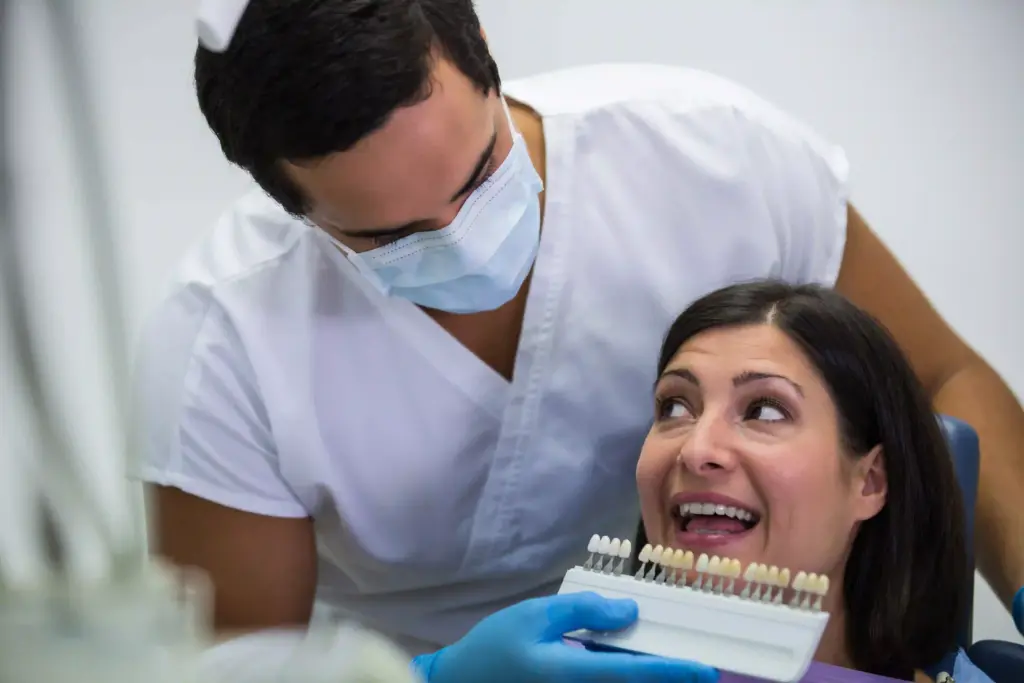
Crowns are like a roof for your house. Just as a roof shields your home from rain and wind, crowns protect your teeth from various factors that can cause damage.
Our clinical findings at Lema Dental Clinic suggest that there are three primary reasons for us to replace dental crowns:
- Invisible Cavities: Underneath the crown, bacteria can easily sneak through and form cavities that are not visible to the naked eye.
- Appearance Issues: It is quite typical that metal-based porcelain crowns leave a dark line that gets more visible as gums recede with time.
- Damaged Components: After many years of usage, crowns may crack or chip. Sometimes, they may even come off completely.
What Happens When You Ignore the Problem
How We Replace a Crown at Lema Dental Clinic
Removing a crown that is glued very tightly to the tooth may appear to be a very alarming procedure. However, thanks to the latest dental equipment, the removal is extremely smooth and painless. Dentist Polen Akkılıç and her dental team are highly skilled at this task. They constantly consider the well-being of the natural tooth underneath.
Steps taken by us to replace a crown:
- Removal in a Very Soft Way: We simply create a very narrow opening into the crown by using small instruments. This leads to breaking the glue that binds the crown to the tooth. The crown comes off quite easily. There is no discomfort in any way.
- Thorough Cleaning: Now, if we examine the natural tooth carefully, we have to acknowledge that it is very important to clean it thoroughly. Any unseen decays have to be removed. Then, we employ the most suitable materials to restore the tooth.
- Digital Scanning: No more mess with mouth putty. We work with 3D scanners that can scan a tooth within just a few seconds. This is quite precise.
- Newest Crown Placement: This belongs to you — a custom-made new crown that is both aesthetically pleasing and of great quality. We use the strongest bonding agent. Your tooth is now both thoroughly protected and cosmetically perfect.
Discerning Between Different Types of Crowns: Is It Time to Move on?
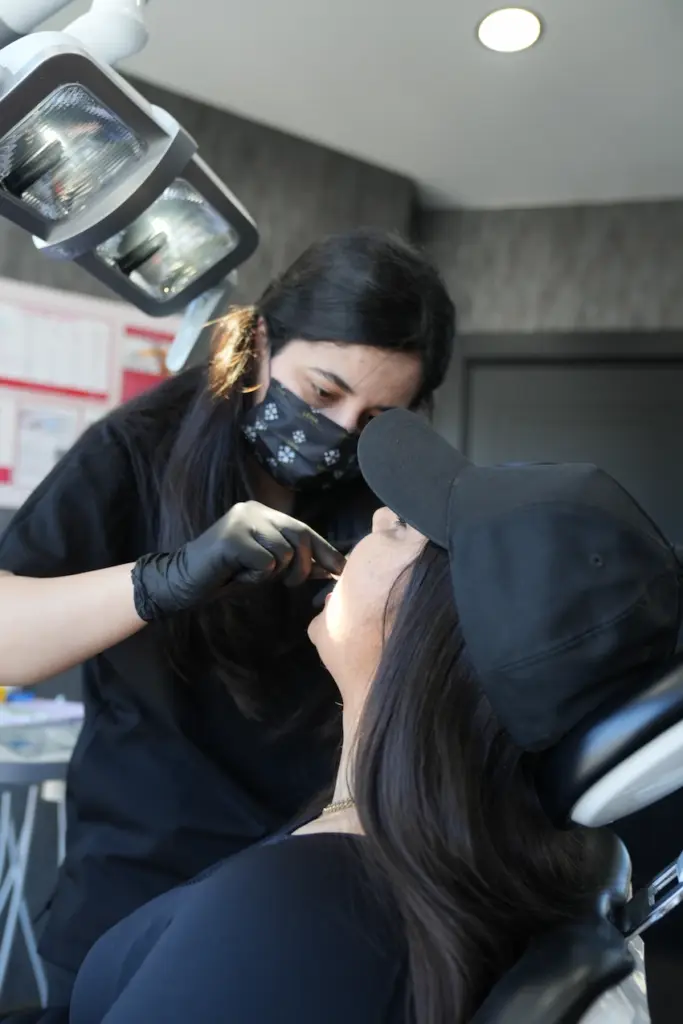
Crowning your tooth anew can also be a possibility of getting a crown that is made of much better materials. This is because the old types are just not that good-looking.
| Feature | Old Metal Crowns (PFM) | Modern Zirconia | E-max (Lithium Disilicate) |
| Appearance | Gums show dark lines. | Clear, bright, and highly realistic. | Extremely great-looking option, amazing for front teeth. |
| Durability | Strong metal base, but the top can get chipped easily. | Great strength and is almost unbreakable. Ideal for molars. | Very resilient, though the hardness of Zirconia is slightly higher. |
| Gingival Health | Metal may cause redness and swelling of the gums. | Completely metal-free, resulting in very healthy gums. | Also, metal-free and highly biocompatible. |
Frequently Asked Questions
Not at all. We numb the tooth completely. You will only feel a little push and vibration. You will not feel any sharp pain.
This is exactly why we take old crowns off! We just cleaned the cavity out. Then, we use a strong filling paste to build the tooth back up. After that, the new crown goes on.
Yes. Many patients travel to Turkey to make their whole smile brighter. If you want white teeth, we will bleach your real teeth first. Then we match the new crown to your bright new smile.
The question remains tied to your tooth health. If the root and base are strong, we can replace the crown many times over our lives.
You need two short visits. On day one, we take off the old crown, scan the tooth, and give you a temporary crown. A few days later, we glued the final crown in place.
- Alqahtani, M., & Aljuboori, F. (2020). Longevity of dental restorations and reasons for replacement. Journal of International Society of Preventive & Community Dentistry, 10(6), 661–667.
- Donovan, T. E. (2004). Longevity of the tooth/restoration complex: A review. Journal of the California Dental Association, 32(2), 122–132.
- Goodacre, C. J., Bernal, G., Rungcharassaeng, K., & Kan, J. Y. (2003). Clinical complications in fixed prosthodontics. The Journal of Prosthetic Dentistry, 90(1), 31–41.
- Pjetursson, B. E., Sailer, I., Makarov, N. A., Zwahlen, M., & Thoma, D. S. (2015). All-ceramic or metal-ceramic tooth-supported fixed dental prostheses (FDPs)? A systematic review of the survival and complication rates. Part II: Multiple-unit FDPs. Dental Materials, 31(6), 624–639.
- Walton, T. R. (2013). An up to 15-year longitudinal study of 515 metal-ceramic FPDs: Part 1. Outcome. The International Journal of Prosthodontics, 26(5), 400–413.

