


Boost hygiene; schedule cleaning safely.
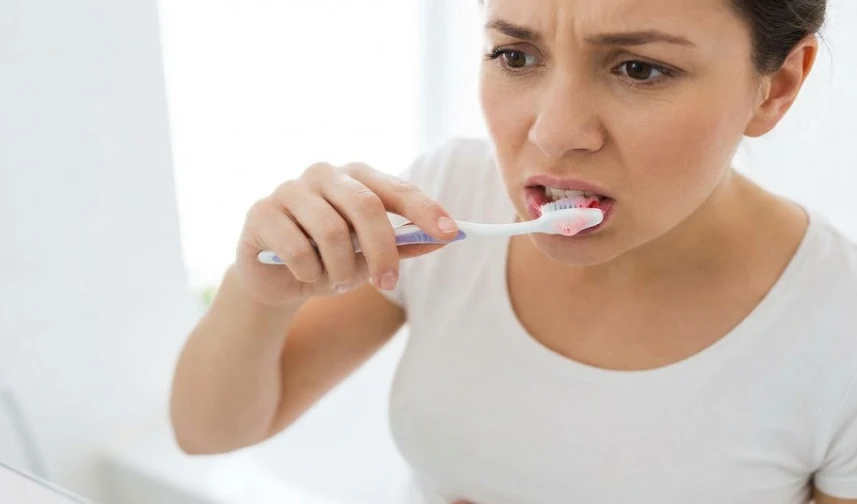
You can imagine getting the “pregnancy glow.” You can even guess the morning sickness and the back pain. Yet nobody warned you that after one day, brushing your teeth would be a nightmare scene from a horror movie.
Bleeding, swollen, or painful gums are probably the most common side effects of pregnancy – and yet the least talked about ones. At Lema Dental Clinic, Turkey, we often see pregnant women who are so terrified they think they’ve got such a severe gum disease that they must have done something terribly wrong.
In fact, it’s not your fault; it’s your hormones.
Professor Doctor Coşkun Yıldız often uses a simple analogy to explain this: Pregnancy gingivitis is a “perfect storm” happening in your mouth. Your oral hygiene could be as good as it can be, but your body’s way of reacting to bacteria has gone through a radical change. Knowing why this happens is the key to dealing with it without putting your or your baby’s health in danger.
Pregnancy and Your Gums: The “Leaky Hose” Analogy
First of all, to solve a problem, you should understand how it works. During pregnancy, your levels of progesterone increase dramatically.
Imagine the blood vessels in your gum tissue as a garden hose. Under normal conditions, those blood vessels are strong and they hold blood very effectively. The hormone progesterone acts like a relaxant that makes the walls of a hose more permeable or “leaky.” It brings about an increase in the amount of blood supplied to the gums which become extremely sensitive as a result.
Thus, the same very small amount of plaque that your gums ignored six months ago now leads to a massive, very aggressive inflammatory reaction. Dentist Polen Akkılıç and her colleagues point out that the most common time for this to occur is the second trimester.
The Danger of “Gentle Neglect”
One of the things that we most frequently see in the clinic is a patient who notices blood after brushing, gets frightened, and in order to avoid pain, stops brushing that area effectively.
This is the last thing you really should be doing. After you pull away from the gumline, it allows plaque to build up which results in the infection getting worse and then more bleeding. Thus, a vicious cycle is being created this way. So, you have to keep on brushing the bleeding areas — carefully, but thoroughly.
Trimester Timeline: When Is It Safe to Treat?
If you are on your way to Turkey or just going to your neighborhood dentist, timing is crucial. Certain dental treatments are not advisable during some trimesters of pregnancy.
| Trimester | The Risk Profile | Recommended Dental Action |
| First (Weeks 1-13) | High. Organ formation is happening. High risk of nausea (morning sickness) eroding enamel. | Emergency Only. Focus on home hygiene. Avoid X-rays and elective treatment. |
| Second (Weeks 14-27) | The Golden Window. The safest time for dental work. Fetus is stable; mom is usually comfortable. | Professional Cleaning (Scaling). Essential to reduce bacterial load. Cavities can be filled safely. |
| Third (Weeks 28-40) | Moderate. Risk of discomfort lying back for long periods (vena cava compression). | Maintenance. Stick to short appointments. Defer major work until after delivery. |
Actionable Steps: The Lema Clinic Protocol

If you are suffering right now, here is what we advise our patients to do immediately:
- Switch to “Soft”: Throw away your medium-bristle brush. Use a soft or extra-soft manual brush.
- The Salt Water Soothe: Dissolve 1 teaspoon of salt in warm water. Rinse daily. Salt reduces edema (swelling) naturally without chemicals.
- Don’t Brush After Vomiting: If you have morning sickness, do not brush immediately after throwing up. The stomach acid softens your enamel; brushing will scrub it away. Rinse with water and baking soda first, then wait 30 minutes.
- See a Professional: You need a deep clean. Removing the hardened tartar (calculus) reduces the irritants that your hormones are reacting to.
FAQ: Common Questions About Pregnancy Gingivitis
“We don’t want to alarm you, but the connection is real. Research suggests a link between severe periodontal disease and premature birth or low birth weight. The inflammation in your mouth releases chemicals (prostaglandins) that can theoretically trigger labor. That is why Professor Doctor Coşkun Yıldız insists that treating gum disease is a vital part of prenatal care, not just cosmetic.”
“Yes, specifically Lidocaine (category B). If you need a cavity filled or a deep cleaning that requires numbing, it is considered safe for both you and the baby. We avoid stronger sedatives, but local numbing is standard practice, especially during the second trimester.”
“It sounds scary, but it is likely a ‘pyogenic granuloma,’ often called a pregnancy tumor. It is benign (not cancer). It is just an overgrowth of tissue due to irritation and hormones. It usually bleeds easily but is painless. In our clinical experience at Lema Dental Clinic, these usually disappear on their own after the baby is born.”
“Ideally, we avoid them. But if you have a dental emergency (like a potential abscess), an X-ray is necessary to diagnose the infection, which is more dangerous than the radiation. We use a double lead apron to cover your abdomen and thyroid, making the radiation exposure to the fetus negligible.”
“Yes. Once your hormone levels stabilize post-partum, the ‘leaky’ capillaries return to normal, and the extreme sensitivity subsides. However, if the bone has been damaged by severe periodontal disease during the pregnancy, that bone won’t grow back, which is why management during those 9 months is critical.”
- Silk, H., et al. (2008). Oral health during pregnancy. American Family Physician, 77(8), 1139-1144.
- Offenbacher, S., et al. (1996). Periodontal infection as a possible risk factor for preterm low birth weight. Journal of Periodontology, 67(10S), 1103-1113.
- Laine, M. A. (2002). Effect of pregnancy on periodontal and dental health. Acta Odontologica Scandinavica, 60(5), 257-264.
- Figuero, E., et al. (2013). Effect of periodontal therapy on birth outcomes: a systematic review of randomized clinical trials. Journal of Clinical Periodontology, 40(s14), S116-S138.
- American Dental Association Council on Access, Prevention and Interprofessional Relations. (2006). Women’s Oral Health Issues. ADA.

