


Screwless implants seal better, while screw implants are mechanically proven.
Screwless vs Screw Implants: Which Is Better for Your Smile?
Opting for dental implants to restore your smile is an extremely important step in your life. It’s closest to what you would get if you had your original teeth back, as far as modern dentistry is concerned. The problem, however, is that once you are in the dentist’s chair, the discussion often turns to various technical details that might be quite intimidating for you.
Actually, we at Lema Dental Clinic have had many discussions with patients regarding the best method of fixing their implants: Should the implants be screw-retained or “screwless“ (cement-retained)?
The fact of the matter is there is no universal solution or one optimal choice for everyone. Both systems represent a bridge going from your titanium root to your porcelain crown which is visible to the world. However, the method of securing this bridge can affect your experience with it several years later.
The Basics: Defining What the Connection Is
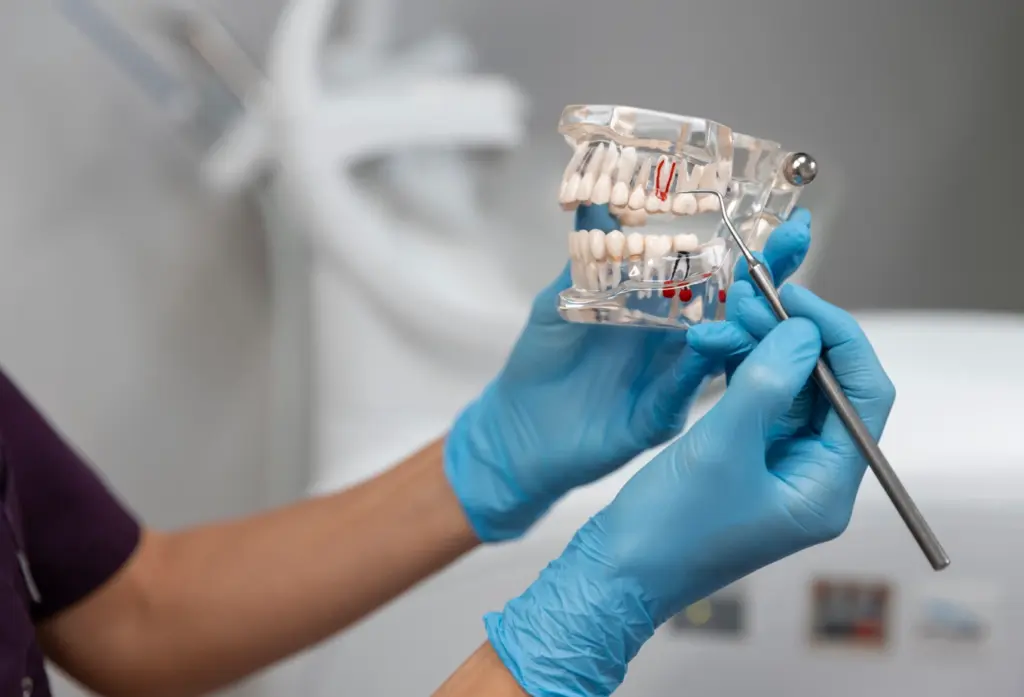
If you want to grasp the difference, compare your implant to a luxury furniture piece. A screw-retained implant is like a modular desk which is held together very tightly by bolts; you can dismantle it and assemble it again at any time. A screwless (cement-retained) implant resembles a custom-built cabinet where the parts are glued with super-strong adhesive. You can’t find the seams but once everything has set, it’s for a long time.
In our practice at Lema Dental Clinic, we have witnessed patients giving priority to aesthetics, while our surgeons, including Prof. Dr. Coşkun Yıldız, emphasize preserving the health of tissues and the retrievability of implants in the long run.
Screwless (Cement-retained) Implants: The Choice of Aesthetics
A great number of patients at first decide to go with screwless. One of the main reasons is that the porcelain stays perfect as there is no access hole for ascrew on the occlusal surface of the tooth.
Dr. Polen Akkılıç and her team usually advise this method for your front teeth—the so-called aesthetic zone. When you smile, you don’t want to even remotely distinguish a composite filling where a screw hole was covered.
The drawback, though, is that the “adhesive” (dental cement) which is utilized to fix the crown to the abutment can occasionally be forced underneath the gumline. Should the sludge not be perfectly cleaned, it will certainly lead to the growth of soft tissue inflammation resulting in peri-implantitis. Imagine it as a tiny splinter lodged under your fingernail which, if you don’t get rid of it, will definitely cause you trouble.
Screw-Retained Implants: The Rationale for Long-Term Care
Anyway, the question is, why do most surgeons still choose screws? Well, the main reason is retrievability.
Say the crown chips or the implant demands a professional cleaning several years down the line, then a screw-retained crown can be quite easily taken off without any damage being done to the implant or the crown itself. The only thing we do is to unscrew it, do the necessary work, and put it back.
Here in Turkey where our clinic is located, we rely on the latest technology in 3D imaging which helps us decide on the exact place of screw holes that is, to the unaided eye, practically invisible thus combining the comfortable handling of a screw with the look of a flawless tooth.
Comparing the Two: At a Glance
| Feature | Screw-Retained Implants | Screwless (Cement-Retained) |
| Aesthetics | Good (Minor hole filled with resin) | Excellent (No visible holes) |
| Retrievability | High (Easy to remove/repair) | Low (Often requires breaking the crown) |
| Gum Health | Higher safety (No cement residue) | Risk of “Cementitis” if not careful |
| Complexity | Requires precise angulation | More forgiving during placement |
| Longevity | Excellent for long-term maintenance | Excellent for immediate visual appeal |
The Lema Method: Which One Is Right for You?
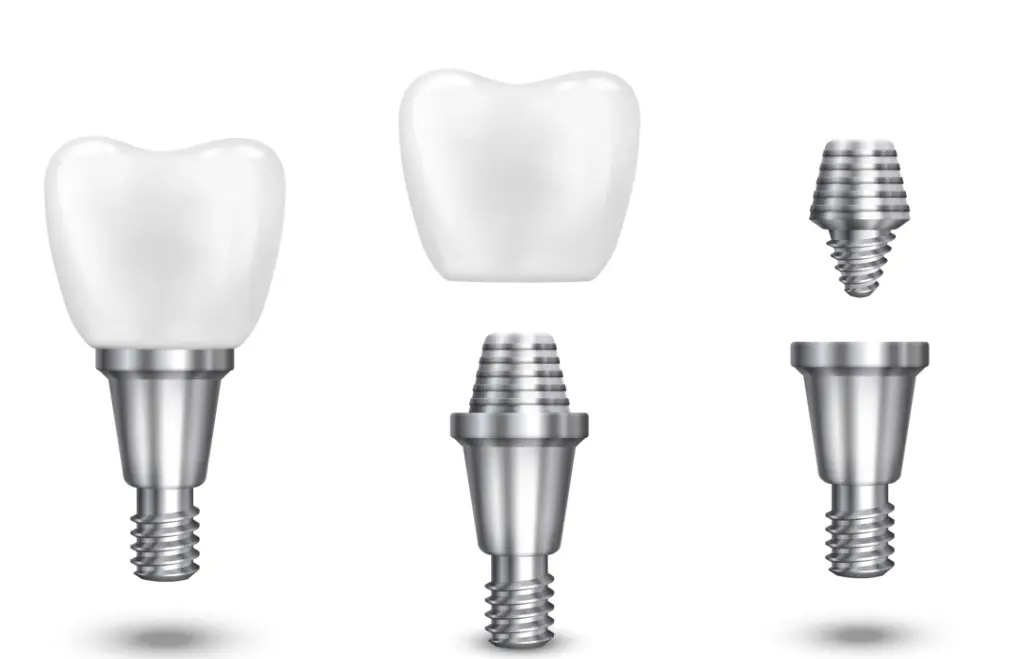
It’s something we observe in the clinic every day. When we are replacing a molar at the back of your mouth—these are the workhorse teeth that handle heavy chewing—we generally favor the screw-retained method. The ease of upkeep is worth a slight visual compromise.
On the other hand, if we are making a Hollywood smile for your front teeth, the screwless one-step further can achieve almost flawless translucency. Professor Doctor Coşkun Yıldız frequently remarks that the “best” option is always the one that works perfectly with the anatomy of your jawbone.
Your jawbone basically serves as a building foundation. If your foundation is set at a certain angle, a screw might even come out through the front of the tooth—which is a nightmare as far as aesthetics go. In such situations, a cement-retained crown enables us to “bend” the angle slightly and still give you a perfectly straight smile.
Why Patients Opt for Turkey to Get This Done
Going abroad to Turkey for dental procedures is not only about the money; it also means getting treated with the most advanced technology and skills. We at Lema Dental Clinic employ CAD/CAM technology to create your crowns with micron-level precision. Whether it is a screw or cement that will be used, the tightness of the fit is such that it almost eliminates the risk of bacteria build-up.
FAQ: Straightforward Answers by Our Specialists
Absolutely not. The “screw vs. screwless” choice is a part of the procedure only after the implant has been integrated with your bone. Usually, crown fitting is a painless, “pressure-only” visit.
Although it is a highly unlikely scenario, it may be possible after several years of heavy chewing. However, the most positive aspect of this working principle is that we can easily retighten it during a quick five-minute appointment.
We only use medical-grade, biocompatible cements. A real allergy case is hardly ever possible. The main risk is “mechanical” irritation due to excess cement, which is mitigated by strictly following clinical protocols.
The access hole is sealed with a composite resin of the identical shade as the neighbouring tooth and it is practically invisible. Only if he/she looks through a magnifying glass at the tooth can a person tell.
If you keep good oral hygiene and regularly get your teeth checked at the clinic both can potentially last you a lifetime. The mechanical bond may need a “tune-up” in 10 to 15 years but the titanium root is for the rest of your life.
- Guertler, A., & Burnside, G. (2020). Comparison of complications in screw-retained and cement-retained implant-supported crowns. Journal of Prosthetic Dentistry, 124(6), 672-678.
- Pauletto, N., et al. (1999). Complications associated with excess cement in fixed implant-supported restorations. Clinical Oral Implants Research, 10(4), 299-305.
- Sherif, S., et al. (2014). A systematic review of screw- versus cement-retained implant-supported fixed reconstructions. The International Journal of Oral & Maxillofacial Implants, 29, 102-120.
- Wittneben, J. G., et al. (2017). Clinical performance of screw-retained versus cement-retained fixed implant reconstructions: A systematic review. International Journal of Prosthodontics, 30(1), 13-24.
- Yıldız, C. (2022). Advanced Prosthodontic Protocols in Modern Implantology. Journal of Turkish Dental Association, 38(2), 45-52.

