


Persistent bleeding and swollen, red gums.
It usually begins with small signs. After brushing, you spit the toothpaste(out) into the sink, and there is a very vague trace of pink in the toothpaste foam. You neglect it. Maybe it was too hard of a brush.
After some weeks, what was pink has become red, and your gums get sore when you floss. This is usually the point when patients turn to Google for answers to questions just like the one you are asking now: “Is this bad?”
As clinical partners of top maxillofacial surgeons in Turkey at Lema Dental Clinic, we see this concern almost every day. The truth is, “bad” in dental health can be a range of different things. Gum disease starts with gingivitis. It is the body’s alarm system—a biological warning bell telling you that bacteria are taking over.
What is most important is the fact that gingivitis can be healed. However, if you disregard the warning signs of it becoming “bad,” it will develop into something that cannot be reversed.
The “Turtleneck” Analogy: Understanding Your Gums
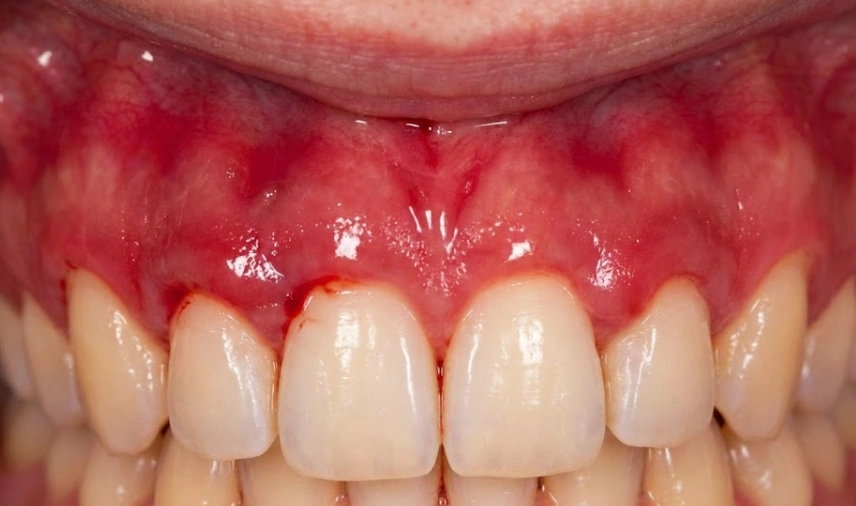
Before you figure out if your condition is worsening, you need to know what healthy looks like.
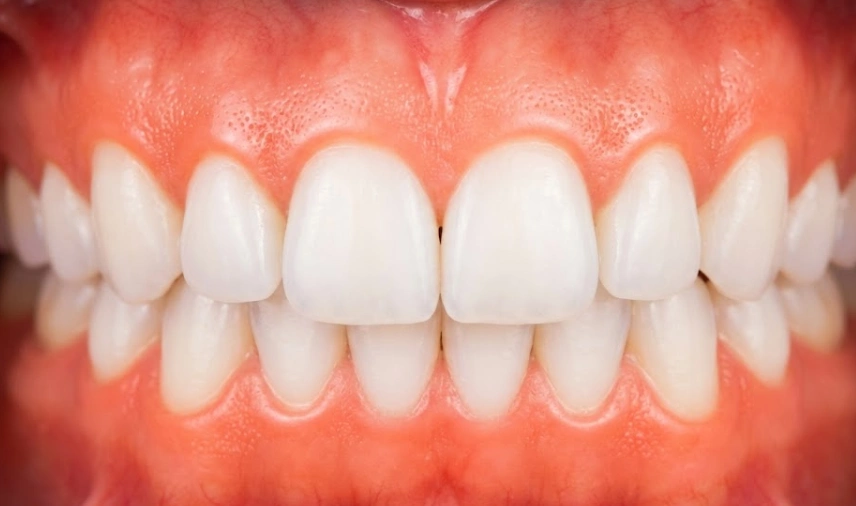
Healthy gums have a coral pink color and a texture similar to the skin of an orange. What is more, gums should be so tight around the teeth that even an extremely close-fitting turtleneck sweater would not be able to keep the cold away.
Imagine your turtleneck is being pulled out to the point of being lost in the deep freeze. It’s happening because the bacteria in plaque along the gum line have accumulated, making those bacteria release toxins that irritate the tissue. The body responds by inflammation. Hence, your “turtleneck” becomes swollen, puffed, and red with irritated skin. Moreover, the tight seal will be replaced by pockets where food and more bacteria can hide, thus the cycle continues.
The Four Clinical Signs That Gingivitis Is Advancing
At Lema Dental Clinic, based on our clinical experience, we advise patients not to determine the severity of their condition by pain. In fact, early gum disease is mostly without pain. However, pay attention to a combination of visual and sensory signs that are continuously worsening.
1. The Color Shift: From Coral to Crimson
Gums in a healthy state are pale pink (though the natural pigmentation varies depending on ethnicity). The first sign of a problem is when the color of the gums progressively changes towards deeper reds or even becomes purple.
The “Bad” Threshold: Redness at the very edge of the gumline only indicates an early stage of the problem. If the entire gum tissue in between your teeth appears swollen, shiny, and very red (a condition that can be compared to an overfilled water balloon), the inflammation is at its peak.
2. The Bleeding Factor: Occasional vs. Provoked
Bleeding is a symptom that should never be ignored. It is like the scalp bleeding when you brush your hair.
The “Bad” Threshold: Mild gingivitis is characterized by the presence of bleeding only if you floss the area in question very thoroughly and aggressively. However, if your gums start to bleed very easily—for example, when you eat crunchy food, during normal brushing, or sometimes even spontaneously without touching them—your condition is on its way to be more severe. Dentist Polen Akkılıç and her team use this clinical marker, “provoked bleeding,” as one of the main indicators that they are searching for during an examination.
3. The Texture Change: Firm vs. Spongy
The touch of healthy gums is usually firm and very elastic too.
The “Bad” Threshold: Try to run your tongue or a clean digit lightly over the surface of your gums. Do the gums feel soft, soggy, or “spongy”? This sponginess is brought on by an excessive accumulation of the fluid, which, in turn, has been caused by chronic inflammation. Loss of tissue structure.
4. The Silent Symptom: Persistent Halitosis
Everybody may have had bad breath after consuming a meal containing garlic but constant, unending bad breath (halitosis) that cannot be eliminated by good oral hygiene is unusual.
The “Bad” Threshold: At the advanced stage of gingivitis, deep pockets develop beneath the gumline. These pockets provide the ideal environment for the growth of anaerobic bacteria, which produce volatile sulfur compounds that give off the bad smell. Most often the patients who come to our clinic in Turkey do not notice their breath but their partners do.
His part of healing is most daunting: You can’t just treat gums when the bone commitment is there.
Essentially here is the point we emphasize to our patients: Gingivitis is related to the gums. Periodontitis is related to bone.
The instance that gingivitis becomes really “bad” is also when it stops being gingivitis at all. It gradually becomes periodontitis. The physical degeneration and structural weakening of teeth-supporting ligaments and bones are symptoms of a more serious level of infection and inflammation that has gone deeper into the tissue.
Professor Doctor Coşkun Yıldız, our chief oral surgeon, sometimes likens this to the following: When the fire is only burning the curtains of a room, it is like gingivitis. It is untidy, but the house is still standing. Periodontitis is the result of the fire which has reached the foundation beams. The house itself is damaged. Once the bone is gone, it is impossible to naturally grow it back.
Stages Side by Side: A Clinical View
Trying to figure out how serious your condition is can be tricky when checking yourself. The table below shows the step from healthy to illness.
| Feature | Healthy Gums | “Bad” Gingivitis (Severe) | The Danger Zone (Early Periodontitis) |
| Appearance | Coral pink, firm, tight stippling. | Angry red, swollen, shiny, smooth texture. | Similar to severe gingivitis, but gums may start receding (teeth look longer). |
| Bleeding | None. | Bleeds easily upon brushing or eating. | Spontaneous bleeding; pus may sometimes be present. |
| Structure | Tight “turtleneck” fit around teeth. | Puffy, loose fit; “spongy” feel. | Deep pockets form; teeth may feel slightly mobile or loose. |
| Reversibility | N/A | Completely Reversible with professional care. | Irreversible Damage. Treatment can stop progression but cannot undo bone loss. |
Clinical Answers to Your Top Gum Health Worries
Not necessarily. Sometimes, in smokers specifically, bleeding is masked because nicotine constricts blood vessels. You could have severe disease without the bloody warning sign. Furthermore, if you stop flossing because it hurts, the bleeding might appear to stop, but the infection is actually digging deeper. The only way to be sure is a periodontal probing by a professional.
This is the biggest trap. It usually does not hurt until it is in the advanced stages of periodontitis, where an abscess forms. Because it is silent, people ignore it until their teeth become loose. We see this constantly at Lema Dental Clinic—patients arriving in Turkey are surprised by the extent of damage because they felt no pain.
You can manage early gingivitis at home, but “bad” gingivitis requires intervention. Once plaque hardens into tartar (calculus) below the gumline, no amount of brushing or mouthwash will remove it. It requires professional scaling and root planing to mechanically remove the irritant so the gums can heal.
While general dentists treat gingivitis everywhere, complex cases often require advanced protocols. At Lema Dental Clinic, we utilize laser-assisted periodontal therapy, which is less invasive and promotes faster healing than traditional surgery. For international patients, combining this advanced care with the cost advantages in Turkey makes elite-level periodontal stabilization accessible.
It varies wildly based on genetics, diabetes status, smoking, and stress. For some, it takes decades. For others with certain risk factors, the progression from severe gingivitis to destructive periodontitis can happen rapidly over a few years. The unpredictability is why immediate action is necessary.
- Chapple, I. L., et al. (2018). Primary prevention of periodontitis: managing gingivitis. Journal of Clinical Periodontology, 45(S20), S71-S76.
- Lang, N. P., & Bartold, P. M. (2018). Periodontal health. Journal of Periodontology, 89(S1), S9-S16.
- Mariotti, A., & Hefti, A. F. (2015). Defining periodontal health. BMC Oral Health, 15(S1), S6.
- Murakami, S., et al. (2018). Dental plaque–induced gingival conditions. Journal of Periodontology, 89(S1), S17-S27.
- Trombelli, L., Farina, R., Silva, C. O., & Tatakis, D. N. (2018). Plaque-induced gingivitis: Case definition and diagnostic considerations. Journal of Clinical Periodontology, 45(S20), S44-S67.

