


Use a floss threader or super floss to clean under the fixed bridge.
The smile is something you couldn’t possibly be careless with, right? With the help of a fixed bridge, you’ve been able to eat that delicious dish you missed all these years, take unlimited selfies, and show your radiant smile again. But the sad truth that we disclose to our patients at the dental clinic on the most regular basis is: a bridge is only as good as the natural teeth it is supported by.
At Lema Dental Clinic in Turkey, Professor Doctor Coşkun Yıldız always tells our patients that although the bridge itself cannot develop a cavity, the natural teeth supporting the bridge which are called the “pillars” of the bridge, indeed can. If plaque is allowed to accumulate under the “floating” tooth (pontic), then that is exactly like allowing rust to settle on the base of a bridge. The entire bridge and the supporting teeth will be at risk if excessive plaque is not removed.
Why Standard Flossing Just Doesn’t Cut It?
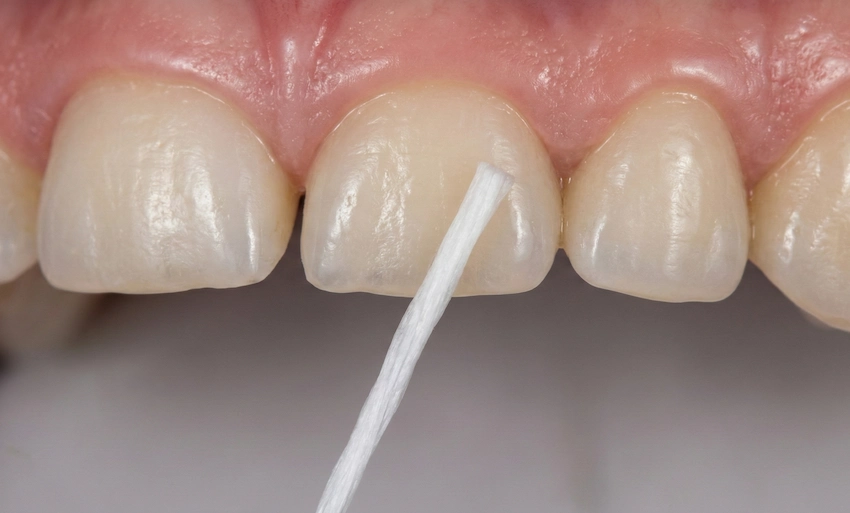
Imagine a fixed bridge as a collection of townhouses attached. You can’t simply drop a piece of string between them because they share a roof and walls. Normal dental floss works on individual teeth, but a bridge needs a special tool to get under its parts.
Dr. Polen Akkılıç and her team explain that the biggest reason a bridge fails is that the patient ignores the space between the bridge and the gumline. Food particles and bacteria are attracted to these secret places. Without regular cleaning, the gums get irritated and inflamed, which may lead to gingivitis or, the anchor teeth may decay.
The Tools of the Trade: Your Bridge Maintenance Kit
If you want to maintain your restoration in top-notch condition, it is necessary to be well-equipped with suitable instruments. Flossing could be the least complicated one and quite effective in getting the teeth healthy, but use it with a bit of ”sharpness”.
1. The Floss Threader
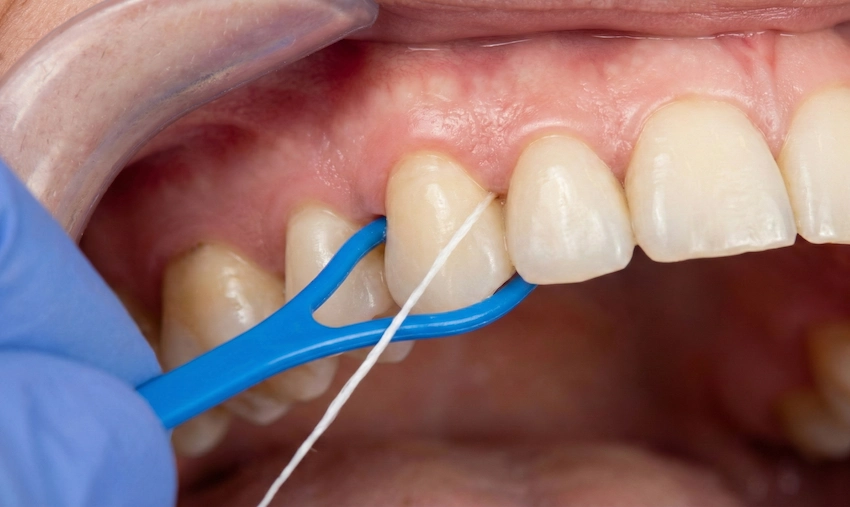
This is the dental care “needle and thread” you might be missing. A floss threader is a pliant plastic loop that you can use to pass your conventional floss through the gap between your bridge and gums.
The method: Insert one end of the threader into the thread, push the other end under the bridge with the rigid side, and then pull it up. After the floss is under the bridge, take the dental floss and curve it in a ‘C’ shape around the natural tooth and brush against the bottom of the dental pontic.
2. Super Floss
This is a pre-cut floss that has a stiff end for going under the bridge, a fuzzy middle part for cleaning the gums, and regular floss for cleaning the teeth. It basically functions as a threader and floss combined and lots of patients at Lema are simply used to it and don’t require another threader.
3. Interdental Brushes
Truth be told, a “little brush” can be more effective than a “string” at times. Because of their small and tapered size, these brushes can be inserted into a tight space. If the space under the bridge is larger or if you generally find it difficult to use your fingers, then this is your best bet.
4. The Water Flosser (Oral Irrigator)
One cannot help but wonder whether water alone does the job! Even though manual flossing cannot be totally substituted with any other method, a water flosser is a really good adjunct. It works by releasing a concentrated water jet to the areas you floss but sometimes miss.
Comparison of Cleaning Methods
| Method | Best For | Ease of Use | Effectiveness |
| Floss Threader | Precision cleaning | Moderate (requires practice) | High |
| Super Floss | Convenience & travel | Easy | High |
| Interdental Brush | Large gaps / Arthritis | Very Easy | Moderate to High |
| Water Flosser | Sensitive gums / Implants | Very Easy | High (Combined with floss) |
The Lema Method: Prevention is the Best Medicine
As we were working at Lema Dental Clinic, we realized that even the most amazing dental work would not be durable without patient care. When you visit our office in Istanbul, Turkey, our hygiene team never lets you go until they have thoroughly treated you. We even rehearse the steps with you.
We want the act of flossing under your bridge to feel as natural as if you were doing your shoelaces. It may, at first, be a bit inconvenient, just as when you first try to play a musical instrument; however, after a week, your hands will automatically go into the correct motion without you even thinking about it.
Common Mistakes That Can Harm You
Anyway, let us work out what really happens. Some patients are wrongly making the mistake of only shoving the floss through the gap without touching any of the teeth. You have to be sure that you are backing the teeth you are wrapping your hand around. Another error that is often made is being too forceful. Your gum is like a very fine silk; therefore, you should apply firm but gentle pressure.
Frequently Asked Questions (FAQ)
In the beginning, if you haven’t been maintaining the area regularly, your gums will probably be very sensitive and bleeding from even slight force can be an indication of inflammation. However, as dentist Polen Akkılıç explains, this should not be a problem after a week if you clean the area gently and regularly. If you still experience pain, you should come to see us at the clinic.
The best that you can do is daily. Usually, we recommend doing it before going to bed so that there won’t be any food particles under the restoration during your sleep when saliva production is at a minimum.
Don’t push it. If the gap is very small, it could be the tartar that has built up or it might be that the bridge has been placed in a certain way. Professor Doctor Coşkun Yıldız can have a look at the bridge and see if there is a good ‘hygienic’ space that can be cleaned.
Water flossers might be completely okay, and they are quite good at removing the pieces of food that have been loosened but the ‘biofilm’ which is the layer of bacteria, is a bit difficult for them. Imagine that you are washing a car: a hose can wash off the mud, but to make it really clean you need a sponge. So, try to use both if you can.
If we think of matching the best materials that are used here at Lema Dental Clinic with your very diligent home care, the bridge can last for a lifetime, 10-15 years and then some. Most definitely it is the cleanliness that is kept which determines the longevity of your dental bridge.
- Akbar, J. H., & Al-Tawil, K. (2022). Maintenance of Fixed Prosthodontics: A Clinical Guide for Longevity. Journal of Prosthetic Dentistry.
- Lindhe, J., & Lang, N. P. (2015). Clinical Periodontology and Implant Dentistry. Wiley-Blackwell.
- Pihlstrom, B. L., et al. (2005). Periodontal Diseases. The Lancet, 366(9499), 1809-1820.
- Sanz, M., & Beighton, D. (2017). Biofilm management and the prevention of periodontal diseases. Periodontology 2000.
- Turkish Dental Association (TDA). (2024). Oral Hygiene Protocols for Fixed Restorations.

