


Powder adhesive mixes with saliva to help dentures stick.
Loose dentures can be a major hassle, not only aesthetically, but in terms of confidence, eating enjoyment, and even the anxiety you can have of your teeth slipping out of place when talking. Basically, you can never be totally in the moment.
The truth is, our faces change as the years go on – your jaw becomes shorter and thinner. Even dentures that looked great initially may be a little short a couple years on – and then the question is: where do adhesives come in?
Many people go for the heavy pastes. However, the powdered form denture adhesives is a great, effortless option to choose. Yet, the question remains: how does that small amount of powder give so much hold? Let us dig a bit deeper into it.
The Mechanics Behind the Hold
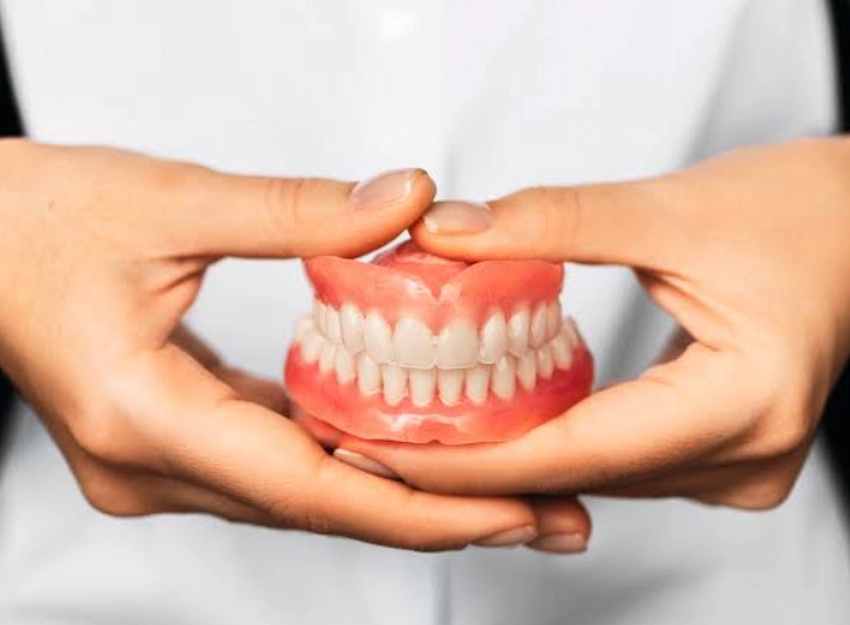
The working principle is actually quite simple once one considers the mouth, a very moist place indeed, as Prof. Dr. Coşkun Yıldız explains. The fact that the mouth has a very high moisture level is important because, otherwise, the powder adhesive wouldn’t be able to create an effective film to help the denture stay in the mouth in the first place.
One could imagine powder being like thousands of miniature dry sponges that have been powdered. These kinds of materials consist of ingredients that dissolve in water; therefore, it is quite normal for us to spread some dry powder onto a wet mouthpiece, then place it into our mouth immediately since the powder mixes up with natural saliva at lightning speed.
The tiny balls expand, and the balls become interconnected, thus forming a very sticky layer with tiny holes in it so that the surface of the artificial tooth touches the surface of the mouth. That is very similar to a super tight, custom-shaped suction cup. A little moisture triggers everything, making a close seal in between the teeth and soft tissues that you can see in the picture below. The seal not only keeps teeth in place, but it also keeps food from sticking to the teeth and falling into the mouth and getting stuck in there.
Powder vs. Paste: Which is Right for You?
Which one is better: powder vs. cream/paste? Both have the same purpose of helping you to stay with the same denture without changing for many months. On the other hand, their applications are a bit different.
| Features | Powder Adhesives | Cream/Paste Adhesives |
| Film Thickness | Super thin, hardly detectable | Heavy, may alter the bite |
| Cleaning | Very simple, just rinsing with water | May become adhesive and difficult to take off |
| Mess | Clean, not likely to spill | May cause leakage to the corners if there is too much of it |
| Recommended | Well-fitted dentures requiring little help | Dentures that are quite old with larger gaps |
| Longevity | Up to 12 hours | Up to 12 hours |
Special Advice on Using Powder from Dentists in Istanbul
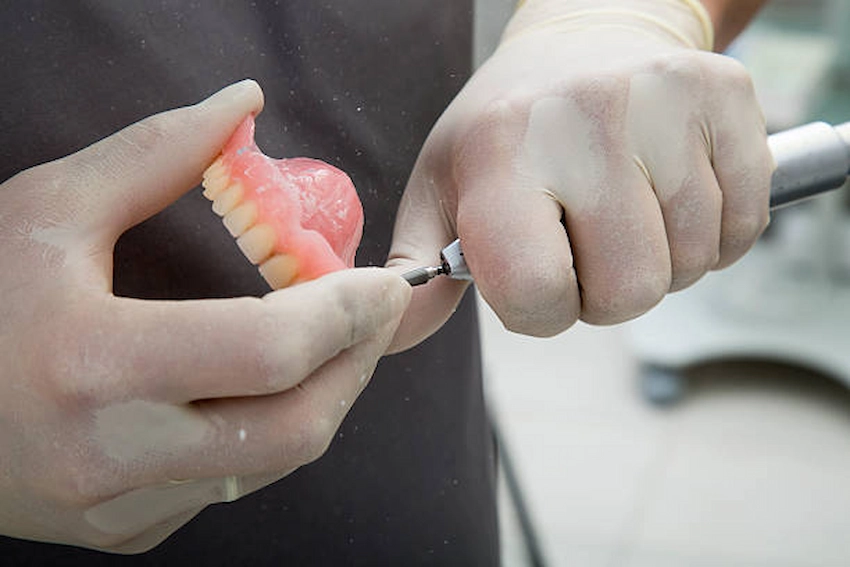
We have observed a pattern in the clinic: a lot of our patients give up on using powder simply because they apply it wrong.
A dentist in Turkey at Lema Dental Clinic, Dentist Polen Akkılıç and her team, guide patients very precisely with instructions on how to properly put on the denture. Below is the simple way you can do your best at home:
- Wash Your Denture with Some Water: Wet the tooth so that it has a little moisture. The trick lies here. The powder will start working only with the presence of water.
- Very Light Layer Only: Do not open the bottle all at once. Take out only a little powder at a time by pushing against the bottle. A very fine layer should cover the part that the denture rests on inside the mouth.
- Shaking Off the Extra: Hold your denture over the sink and very carefully tap on its back side until all the excess powder has fallen off. This way, you will be able to get only one layer, where your moist surface was, and nothing else.
- Getting Good Grip: Place the denture in your mouth, bite together, and do not stop biting for a few seconds. That way, the denture will stay in a set position.
Frequently Asked Questions
What is the recommended amount of powder?
Sprinkle powder just enough to get a fine layer that evenly covers all the areas of the denture that are going to come in contact with the gum, just like dusting a pan with flour before baking. If the surface of the denture is covered in clumps of powder, that means that there was an excessive amounts used.
Is it possible to use powder on my two dentures? I.e., one above one.
Yes. With an upper denture, it is like giving a denture some extra suction force through a tiny vacuum. Whereas, for a lower denture, it is more about creating a sort of an extra layer to prevent sliding, because, due to the structure and orientation of lower jaws (with very few teeth to hold a lower denture in place compared to the upper one), we always have issues with the lower ones.
How to clear away the remaining part of the powder from the gums?
Apart from the advantages it has in being extremely good adhesive, one of the major benefits of using powder is that it’s not going to stick to your gums. It is really simple to get rid of it – just drink some water and then, with the help of a gentle motion, rub your gums with an ultra-soft toothbrush, for example, or you may also use a wet cloth.
How safe is it if I accidentally ingest a small amount of this substance?
All of the powders that you can purchase from your regular supermarkets are composed of harmless ingredients, not only to use externally but also accidentally to swallow them. However, swallowing a small amount is definitely not a reason to worry about the potential harm it may cause to the body.
Will the use of powder really fix my very loose denture?
Towards a more secure denture, adhesives will help, and a tighter grip to the mouth is achieved as a result of that. But, on the other hand, it does not really correct an ill fit. In most severe cases, dentures that either rock on the bottom with little resistance from the gum or that cause the patient pain will require a clinic visit to recontour the dentures or even to consider dental implants to replace the natural teeth completely if the bone loss is significant.
Academic References
- Grasso, J. E. (2004). Denture adhesives: changing attitudes. The Journal of the American Dental Association, 135(1), 81-86.
- Koran, A. (1989). The use of denture adhesives as an aid to denture treatment. The Journal of Prosthetic Dentistry, 62(6), 711-715.
- Bartlett, D. W., & Carter, N. E. (2013). The role of denture adhesives in the management of complete dentures. British Dental Journal, 214(8), 385-388.
- Zhao, K., & Cheng, X. R. (2011). Effect of different types of denture adhesives on the retention of maxillary complete dentures. Journal of Oral Rehabilitation, 38(6), 462-468.
- Coates, A. J. (2000). Usage of denture adhesives by complete denture patients. International Journal of Prosthodontics, 13(1), 43-48.

