

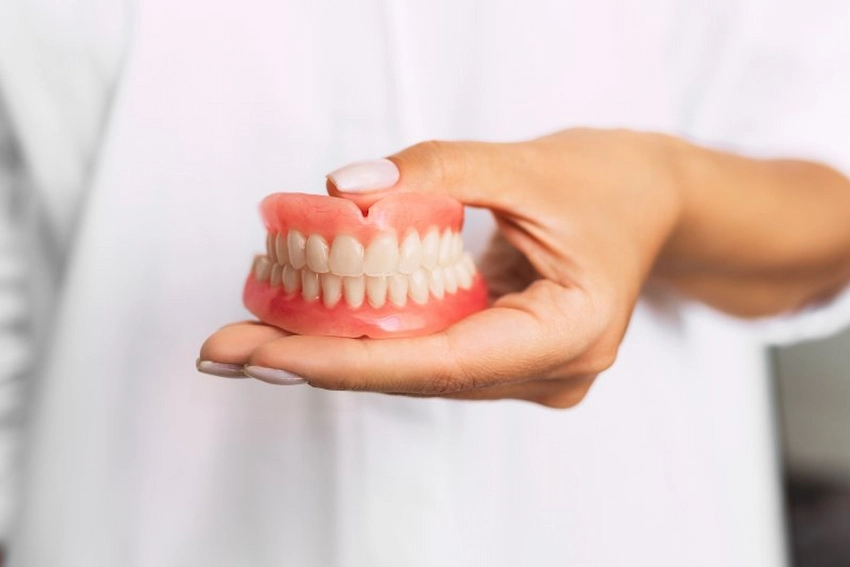
Jak działa proszkowy klej do protez zębowych?
Proszkowy klej do protez miesza się ze śliną, aby pomóc protezom utrzymać się na miejscu.
Luźne protezy zębowe mogą być dużym problemem, nie tylko estetycznym, ale także wpływającym na pewność siebie, przyjemność z jedzenia, a nawet powodować lęk przed wypadnięciem zębów podczas rozmowy. Zasadniczo, nigdy nie można być w pełni obecnym w danej chwili. Prawda jest taka, że nasze twarze zmieniają się z biegiem lat – szczęka staje się krótsza i cieńsza. Nawet protezy, które początkowo wyglądały świetnie, po kilku latach mogą okazać się nieco za krótkie – i wtedy pojawia się pytanie: jaką rolę odgrywają kleje? Wiele osób wybiera gęste pasty. Jednakże, forma proszkowa kleju do protez jest świetną, niewymagającą wysiłku opcją. Pozostaje jednak pytanie: jak tak niewielka ilość proszku zapewnia tak silne utrzymanie? Przyjrzyjmy się temu bliżej.Mechanizm działania kleju
Proszek czy pasta: Co jest dla Ciebie odpowiednie?
Co jest lepsze: proszek czy krem/pasta? Oba mają ten sam cel – pomóc Ci utrzymać tę samą protezę bez konieczności jej wymiany przez wiele miesięcy. Z drugiej strony, ich zastosowania nieco się różnią.| Cechy | Kleje proszkowe | Kleje w kremie/paście |
| Grubość warstwy | Super cienka, prawie niewykrywalna | Gruba, może zmieniać zgryz |
| Czyszczenie | Bardzo proste, wystarczy spłukać wodą | Może stać się lepka i trudna do usunięcia |
| Bałagan | Czysty, mało prawdopodobne rozlanie | Może wyciekać w kącikach ust, jeśli jest jej za dużo |
| Zalecane dla | Dobrze dopasowane protezy wymagające niewielkiego wsparcia | Dość stare protezy z większymi szczelinami |
| Trwałość | Do 12 godzin | Do 12 godzin |
Specjalne porady dotyczące stosowania proszku od dentystów w Stambule
- Umyj protezę wodą: Zwilż protezę, aby była lekko wilgotna. W tym tkwi sekret. Proszek zacznie działać tylko w obecności wody.
- Tylko bardzo cienka warstwa: Nie otwieraj butelki od razu. Wyciśnij tylko niewielką ilość proszku, naciskając na butelkę. Bardzo cienka warstwa powinna pokryć tę część protezy, która opiera się na dziąsłach w jamie ustnej.
- Strząśnij nadmiar: Trzymaj protezę nad zlewem i bardzo delikatnie stukaj w jej tylną stronę, aż cały nadmiar proszku odpadnie. W ten sposób uzyskasz tylko jedną warstwę, tam gdzie była wilgotna powierzchnia, i nic więcej.
- Stabilne osadzenie: Umieść protezę w ustach, zaciśnij zęby i nie przestawaj zaciskać przez kilka sekund. W ten sposób proteza pozostanie w ustalonej pozycji.
Często zadawane pytania
Piśmiennictwo naukowe
- Grasso, J. E. (2004). Denture adhesives: changing attitudes. The Journal of the American Dental Association, 135(1), 81-86.
- Koran, A. (1989). The use of denture adhesives as an aid to denture treatment. The Journal of Prosthetic Dentistry, 62(6), 711-715.
- Bartlett, D. W., & Carter, N. E. (2013). The role of denture adhesives in the management of complete dentures. British Dental Journal, 214(8), 385-388.
- Zhao, K., & Cheng, X. R. (2011). Effect of different types of denture adhesives on the retention of maxillary complete dentures. Journal of Oral Rehabilitation, 38(6), 462-468.
- Coates, A. J. (2000). Usage of denture adhesives by complete denture patients. International Journal of Prosthodontics, 13(1), 43-48.
Pytania pacjentów
What is the recommended amount of powder?
Sprinkle powder just enough to get a fine layer that evenly covers all the areas of the denture that are going to come in contact with the gum, just like dusting a pan with flour before baking. If the surface of the denture is covered in clumps of powder, that means that there was an excessive amounts used.
Is it possible to use powder on my two dentures? I.e., one above one.
Yes. With an upper denture, it is like giving a denture some extra suction force through a tiny vacuum. Whereas, for a lower denture, it is more about creating a sort of an extra layer to prevent sliding, because, due to the structure and orientation of lower jaws (with very few teeth to hold a lower denture in place compared to the upper one), we always have issues with the lower ones.
How to clear away the remaining part of the powder from the gums?
Apart from the advantages it has in being extremely good adhesive, one of the major benefits of using powder is that it's not going to stick to your gums. It is really simple to get rid of it - just drink some water and then, with the help of a gentle motion, rub your gums with an ultra-soft toothbrush, for example, or you may also use a wet cloth.
How safe is it if I accidentally ingest a small amount of this substance?
All of the powders that you can purchase from your regular supermarkets are composed of harmless ingredients, not only to use externally but also accidentally to swallow them. However, swallowing a small amount is definitely not a reason to worry about the potential harm it may cause to the body.
Will the use of powder really fix my very loose denture?
Towards a more secure denture, adhesives will help, and a tighter grip to the mouth is achieved as a result of that. But, on the other hand, it does not really correct an ill fit. In most severe cases, dentures that either rock on the bottom with little resistance from the gum or that cause the patient pain will require a clinic visit to recontour the dentures or even to consider dental implants to replace the natural teeth completely if the bone loss is significant.