


Professional cleaning plus rigorous hygiene.
At first, it usually begins very innocently. Say you have been brushing your teeth and after spitting your toothpaste, you see a pink streak. You rinse, maybe a little more blood, and then think, “I guess I brushed too hard.”
Honestly, I don’t think you did. Healthy gums, in fact, function like a tight, waterproof seal surrounding your teeth; they should not bleed when touched. The blood is your body’s signal that there is a problem. It is the initial and sometimes the only indication that your gums are irritated due to Gingivitis.
In our clinical practice at Lema Dental Clinic, Turkey, we see that a lot of patients ask for a “magic mouthwash” that will make the gum bleeding stop overnight. However, gum disease cannot simply be alleviated with a pill like a headache. It is a biological response to an unwanted intruder.
The “Splinter” Analogy
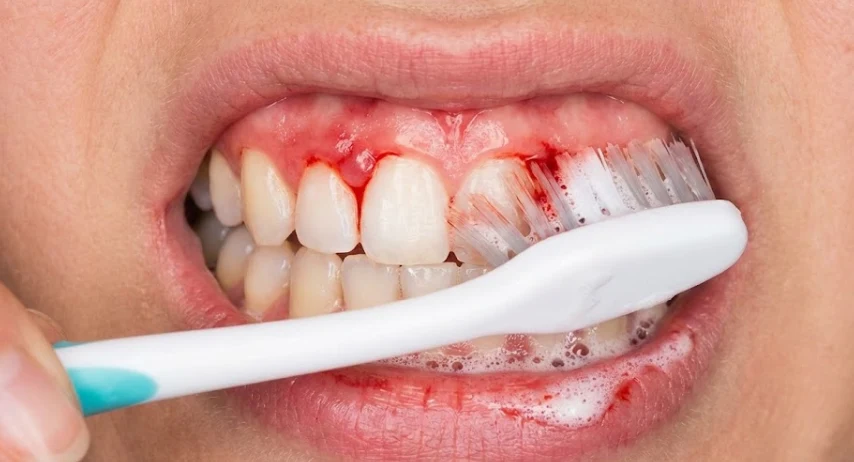
The quickest cure can be better understood if you understand the cause. Professor Doctor Coşkun Yıldız very often uses this metaphor when talking to the patients on the clinic floor:
Envisage a scenario where you get a splinter stuck deep in your finger. The skin around the splinter turns red, becomes swollen and starts to be painful. You may apply antibiotic cream, soak the finger in salt water and take painkillers. However, if you really want to get rid of the infection, you have to get the splinter out first.
Similarly, in your oral cavity, the “splinter” can be calculus (tartar) and plaque. The plaque is the soft, sticky film of bacteria; if you leave the plaque without brushing it, after a while it will become tartar – a very hard substance similar to coral that attaches itself to the surface of your teeth. Brushing and flossing cannot remove tartar once it has formed. It irritates the gums constantly by sitting against them, which results in bleeding and swelling.
The Fastest Route: The “Hard Reset”
Therefore, what is the most immediate method by which to cure gingivitis? It is a two-step “Hard Reset.”
Step 1: Professional Debridement (The Extraction)
Firstly, getting the “splinter” out is non-negotiable. It implies a professional dental cleaning (scaling) carried out by an expert practitioner like Dentist Polen Akkılıç and her team. By using ultrasonic instruments, they can efficiently disintegrate the tartar without causing any harm to the gums and teeth.
We have seen cases where patients use a mouthwash solely to combat bleeding gums for several months with no positive effects. After physically removing the tartar, the bleeding usually subsides within 24 to 48 hours. In fact, it is just that quick.
Step 2: The 14-Day Home Protocol
Afterward, you should make your mouth and gums a friendly place to heal and support reattachment by following a 14 days home protocol.
- The Tool: Use a soft-bristled brush. A hard toothbrush is like abrasive sandpaper to a tender red sunburned area (gums).
- The Technique: Keep flossing although it causes bleeding. In fact, the reason you have to floss is that your gums are bleeding. During this action, the blood helps to remove the stagnant bacteria that cause the adhered blood and, at the same time, fresh oxygen-rich blood is brought to the tissues.
- The Chemistry: We can give Chlorhexidine mouthwash for a short period (normally for just one week). This mouthwash is an exceptionally strong antimicrobial agent that eradicates the bacteria responsible for the inflammation.
Speed of Recovery: What to Expect
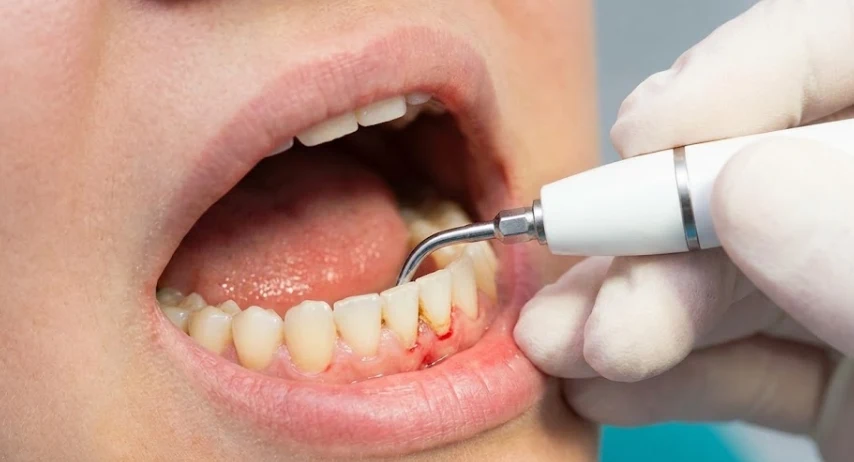
This practice plan is accompanied with a surprisingly quick recovery timeline if you adhere to it. One of the reasons why the human mouth heals quickly is because the area is well exposed to blood.
- Day 1 (After the Professional Cleaning): The gums might be a bit sore, yet the expected release of a “heavy” feeling will be achieved in the mouth.
- Days 3-5: The redness part returns to the original pink. The swelling drops largely.
- Day 10-14: No more bleeding will be present. The gums will be quite firm and appear sharp as a knife against the teeth.
Comparison of Treatments
Since patients want to avoid the dentist and treat this problem by themselves at home, here is the explanation of why that is an approach to healing delay.
| Treatment Method | Mechanism of Action | Time to Heal | Effectiveness on Tartar? |
| Professional Scaling | Physically removes the source (calculus). | 10-14 Days | Yes (100%) |
| Salt Water Rinses | Reduces swelling and alkalizes mouth pH. | 3-4 Weeks (Symptom relief only) | No |
| Antiseptic Mouthwash | Kills surface bacteria. | Variable (Does not cure deep infection) | No |
| Antibiotics | Suppresses bacterial growth temporarily. | Returns once meds stop | No |
| Vitamin C Supplements | Supports collagen repair. | Months (Supportive only) | No |
Top Queries on Reversing Gum Inflammation
Technically, yes. The bacteria that cause gum disease (P. gingivalis and others) can be transferred through saliva. If you share toothbrushes or kiss someone with active periodontal disease, you are introducing those specific bacterial strains into your own microbiome. However, if your oral hygiene is impeccable, your body can usually fight them off.
Itching is actually a distinct stage of gingivitis. It often signals that the gum tissue is actively irritated but not yet painful. It’s the sensation of your immune system releasing histamines to fight the bacteria trapped under the gumline. Do not scratch them with your fingernail; floss them.
Absolutely. Stress raises your cortisol levels, which suppresses your immune system and increases inflammation throughout the body. At Lema Dental Clinic, we frequently see “exam stress” or “work stress” flare-ups in patients who otherwise have good hygiene. Stress makes your body worse at fighting the bacteria that are already there.
This is the critical danger. Gingivitis (inflammation) is reversible. Periodontitis (bone and gum loss) is not. If you catch it while your gums are just red and puffy, they will return to normal. If you wait until the gum line has physically moved down the tooth root, that tissue is gone forever without surgical intervention. This is why speed is essential.
In almost every case, yes. An electric toothbrush removes plaque more efficiently than manual brushing because it vibrates at a frequency that breaks up bacterial colonies. It also has a pressure sensor that stops you from brushing too hard—a common mistake people make when they think they need to “scrub” the disease away.
- Löe, H., Theilade, E., & Jensen, S. B. (1965). Experimental gingivitis in man. Journal of Periodontology, 36(3), 177-187.
- Van der Weijden, G. A., & Hioe, K. P. (2005). A systematic review of the effectiveness of chlorhexidine on gingivitis. Journal of Clinical Periodontology, 32(s6), 214-228.
- Chapple, I. L., et al. (2015). Primary prevention of periodontitis: managing gingivitis. Journal of Clinical Periodontology, 42(S16), S71-S76.
- Trombelli, L., et al. (2018). Plaque-induced gingivitis: Case definition and diagnostic considerations. Journal of Periodontology, 89(S1), S46-S73.
- Sambunjak, D., et al. (2011). Flossing for the management of periodontal diseases and dental caries in adults. Cochrane Database of Systematic Reviews, (12).

