


Gingivectomy removes gum tissue; gingivoplasty reshapes it.
Having a great smile goes far beyond just having great teeth. Your gums can be considered as a custom-made matting that surrounds a master painting; if the matting is old, run over by plants, or just uneven, the art will not be able to be the center of attention.
Typically, patients coming into Lema Dental Clinic from Turkey are pointing to their gums and complaining. Sometimes it’s the issue that they consider the teeth too “small.” Other times, the patients have been suffering from continuous pockets together with the inflammation caused by the periodontal disease and the discomfort of the infection. The truth is, you cannot get rid of these issues unless you have accurate soft-tissue management. Among the procedures the doctors most frequently perform there are gingivectomy and gingivoplasty. It is remarkable how these two are the most common and yet the most misunderstood ones.
Let’s talk about them a bit. Even though they sound like the same thing, their main different and distinct functions are entirely different.
What is a Gingivectomy? The Art of Removal
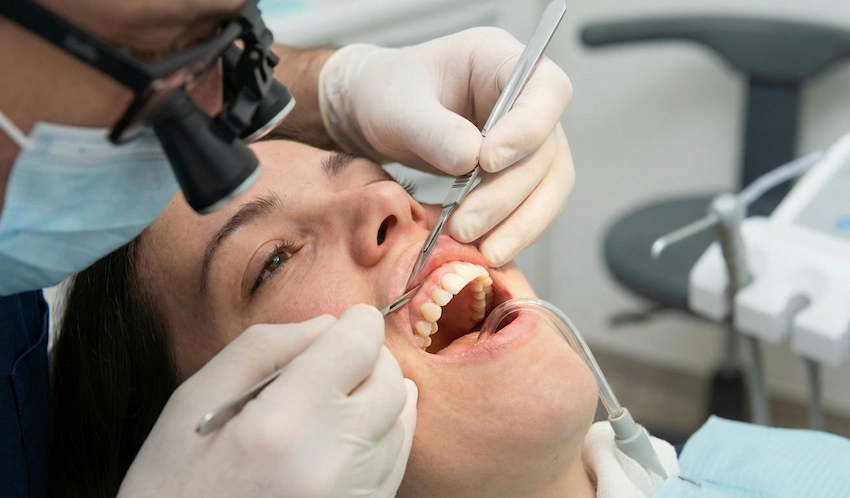
A gingivectomy is the surgery of the gum tissue, which could either be partial (trimmed) or total (removed completely). We generally use this treatment when the gum disease has made the gums pull away from the teeth and thus created the deep pockets where the plaque and tartar can settle.
Consider a scenario of a beautifully tailored sleeve on a shirt that has suddenly become loose, thus trapping the dirt in the folds of the fabric. A gingivectomy is cutting off that extra, diseased cloth piece, thus getting rid of the pockets at the same time, and stopping the gingivitis from turning into something more serious. Besides that, it is also very effective for the treatment of severe gingival hyperplasia which is one of the side effects of some drugs.
What is a Gingivoplasty? The Art of Sculpting
The tissue may be healthy, but it is just that it is not well-shaped and so, what should we do? Well, that’s the point where gingivoplasty comes into play. Another term for gingivoplasty is the surgical reshaping and contouring of the gum tissues.
If a gingivectomy is like pruning each branch that is overgrown so that the tree is healthy again, then a gingivoplasty is like carefully trimming a topiary hedge into an aesthetically pleasing shape. This technique is used for asymmetrical gum lines and gummy smile correction, as well as to achieve a more natural-looking gum contour around dental implants or crowns.
Key Differences at a Glance
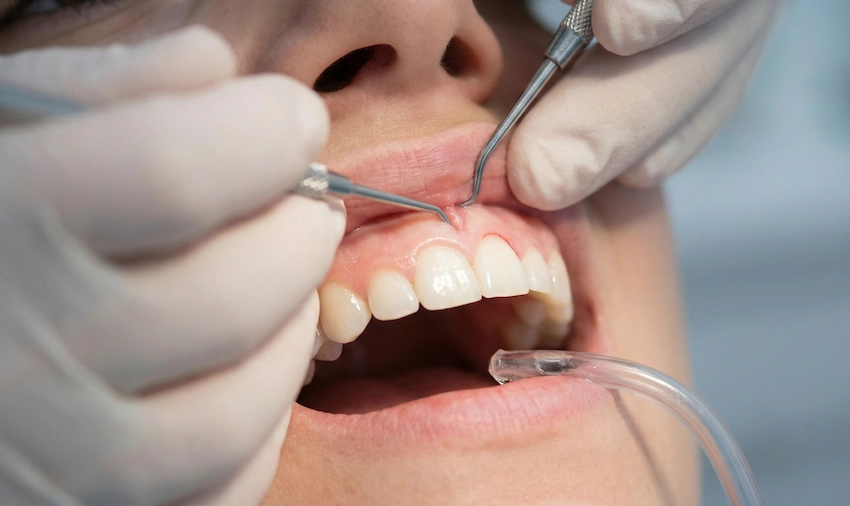
We even do these procedures in the same visit at Lema Dental Clinic in Turkey.
Since the principle of success in periodontics is not only in the surgeon’s skill but also in the artistic eye of an architect, Prof. Dr. Coşkun Yıldız says that you can not only take away the tissue and hope the beauty will come, you must have the plan of the final architecture before you make the first incision.
These days, dental lasers, among other high-tech instruments, help the whole procedure be performed with speed and accuracy, and with utmost comfort for the patient. As a matter of fact, the laser technique allows the healing processes to be so fast, that the patients do not even get tired of waiting for the gum to heal. Thanks to their nature, lasers hold, giving the immunological cells an opportunity, and are a factor for quicker healing. The bleeding is minimal, thus the risk of infection is substantially lower, and also, the recovery period is significantly shorter compared to the standard procedures with the scalpel.
Gingivectomy vs. Gingivoplasty: The Core Differences
| Comparison Criteria | Gingivectomy (Gum Excision) | Gingivoplasty (Gum Contouring) |
| Primary Goal | The complete surgical removal of diseased or severely overgrown gum tissue. | The aesthetic reshaping and sculpting of healthy but malformed gum tissue. |
| Clinical Indications | Advanced periodontitis, deep periodontal pockets, drug-induced or genetic gum overgrowth (hyperplasia). | Asymmetrical gum margins, “Gummy Smile” (excessive gingival display), aesthetic crown lengthening. |
| Type of Approach | Primarily a therapeutic (functional) procedure focused on halting disease. | Primarily a cosmetic (aesthetic) procedure focused on creating flawless gum architecture. |
| Visual Analogy | Pruning a diseased or heavily overgrown branch to save the tree. | Sanding and polishing a sculpture to reveal its fine, symmetrical details. |
| Healing Process | Involves full tissue excision, so deep healing takes a few weeks; using dental lasers significantly accelerates this. | Involves superficial contouring, resulting in a much faster, virtually painless, and highly comfortable recovery. |
| Treatment Combination | Often performed as the vital first step to clear infection and create a healthy baseline. | Frequently performed as the final touch right before placing zirconia crowns or porcelain veneers to ensure a perfect canvas. |
Frequently Asked Questions
Patients often worry about the pain during the procedure. However, I always tell them that they should not be scared as we will use local anesthesia at a very high dose level, and the patient probably will not feel a needle. Only afterthey get out of the numbness, they will feel a bit of the pain and discomfort which you may compare to a pizza burn location in the mouth. “The good news is, it is indeed, a very manageable pain, easily controlled with non-strengthening drug medication.
The healing of the gums is usually pretty quick on the nail surface within a week or two. Really, if we bring in some of the help from advanced dental laser healing will be even faster. I tell my patients to provide a soft type man for the first few days, and stay away from spicy or crunchy foods that might cause hassles for a healing wound.
Yes, definitely you can. Actually it is very common. As I remove the problematic tissue (the gingivectomy), I almost always need to contour the remaining edges (the gingivoplasty) so that your gums heal in a natural, scalloped shape around your teeth.
Soft tissue if it has been excised because of an inflammatory overgrowth and if you have maintained good oral hygiene, it will generally not come back. However, if the underlying cause – such as a certain medication or poor brushing habit – continues, then the gums may indeed overgrow again. We will establish a strict monthly maintenance program with you.
It is easy for patients to choose us as Lema Dental Clinic because we combine surgical expertise of the highest level with the most advanced technology available today and all in a very welcoming environment where accessibility is ensured. Specialists like Prof. Dr. Coşkun Yıldız are guiding your care so that you reach your functional and aesthetic goals at the same time.
- Carranza, F. A., Newman, M. G., Takei, H. H., & Klokkevold, P. R. (2018). Carranza’s Clinical Periodontology (13th ed.). Elsevier.
- Lindhe, J., Lang, N. P., & Karring, T. (2015). Clinical Periodontology and Implant Dentistry (6th ed.). Wiley-Blackwell.
- Goldman, H. M. (1951). The development of physiologic gingival contours by gingivoplasty. Oral Surgery, Oral Medicine, Oral Pathology, 4(1), 88-93.
- Levine, R. A., & McGuire, M. (1997). The diagnosis and treatment of the gummy smile. Compendium of Continuing Education in Dentistry, 18(8), 757-762.
- Zucchelli, G., & Mounssif, I. (2015). Periodontal plastic surgery. Periodontology 2000, 68(1), 333-368.

