


Intense pain, exposed bone, odor.
You survived the extraction. The numbness disappeared and initially, for the first day or two, everything was okay. However, by around the third day, your dull pain had not gone away but instead got worse. The pain became intense and you could feel it throbbing and it was also spreading, either up to your ear, or down your neck.
This is the main symptom of Alveolar Osteitis, or as it is more commonly known, Dry Socket. From our work with patients at Lema Dental Clinic in Turkey, we know that mental images of this problem are a great source of anxiety. Also, technically, we would say that it is not a classic infection; it is a compromise of the body’s intrinsic wound healing process. After a tooth extraction, your body naturally forms a blood clot to fill the empty socket. This clot is like a biological “stopper” in a bottle of wine. It closes the area, protects the bone underneath that gets exposed, and becomes the groundwork for new tissue to develop.
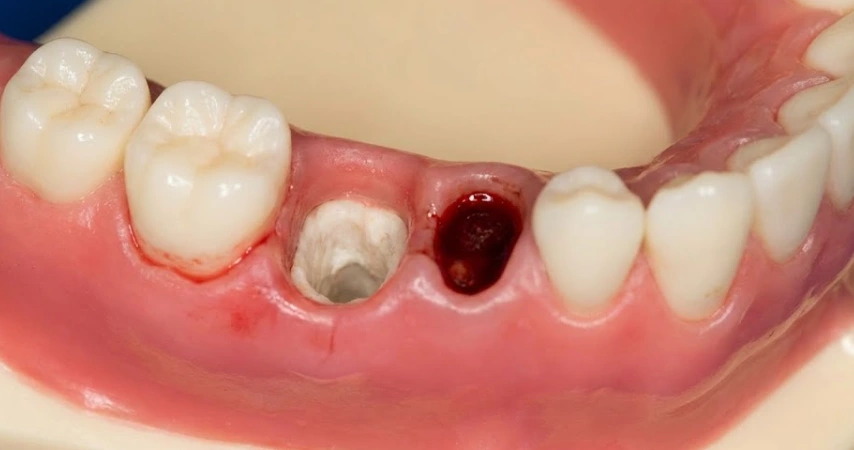
Dry socket is a situation when the cork is pulled out too early or dissolves before the hole has fully healed.
Broken Window Analogy
Once you understand the sensation, think of it as a broken window in your house in the middle of the coldest season. The blood clot is the piece of wood that you use to cover the opening and keep the cold out. When the wood falls off, the cold wind hits inside the house directly.
The “house” in this case refers to your jaw. The sensory nerves running through the bone and the bone itself comprise the “house”. Without the clot, the bone is laid bare to the oral environment. Professor Doctor Coşkun Yıldız often tells his patients that bone is not naturally exposed to air. If it is, the result of such exposure is an agonizing, deep pain, which is resistant to the effects of regular painkillers.
How to Tell if It’s Normal Pain or Dry Socket?
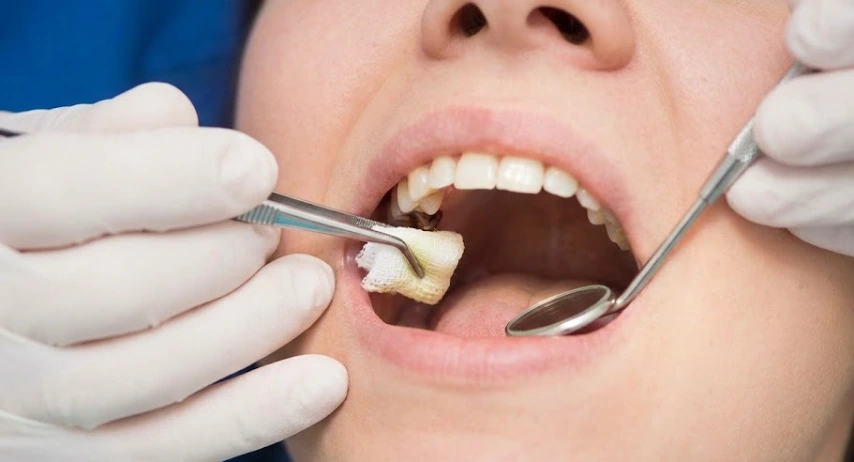
Getting over an extraction—especially of the wisdom teeth—can be have slight discomfort. However, dry socket is very different. Dentist Polen Akkılıç and her team educate patients to recognise the following signs as the most indicative ones:
- The Timeline Shift: Typically, after surgery, pain is most intense on day 1 or 2 and then gradually fades away. On the contrary, dry socket pain may be initially low but then it will shoot up drastically on Day 3 or 4.
- The Visual Test: If you check in the mirror, a healing socket is dark (the clot). A dry socket appears as if it is empty or greyish-white. What you are seeing is your jawbone.
- The Smell and Taste: Those suffering from dry socket complain of a nasty taste that no amount of brushing can get rid of plus they have bad breath. The reason behind this is that food particles trapped inside the unhealed socket ferment.
Normal Healing and Dry Socket: Side by Side
When suffering from pain, it is difficult to figure out the root cause. Here are the points we use to tell the two apart at our dental practice in Turkey.
| Feature | Normal Extraction Healing | Dry Socket (Alveolar Osteitis) |
| Pain Level | Dull, manageable soreness; improves daily. | Sharp, throbbing agony; worsens after 48-72 hours. |
| Response to Meds | Responds well to Ibuprofen/Paracetamol. | Often resistant to standard painkillers. |
| Appearance | Dark red/brown blood clot fills the hole. | Whitish bone is visible; hole appears “hollow.” |
| Radiation | Localized to the extraction site. | Radiates to the ear, temple, eye, or neck. |
| Oral Odor | Minimal or metallic (blood) taste. | Strong, foul odor and rotten taste. |
How We Treat It: Immediate Relief
The good news is that while dry socket is painful, it is very treatable. The moment a patient walks back into Lema Dental Clinic with these symptoms, our priority is pain management.
We do not just tell you to “wait it out.” The treatment involves gently flushing the debris from the empty socket to remove any trapped food. Then, we place a medicated dressing—often containing eugenol (clove oil) and anesthetic properties—directly into the hole.
The relief is usually instantaneous. It acts like a new, artificial scab, soothing the angry bone almost immediately. You may need to come back a few times to have the dressing changed, but the worst is over once that packing is in place.
Top Queries on Managing Extraction Complications
This is known as “referred pain.” The nerves in your jaw are part of a larger network called the trigeminal nerve, which branches out across your face. When the bone in the socket is exposed and distressed, the pain signal travels along this nerve highway, often confusing your brain into thinking the pain is coming from your ear or temple, even though your ear is perfectly healthy.
Yes, and it is the number one risk factor we see. Smoking does two things: the chemical toxins delay healing, and the physical act of inhaling creates negative pressure (suction) in the mouth. This suction acts like a vacuum, physically ripping the blood clot out of the socket. We strongly advise pausing all smoking for at least 72 hours post-surgery.
Technically, yes, the gum tissue will eventually grow over the exposed bone, but it is a slow and agonizing process that can take up to two weeks. There is no reason to suffer through that. Professional treatment accelerates relief and prevents potential secondary infections.
We advise against it for the first week. Just like smoking, using a straw creates a vacuum seal in your mouth. That suction force stresses the blood clot. It is much safer to drink directly from the cup or use a spoon for thicker liquids like smoothies or soups.
Statistically, yes. Research suggests that high levels of estrogen (often associated with oral contraceptives or specific points in the menstrual cycle) can affect the blood’s clotting ability. If you are taking birth control, it is worth mentioning to your surgeon so we can take extra precautions with the extraction site.
- Blum, I. R. (2002). Contemporary views on dry socket (alveolar osteitis): a clinical appraisal of standardization, aetiopathogenesis and management: a critical review. International Journal of Oral and Maxillofacial Surgery, 31(3), 309-317.
- Kolokythas, A., Olech, E., & Miloro, M. (2010). Alveolar osteitis: a comprehensive review of concepts and controversies. International Journal of Dentistry, 2010.
- Noroozi, A. R., & Philbert, R. F. (2009). Modern concepts in understanding and management of the “dry socket” syndrome: comprehensive review of the literature. Oral Surgery, Oral Medicine, Oral Pathology, Oral Radiology, and Endodontology, 107(1), 30-35.
- Taberner-Vallverdú, M., et al. (2015). Efficacy of different methods for alveolar osteitis prevention: A systematic review. Medicina Oral, Patología Oral y Cirugía Bucal, 20(6), e763.
- Mamoun, J. (2018). Dry Socket Etiology, Diagnosis, and Clinical Treatment Techniques. Journal of the Korean Association of Oral and Maxillofacial Surgeons, 44(2), 52-58.

