


Dry socket is a painful complication after extraction caused by clot loss and preventable with proper care.
Only a few things can be as disappointing as finishing a dental treatment and then having a complication come up days later. You’ve made it through the extraction, which was probably the toughest part, but now, out of the blue, you’ve got this dull, throbbing pain which seems to travel up your jaw and to your ear.
That is alveolar osteitis or just a dry socket, as it is known.
At Lema Dental Clinic in Turkey, we carry out thousands of tooth extractions and dental implant operations yearly. The fact is, while dry socket is the most common complication after a tooth removal, it can be largely avoided. And it is actually not an infection; it is more like the healing mechanism has failed.
The “Biological Bandage”: Understanding the Mechanism
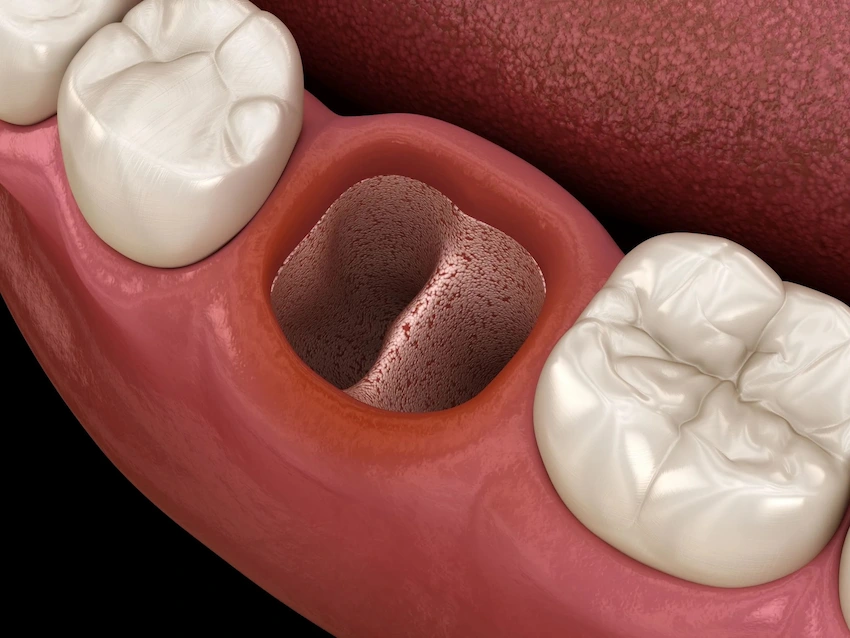
One has to picture how the body repairs bone in order to really get alveolar osteitis.
Imagine that the tooth socket after the removal is similar to a very deep scratch on your knee. Immediately after the extraction, your body will send blood cells to the area to create a clot. The role of this clot is basically the same as a protective scab or a biological cork. The clot covers the bone and nerve endings, protecting them from air, food, and bacteria, while at the same time, it stimulates the growth of new tissue underneath.
A dry socket situation happens when the blood clot, or “cork”, either never gets formed, comes off, or disappears too soon. Without that buffer, the bone is exposed and laid bare. And bone, unlike skin, greatly dislikes being exposed to the mouth’s air.
Why Does It Happen? (The Risk Factors)
Those who experience dry socket often wonder, “Is it my fault?” I guess sometimes it may. But other times, it’s just how things work with the body. During our work at Lema Dental Clinic, we have come across several risk factors that stand out based on our patients’ experiences.
The first 24 to 72 hours post-surgery are extremely important and if one interrupts the fragile clot during this time, the bone will be thoroughly exposed to the environment, therefore, at risk of getting inflamed, says Dr. Polen Akkılıç.
1. The Suction Effect
This is what poses the greatest danger. When someone uses a straw to drink, a vacuum is created in the mouth and that negative pressure is enough to physically suck the clot out of the tooth socket. The same applies to frequent spitting or rinsing the mouth.
2. The Smoker’s Dilemma
Smoking has mainly negative outcomes here. Firstly, the act of smoking creates suction as the smoker inhales. Secondly, nicotine is a vasoconstrictor – it makes the blood vessels contract and thus reduces blood supply to the healing area. This makes it difficult for the healing clot to develop and stay in place.
3. Bacterial Influence
Bacteria in the mouth, especially when combined with gingivitis or other forms of gum disease can produce enzymes capable of disintegrating the blood clot.
The Lema Protocol: How We Prevent It
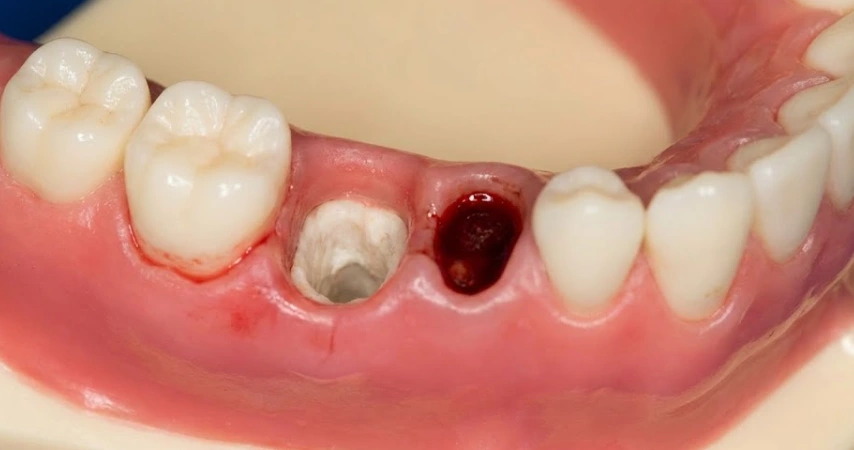
Professional surgeons and specialists contribute to the prevention of complications during surgery. According to Professor Doctor Coşkun Yıldız, the surgical technique has a major impact on clot formation. Traumatic tooth extraction surgery usually results in poor healing. Preserving the socket’s bony walls with a minimally invasive technique gives the clot a better “scaffolding” to hold on to.
Below is a list of our recommendations to the patients in Turkey to have trouble-free post-surgery days:
- Zero Suction: Avoid straws, spitting, and smoking for 72 hours at a minimum.
- Gentle Hygiene: We typically recommend using a special antiseptic rinse. Do not swish aggressively; just let the liquid flow around your mouth and then gently drop it into the sink.
- Dietary Adjustments: Eat only soft meals. Examples are mashed potatoes or yogurt but absolutely no crunchy food which can irritate the wound.
Spotting the Difference: Normal Healing vs. Dry Socket
Sometimes it is difficult to distinguish possible complications from the basic post-operative discomfort. Here are some signs that we take into consideration.
| Feature | Normal Post-Extraction Healing | Dry Socket (Alveolar Osteitis) |
| Pain Onset | Highest on Day 1, then gradually decreases. | Improves at first, then sharply increases on Days 3–5. |
| Pain Type | Mild soreness, localized tenderness. | Throbbing, radiating pain to ear, eye, or temple. |
| Appearance | Dark red blood clot visible in the socket. | Empty-looking socket; whitish bone may be visible. |
| Taste / Smell | Mild metallic taste from blood is normal. | Foul taste and bad breath (halitosis). |
| Response to Medication | Responds well to standard painkillers. | Often does not respond to over-the-counter painkillers. |
Frequently Asked Questions
Technically yes, in the end, the gum tissue will cover the bone that is left exposed, but this is a very slow, painful process which is why the patient can be in pain for up to 10 to 14 days. You do not have to endure such suffering. Please give us a call if the pain gets worse after three days. We may then apply a medicated dressing which provides almost instant pain relief.
Yes, definitely! But the brushing must be done very carefully and skilfully. Your other teeth may be brushed normally so as to keep the bacteria at low levels but the operation site should be avoided completely until the area has healed for a couple of days. It is not necessary to spit out after brushing; simply let the toothpaste slide out gently.
Of course, in certain situations where the risk is considered to be high (e.g., difficult wisdom teeth removal) Professor Doctor Coşkun Yıldız may apply platelet-rich fibrin (PRF) or collagen plugs. Both are basically biologically-based enhancers that help stabilize the clot and achieve fast gum closure.
The airplane itself will not cause dry socket but since airplane cabin air is dry, it can cause dehydration. Therefore, hydration needs to be your top priority. Our suggestion would be to take plenty of water with you (no straws!) and during your flight to keep your mouth moist as much as you can.
The color can be confusing. Granulation tissue, i.e. the tissue being formed during the healing process is sometimes creamy white and looks very much like food or bone. If you don’t feel too much pain, then it is probably the new tissue. Please don’t try to remove it!
- Mamoun, J. (2018). Dry Socket Etiology, Diagnosis, and Clinical Treatment Techniques. Journal of the Korean Association of Oral and Maxillofacial Surgeons, 44(2), 52–58.
- Taberner-Vallverdú, M., Nazir, M., & Sánchez-Garcés, M. A. (2015). Efficacy of different methods used for dry socket management: A systematic review. Medicina Oral, Patología Oral y Cirugía Bucal, 20(5), e633–e639.
- Kolokythas, A., Olech, E., & Miloro, M. (2010). Alveolar Osteitis: A Comprehensive Review of Concepts and Controversies. International Journal of Dentistry, 2010, 249073.
- Rakhshan, V. (2018). Common risk factors of dry socket (alveolar osteitis) following tooth extraction: A review and meta-analysis. Journal of Stomatology, Oral and Maxillofacial Surgery, 119(5), 407-411.
- Chow, O., & Wang, R. (2020). Patient concepts and understanding of dry socket: A qualitative study. Journal of Oral and Maxillofacial Surgery, 78(10), 1670-1676.

