


Status symbol and durability
It could be that while you’re strolling around Istanbul or checking out some celebrities’ Instagram accounts, a gold tooth might catch your eye. To some people are mostly associated with rap culture, a sign of wealth, or simply a fashion statement.
However, for those of us who work in the medical field is not just a piece of jewelry. It is an element that has a long and useful history.
At Lema Dental Clinic, a lot of the time we hear the question from our patients, “Is gold still a reasonable option or has it become a thing of the past?” The truth is that putting gold in one’s mouth is a decision that is mostly influenced by two very different sets of motives, either biological necessity or cultural expression.
Looking at the science behind the shine is the only way to understand why gold has remained important for millennia.
The “Soft” Strength: A Medical Perspective
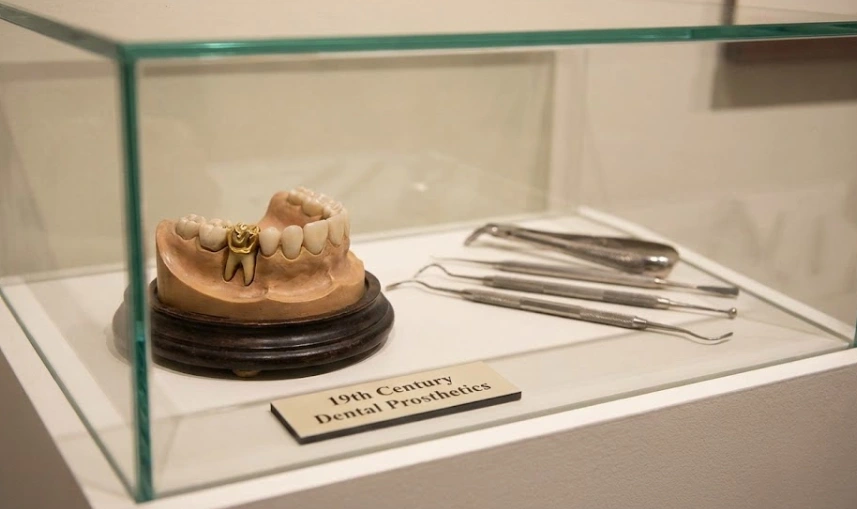
Before gold was used for its status value, it was the ultimate dental material. The reason is that it is probably the most “tooth-friendly” material that we can find.
Professor Doctor Coşkun Yıldız frequently uses a comparison involving a hammer and an anvil to explain the behavior of gold: Your teeth are like a hammer and an anvil. If you keep hitting a wooden anvil (your natural tooth) with a steel hammer (porcelain crown which is very hard), the wood will finally break and wear out.
Gold is opposite. Gold alloys for dental use have a “wear coefficient” that is almost the same as that of the tooth enamel. It is strong enough to endure the action of chewing, and at the same time, it is soft enough not to damage the tooth that is coming into contact with it. People with heavy bite force or who clench and grind their teeth (bruxism) will find that gold is more like a shock absorber than a battering ram.
The Perfect Seal
Another thing that older dentists, in particular, love gold for is its “marginal integrity”.
Working on a crown with Dentist Polen Akkılıç and her team, the very tiny space between the tooth and the crown is of utmost importance such that bacteria are not able to enter. Only gold being a metal that can be deformed. This characteristic of gold can be used to burnish its surface so accurately against the tooth that bacteria simply cannot enter.
Thanks to digital scanning, the level of precision of Zirconia and E-max crowns here in Turkey is amazingly high but gold was the standard for the “perfect fit” for more than a hundred years.
The Cultural and Status Factor

It’s a given that we can’t overlook the aesthetic decision. Many cultures from Central Asia to the American hip-hop culture have gold teeth as a conscious display of their identity.
- Wealth & Status: For centuries, it was the gold teeth that distinguished those who could afford the luxury of dental care. Literally, it was an investment you had in your head.
- Fashion: More recently, “grills” (the removable covers) have given gold teeth the status of a replaceable accessory, like a watch or a chain.
- Tradition: In parts of Eastern Europe and Central Asia, a set of gold teeth is still regarded as a sign of traditional beauty and strength, hence, quite the opposite of the “invisible” dentistry favored in the West.
Still, at Lema Dental Clinic, the patient culture shift has been huge. Nowadays, most of the patients coming from abroad to Turkey are intent on getting the “Hollywood Smile“—a smile that is natural-looking, bright, and white. In their minds, the compromise between gold and the natural tooth is that they desire gold’s durability but a pristine natural tooth’s look. That is why Zirconia has replaced gold in the market.
Gold vs. Modern Materials: The Trade-Off
Were you wondering which material is the best? Here is a brief comparison of gold with some modern materials that we may find most frequently in our clinic.
| Feature | Dental Gold Alloy | Zirconia (Hollywood Smile) | Porcelain Fused to Metal (PFM) |
| Aesthetics | Poor (Yellow/Silver color) | Excellent (Natural transparency) | Good (But can show dark metal line) |
| Durability | Extreme (Rarely cracks) | Very High (Harder than steel) | High (But porcelain can chip) |
| Biocompatibility | High (Good for gums) | High (Tissue loves it) | Moderate (Some metal allergies) |
| Wear on Teeth | Low (Gentle on opposing teeth) | Moderate (Harder than enamel) | Moderate to High |
| Tooth Prep | Minimal (Requires less drilling) | Moderate | Significant |
The Verdict: Is Gold Dead?
Not entirely. We still see cases where gold is the best medical choice, particularly for back molars that no one sees, or for patients with extremely limited vertical space in their mouths. Since gold is a metal, it can be made very thin without breaking. Porcelain needs bulk to survive.
But for the vast majority of our patients, the dream is a white smile. Modern Zirconia offers a durability that rivals gold without the aesthetic compromise.
FAQ: Common Questions About Gold Teeth
No. You would never use pure 24-karat gold for a crown; it is too soft. Dental gold is an alloy, usually mixed with platinum, palladium, silver, copper, and zinc to give it strength. A “high noble” alloy contains at least 60% precious metals.
Yes, high-quality dental gold is extremely biocompatible. It is non-toxic and resists corrosion. In fact, the body tolerates gold better than almost any other metal. However, cheap “gold-colored” alloys can contain nickel, which causes allergic reactions in many people.
Not if it is done correctly. Because gold fits so tightly, it actually seals the tooth better than many other materials. However, if you don’t brush and floss, the tooth structure at the gumline can still decay, regardless of the crown material.
No. Whitening gels only work on natural enamel. You cannot change the color of gold, porcelain, or zirconia once it is placed. If you want a white smile, the gold crown must be removed and replaced.
The price fluctuates with the global market. You are paying for the material weight of precious metals (gold, platinum, palladium) plus the high-level craftsmanship required to cast and polish the metal. Often, a high-quality Zirconia crown in Turkey is more affordable than a gold one.
- Knosp, H., Holliday, R. J., & Corti, C. W. (2003). Gold in dentistry: Alloys, uses and performance. Gold Bulletin, 36(3), 93-102.
- Donovan, T. (2011). Longevity of the tooth-supported metal-ceramic and all-ceramic restorations: A systematic review. Journal of Esthetic and Restorative Dentistry, 23(4), 226-236.
- Anusavice, K. J. (2012). Phillips’ Science of Dental Materials. Elsevier Health Sciences.
- Bergman, M., et al. (1980). Biological effects of dental alloys. Swedish Dental Journal, 4(4), 143-151.
- Roberts, H. W., et al. (2009). Optical properties of gold alloy and ceramic restorative materials. Journal of Prosthetic Dentistry, 101(4), 277-286.

