


Thinning enamel lets light through.
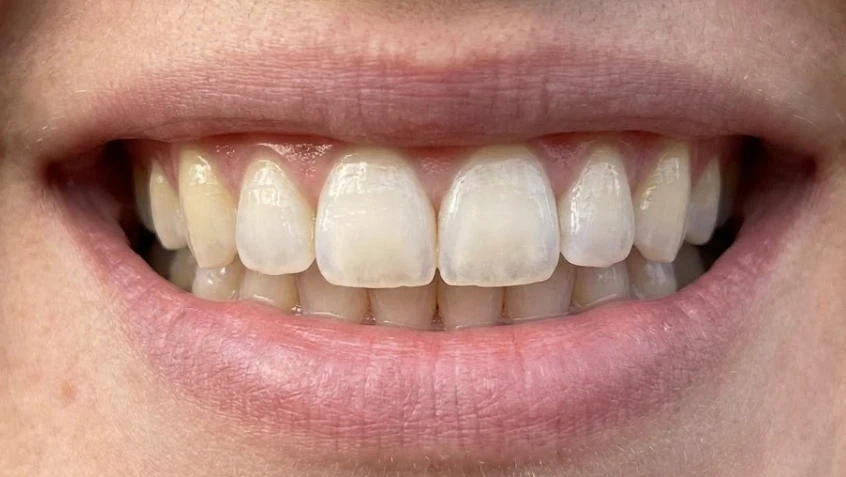
It begins in a very inconspicuous way. You spot your smile reflection in the mirror under very bright bathroom lighting, and the front edges of your teeth appear somehow different. Your teeth were always solid, creamy white and now the very tips seem to have a bluish tint, or gray or even clear as if they were made of glass or frost.
In our clinical experience at Lema Dental Clinic, Istanbul, we notice that this is one of the issues that definitely causes patients a lot of anxiety. It is not just a surface imperfection; it almost seems as if your teeth have been eaten away.
The fact is that this is exactly what happens. It is withholding you from knowing what the cause of this is that it requires a little dental anatomy lesson. And the truth is, by the time you get to see that translucency it is already a sign that the protective layer of the tooth that is most important has been lost.
The “Fingernail” Illustration: How to Get the Tooth Structure
If you want to understand why the edges of your teeth are becoming clear, you need first to build up the image of how a tooth is constructed.
Consider your tooth to be like your fingernail. The principal part of your tooth is dentin. Dentin is bony, dense tissue that varies in color from light yellow to dark gold. It’s like the pink, fleshy part of the nail bed that gives the tooth its main color.
Enamel is what lies on top of the dentin. Enamel is the hardest material that can be found in the human body. It has a very high content of minerals and is semi-transparent, which makes it quite similar to the clear, hard keratin that makes up a fingernail.
And here is something pretty important: The opaque dentin that is beneath does not run all the way to the very edge of your front teeth. The very tips are made of only enamel.
When your teeth are healthy and thick, that enamel tip looks as white as snow because it is dense enough to reflect light. However, if the outer layer of the enamel gets worn down as a result of the natural wear and tear or chemical erosion, the light will be able to go through it. You can see how this would give the effect of a “see-through” or glassy appearance at the bottom edge.
Disciples: What Is Eating Away at Your Shield?
Thin enamel is the reason your teeth are becoming translucent. The question is, what is hydrolyzing your teeth? From the experience we gained through our consultations across Turkey, mostly we can attribute that to three major factors.
1. Acidging (Chemical Erosion)
This is the number one reason why we today; you have been, in fact, dissolving your enamel with acid.
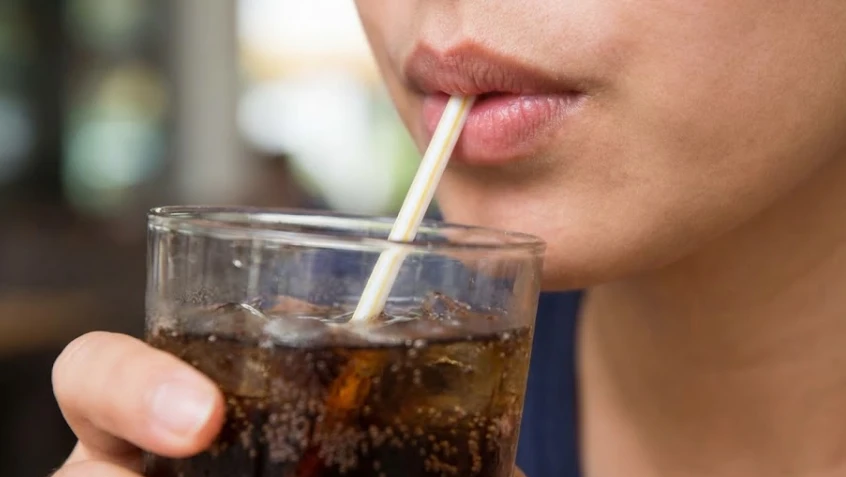
- Dietary Acids: An everyday habit of dipping your teeth into lemon water, high-acid sports drinks, soda, or even healthy vinegar-based dressings can easily be considered as bathing the teeth in acid.
- The “Silent Reflux”: Most patients do not realize that they are suffering from silent GERD (acid reflux) while they are sleeping. Acid in the stomach is highly potent and it lands against the back of the front teeth during the night, which is the main cause of severe thinning over time.
2. The Physical Grind (Attrition)
Our lead oral surgeon, Professor Doctor Coşkun Yıldız, often points out that jaw structural changes caused by grinding teeth or bruxism may result in aesthetic problems.
By bruxism, you are physically running the risk of sanding down your enamel. It is like taking a piece of sandpaper for that clear fingernail tip; sooner or later, it becomes very thin and fragile. We typically observe patients with flat, shortened teeth and translucent, chipping edges.
3. Aggressive Whitening and Hygiene
Everyone wants to have a bright and shiny smile, but overusing over-the-counter whitening strips with high acidity is akin to dehydrating and demineralizing enamel. In the same way, brushing too hard with abrasive charcoal toothpastes can act like a fine-grit sandpaper, gradually wearing away the protective layer over a number of years.
The Hard Truth: Can Enamel Grow Back?
At the very beginning, this is the question every patient is eager to know. Enamel, no. contains living cells. Therefore, unlike your skin or bones, which can regenerate after an injury, enamel cannot be restored once it has been lost.
You cannot grow it back through diet, supplements, or special toothpastes. While some products are capable of “remineralizing” the enamel (i.e., making it a little harder), they do not have the ability to add volume back to a tooth that has physically thinned.
Clinical Solutions: Structure and Aesthetic Restoration in Turkey
Because the biological shield is no longer there, the remedy must be a prosthetic one. We have to reinstall what the years and acid have taken from us. Here at Lema Dental Clinic, we base our decisions on the extent of the translucency in the patient.
1. The “Band-Aid”: Cosmetic Bonding
In very rare circumstances for adolescents, dentists might decide to try bonding. The procedure consists of putting a resin with the colour of the tooth on the back side of the translucent edge to stop light from passing through. Although it is a quick fix, Dentist Polen Akkılıç, along with her aesthetic team points out that bonding is a very delicate procedure because bonded surfaces tend to collect stains very quickly and the material might need to be renewed in just a few years.
2. The Word of Mouth: Porcelain Veneers
We had a lot of dental patients from foreign countries who came to speak to us about long-term solutions and, in their cases, the treatment of choice always turned out to be porcelain veneers.
A veneer is a thin, ceramic thin layer that is medically approved which is glued to the front part of the tooth. The two benefits are immediate:
- It replicates natural enamel: Porcelain has the precise degree of translucency and light-reflecting characteristics of healthy tooth material.
- It provides additional strength: It serves as a new, highly resistant protective layer for the naturally thin and delicate edge that is susceptible to chipping and cracking.
Given that the natural tooth underneath is thin enough already, this treatment usually requires very little, if any, trimming of the tooth.
Comparing Your Restoration Options
It is crucial that when one decides how to handle the problem of translucent edges, the decision is made in such a way that the two factors, longevity and aesthetic,s are balanced. Below is a summary of the usual courses of action that we take.
| Treatment Option | How it Works | Longevity | Best Candidates |
| Remineralization Therapy | Prescription fluoride/calcium paste to harden remaining enamel. | Ongoing maintenance | Very early stages; those looking to stop progression, not fix aesthetics. |
| Cosmetic Bonding (Composite) | tooth-colored resin applied to the edge to block light. | 3–7 Years (prone to staining) | Minor translucency; tight budgets; younger patients. |
| Porcelain Veneers (Emax/Zirconia) | Thin ceramic shields bonded to the front of the tooth. | 15–20+ Years | Moderate to severe translucency; patients seeking a permanent, flawless aesthetic. |
| Full Coverage Crowns | The entire tooth is capped for structural support. | 15–20+ Years | Severe cases where the tooth is very short or structurally compromised from grinding. |
Expert Answers to Your Queries on Thinning Enamel
It is primarily a structural risk. The translucent edge is incredibly thin and fragile. These edges are highly prone to micro-cracks and chipping. Furthermore, as the enamel thins, the underlying dentin gets closer to the surface, which often leads to significant sensitivity to cold and hot foods.
It likely contributed, but probably didn’t cause it alone. Whitening works by opening pores in the enamel to pull out stains. Chronic overuse, especially of acidic DIY products, can leave the enamel chronically dehydrated and demineralized, accelerating the wear caused by acid or grinding.
No. Changing your diet is critical to stop the progression of the damage, but it will not reverse it. Eliminating daily lemon water or soda will save the enamel you have left, but it won’t bring back what is already gone.
Not in modern dentistry. Because your teeth are already thinned at the edges, we often have to remove very little, if any, healthy tooth structure to place the veneer. We are essentially replacing the missing volume with porcelain. It is often the most conservative way to ensure long-term strength.
Dehydration. If you sleep with your mouth open, or if you’ve just used a whitening strip, your teeth lose water content. Dehydrated teeth look chalkier white in the thicker parts and more noticeably transparent at the thin edges. Once rehydrated by saliva, they may look slightly better.
- Lussi, A., & Carvalho, T. S. (2014). Etiology of dental erosion—intrinsic and extrinsic factors. Monographs in Oral Science, 25, 9-44. Let’s look closer…
- Addy, M., & Shellis, R. P. (2006). Interaction between attrition, abrasion and erosion in tooth wear. Monographs in Oral Science, 20, 17-31.
- Bartlett, D. W., et al. (2013). The prevalence of tooth wear in their teens and twenties. Journal of Dentistry, 41(5), 466-472.
- Joiner, A. (2007). The bleaching of teeth: a review of the literature. Journal of Dentistry, 34(7), 412-419.
- Magne, P., & Belser, U. (2002). Bonded porcelain restorations in the anterior dentition: a biomimetic approach. Quintessence Publishing Company.

