


Dental implants can replace one tooth, several teeth, or a full smile.
Losing a natural tooth is like losing a small piece of yourself. It changes your communication by altering the way you talk; it affects your eating pattern because it influences how you chew; and, most noticeably, it alters the way you smile.
Initially, when patients come to us for treatment, they usually show a great degree of concern about the numerous online articles talking about the various ways of replacing missing teeth, which may result in them getting overwhelmed.
At the core, we shall examine what the basis of the solution is. Just imagine your jawbone resorption as if it is the base of your house. If one missing tooth takes its place, the bone of the jaw that is left without support will gradually resorb because, without being constantly worked (a normal tooth keeps stimulating the surrounding bone and prevents its resorption), this bone simply dies.
To stop the natural bone loss and give a sturdy foundation for the prostheses, we usually make the patients wear a temporary denture (fixed or removable) for about six to twelve months. In most instances, however, we will also insert some titanium posts at this stage. These are the roots of the future dentures, like the structural steel beams of the house. The titanium will not only provide an anchoring mechanism for the permanent prostheses but also, through the bone regeneration process, we will be able to reshape the bone if necessary.
The fact, that at Lema Dental Clinic, we work only under direct supervision of the dentist, enables us to treat even the most challenging cases in an absolutely safe environment that is also highly motivating and very human. Let’s have a closer look at the treatment procedures employed by us to rebuild smiles here at the clinic in Turkey.
The Foundation Replacements: Single and Multiple Implants
Single-Tooth Implants
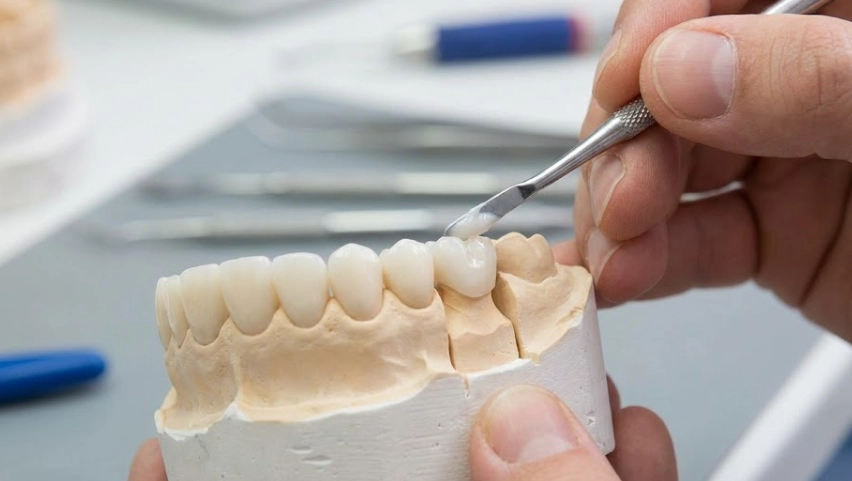
When only one tooth is missing, the implant option should never come up if the two healthy adjacent teeth can be used as supports for a bridge. However, this would require their crowns to be trimmed. A much more conservative and modern solution is to do what is usually referred to as “implant surgery”, in other words a single-tooth implant with a titanium post placed in the gap without touching any other tooth. This post then undergoes a recovery phase of 3 to 6 months, where the body of the patient actually grows new bone to fix the post in place. The bone fusing to the post is a process called osseointegration. After this, we fix an attaching piece or abutment on the top of the post. Then, the patient will be able to see and talk again with his/her new artificial tooth (the implant-supported crown) placed securely onto the implant and glued in position with a special dental cement.
Implant-Supported Bridges
What do you do if you miss out several teeth next to each other for which you would need one implant for each of them and then also connect them all together with an artificial bridge? Well, it is a great and very convenient idea to limit the number of surgeries, but we do not see enough bone to support all of that. Instead of that, we place two implants on the very edges of the missing teeth; these two are the strongest supports from thereon and will hold the fixed bridge that spans the gap.
Full-Arch Solutions: When You Need a Fresh Start
You come to us for a completely new set of teeth on the upper or lower jaw. If it is a whole upper jaw, then the dentist, Polen Akkılıç, and her team will first decide whether you will be fitted with the All-on-4/All-on-6 system or another type of restoration. In any case, your current teeth are going to be taken out first so that the implants can be placed directly on the jawbone.
The All-on-4 and All-on-6 Systems
Professor Doctor Coşkun Yıldız is one of those experts who has written extensively about the revolutionary power of All-on-4 and All-on-6 concepts for full-mouth restorations. These concepts involve angling and placing from four to six dental implants in the most suitable and most solid bone areas of the jaw to prevent the need for an extensive bone grafting procedure.
Hospital: Patients arriving with severe dental phobia are able to leave with one set of fixed teeth permanently attached to a dental bridge made from a combination of zirconium frameworks and porcelain layers.
Advanced Solutions for Complex Anatomy
Zygomatic Implants
In such a patient, the bone of the upper jaw is just so worn away that the regular implants just do not have any bone to attach themselves to. So what is left of the patient’s options?
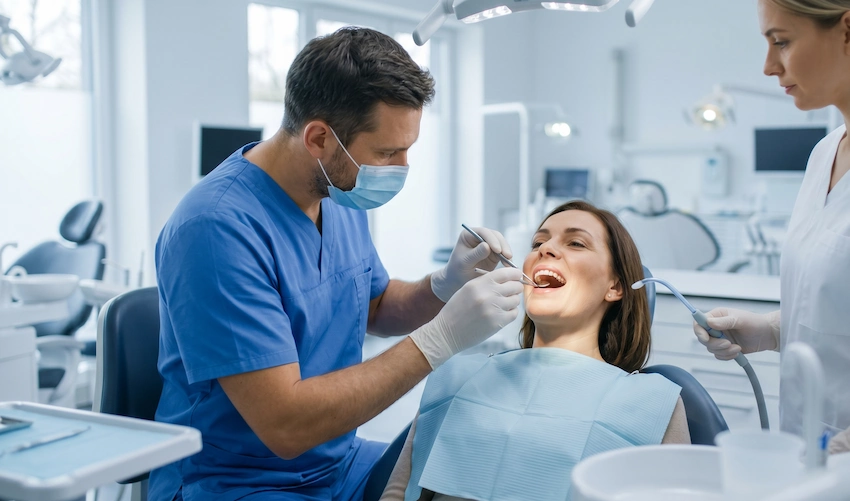
The solution lies in zygomatic implants. Instead of getting fixed into the bone that has been receding because of years of not using the bone (that is, tooth wear), these extra-long ones are being placed inside one of the stronger bones in the facial structure-the cheekbone or zygoma.
Zygomatic surgery is a highly complicated procedure that only a few top dental clinics in the world offer. Through zygomatic implants, it is possible even for those previously deemed unsuitable for implants,s such as the elderly and/or patients who lack sufficient jaw bone volume, to now get permanent fixed prosthetics, which can only be achieved through implants.
Sinus Lifts and Bone Grafting
Many people who are considering getting upper jaw implants run into one problem: there is no space left because their sinus membranes, which are delicate tissue lining a body cavity, are too close. To get around it, we perform a procedure called a sinus lift, where our doctor is the equivalent of a delicate egg, carefully raising the membrane upward and then laying the bone graft under it. Eventually, the jawbone grows so deep in such a way that it reaches the level necessary for the implants to be fitted safely.
The Lema Standard of Care
Dentist Polen Akkılıç, together with her team, has the capability of designing every single millimeter of your procedure in advance with the most recent 3D volumetric tomography scan without you having to step into the treatment room once. A visit from outside Europe for dental implants at the very least includes a dental check-up. However, the major reasons that attract a lot of dental tourists to visit Turkey are not just the cost of dental treatments, but also the fact that one can get a really modern dental implant, high-quality dental materials, a top-notch dentistry team with whom you have to feel at home,e and the personal responsibility of the dentist towards your dental recovery after surgery.
Comparison Table of the Different Procedures
| Type of Procedure | Who Is It For? | Expected Healing Time | Main Benefit |
| Single Implant | The loss of 1 – 2 adjacent teeth or a gap in adjacent teeth. | 3 to 6 months | Adjacent healthy teeth stay untouched. |
| Implant Bridge | The loss of at least 3 consecutive tooth spaces. | 3 to 6 months | Minimal number of invasive procedures. |
| All-on-4 / 6 | A full mouth arch (upper or lower). | Immediate load (Temporary teeth) | Fixed teeth in a few days; heavy bone grafts are avoided. |
| Zygomatic | Serious upper jawbone loss. | Immediate load (Temporary teeth) | Becoming a real option even when traditional implants can not be put. |
Frequently Asked Questions
Will the implant surgery hurt?
Pain prevention is our first objective as physicians. The implant insertion operation is to be carried out in a complete state of numbness. There may be some pressure sensations. You will not get any kind of piercing pain. Most of our patients do well with only over-the-counter pain medications during the early recovery phase for a couple of days.
What is the life span of a dental implant?
A better way to think about dental implants is as a fixed artificial root system. The titanium part of the implant, if it is well cared for through brushing and flossing and regular dental check-ups, can actually remain a functional root in the bone for a lifetime, whereas the porcelain part, the crown of the dental implant, is more likely to be replaced in the next 15-20 years due to normal wearing.
Why is adhesive used and not cement in some restorations?
We base the selection of our dental cement on each particular case. Using high-quality dental adhesive results in a very secure, gap-free restoration-to-abutment interface which reduces the chances of plaque accumulation underneath the gum line significantly.
Am I too old to get dental implants?
It is usually not the age itself that is of interest to us, but the health of the person’s overall physical condition to make sure that they can be safely anesthetized and that their bones have enough volume and density in the place of implants to support them and to be fused with implants. I have treated patients up to their mid or so of the eighties. If you are generally a healthy individual and you have not had a lot of tooth extractions, then you should be okay for dental implantation.
How can I return to my country so soon after getting dental implant placed in Turkey?
One can only stay in the foreign country in which you had the treatment for 4-7 days. As during these days, our doctor and the whole team of Lema Dental Clinic are there for you, they will be able to give you the right post-operative instructions, remove the stitches from your oral tissues and monitor your very first recovery phase in the clinic itself. It is a good idea to have the post-surgical check-up, remove the stitches, etc. before flying back.
Academic References
- Buser, D., Sennerby, L., & De Bruyn, H. (2017). Modern implant dentistry based on osseointegration: 50 years of progress, current trends and open questions. Periodontology 2000, 73(1), 7-21.
- Maló, P., de Araújo Nobre, M., Lopes, A., Macroux, A., & Goss, A. (2011). “All-on-4” immediate-function concept for completely edentulous maxillae: A clinical report on the medium (3 years) and long-term (5 years) outcomes. Clinical Implant Dentistry and Related Research, 13, e109-e117.
- Chrcanovic, B. R., Albrektsson, T., & Wennerberg, A. (2016). Survival and complications of zygomatic implants: An updated systematic review. Journal of Oral and Maxillofacial Surgery, 74(10), 1949-1964.
- Esposito, M., Grusovin, M. G., Rees, J., Karaslos, D., Felice, P., Alissa, R., … & Coulthard, P. (2008). Effectiveness of sinus lift procedures for dental implant rehabilitation: A Cochrane systematic review. European Journal of Oral Implantology, 1(1), 7-26.
- Tarnow, D. P., Cho, S. C., & Wallace, S. S. (2000). The effect of inter-implant distance on the height of inter-implant bone crest. Journal of Periodontology, 71(4), 546-549.

