


Floss removes sticky plaque better, while water flossers are easier and gentler on gums.
One of the most frequent admissions we get in the dental exam chair is “I brush twice a day, but I hardly ever floss.”
Totally get it. Flossing with a string can be quite a drag, difficult, and if your gums are very sensitive, it can hurt a bit, too. Then comes a water flosser–a gadget of the future offering a “power wash” of your teeth. But is it really the best? Or is it just a messy alternative that leaves plaque behind?
At Lema Dental Clinic in Turkey, this is not only a hygiene question; structure is involved as well. Whether you still have your natural teeth or have had a smile made over at Lema, it is the way you clean the spaces between your teeth that determines how long your smile will stay beautiful.
We didn’t just want to get into an argument, so here we are breaking down the mechanics, the biology, and what we actually see under the microscope.
The Old Guard: Traditional Dental Floss
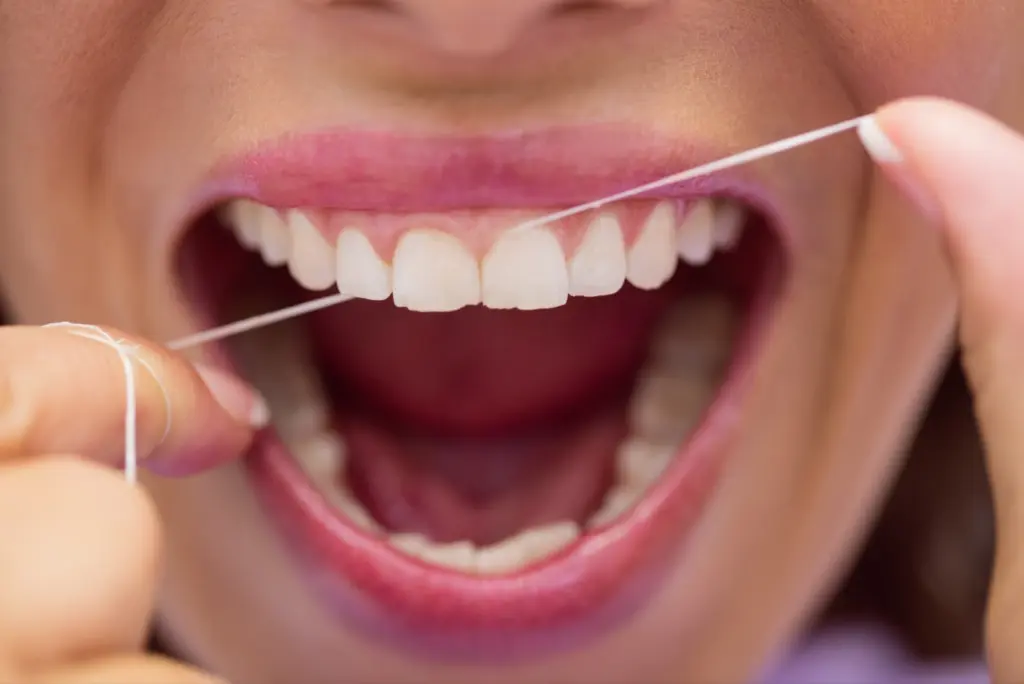
Consider traditional dental floss in the same way you would a squeegee for your teeth. It works solely through mechanical friction. When the floss thread is forced through the cramped contacts, you are essentially dislodging the dental biofilm (plaque) by scratching the surface of the tooth.
Plaque is actually very sticky. It fixes itself to enamel just like algae sticks to a rock. At times, the sole method of eradicating it is by physically wiping it off. Besides string floss, no other utensil can go around the bend of the tooth and access the gingival sulcus—which is a gum disease-prone area—almost as effectively.
Dentist Polen Akkılıç and her team keep telling the patients that for the very narrow spaces where the teeth are crowded together, string floss is the best option. There is a place for fundamentals in any era and traditional floss is one among them. It mainly goes where water simply bounces without seeping through.
The Challenger: The Water Flosser
If floss is a scrub brush, a water flosser is a pressure washer. It uses a pressurized stream of pulsating water to blast away food particles and flush out bacteria.
This accessibility factor of the technology is huge. If you have arthritis, dexterity, or other issues, and complex dental work, it can be nearly impossible to maneuver a piece of string. Using a water flosser eliminates such a problem.
Still, there is a subtlety that most people lose. Water is perfect for rinsing away crumbs etc., but it cannot effectively remove the sticky, calcifying layer of plaque that has already adhered to the tooth. It washes the entire place but it doesn’t actually clean the floors.
The “Lema” Perspective: Why Context Matters
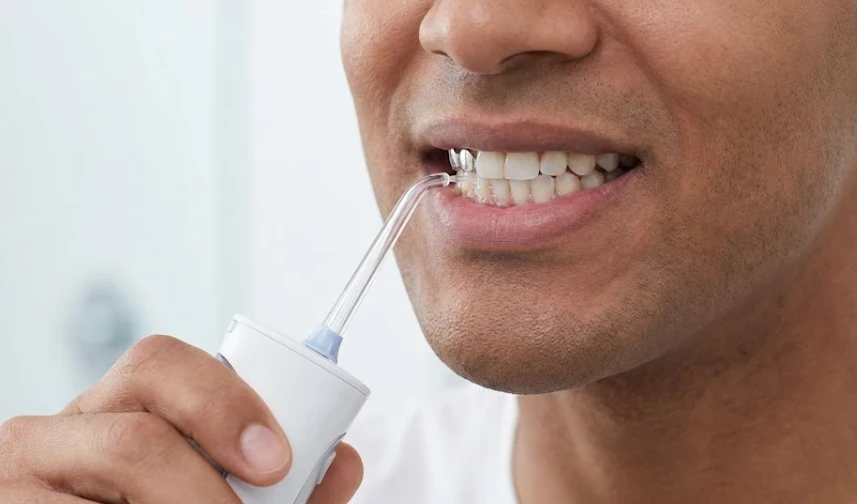
We are a dental clinic in Istanbul and we see a lot of dental tourists become our patients. To many we have done such complex restorations as veneers, crowns, full-arch implants, etc. This, of course, changes the rules of hygiene totally.
Professor Doctor Coşkun Yıldız always includes in his presentations how the surface of a porcelain veneer or a titanium implant is entirely different from the natural enamel.
- For Implants & Bridges: You cannot force string floss through a solid bridge. It is physically not doable. Thus, in such situations, a water flosser is no longer an option; it is a must. It gets under the false teeth (pontics) which is the favourite spot of bacteria.
- For Veneers: You can definitely floss your veneers but if you habitually snap the floss around the gums, these can become irritated. With the water flosser, you give your gums a light touch, almost like a gentle massage which increases the blood flow without the trauma of a string flick.
The Verdict? It’s Not an “Or,” It’s an “And”
The most successful patients we see at Lema Dental Clinic—the ones whose smiles look fresh and perfectly maintained even after five, ten years—are usually those who have gone with a hybrid approach. They use the water flosser to dislodge the big stuff and get their gums going, and then they finish off with string floss or interdental brushes for that precision touch.
Comparison: The Mechanics of Cleaning
| Feature | Traditional Dental Floss | Water Flosser |
| Primary Action | Mechanical scraping (friction) | Hydraulic flushing (pressure) |
| Plaque Removal | Excellent for sticky, adhered biofilm | Good for loose debris; less effective on sticky plaque |
| Gum Safety | Higher risk of bleeding if used incorrectly | Very safe; massages gums and reduces inflammation |
| Best For | Tight gaps, crowded teeth, natural enamel | Braces, bridges, All-on-4 implants, and dexterity issues |
| Learning Curve | High (requires proper technique) | Low (easy to use) |
| Mess Factor | Low | High (water spray) |
FAQs: Straight Answers from the Clinic
We would love to say yes, but in most cases, the answer is no. Except for those cases of dental work where string flossing is impossible (like a fixed bridge), water alone will hardly ever remove 100% of the sticky film on your teeth. In a way, think of the water flosser as a lovely extra versus a total substitute.
It is actually the other way round. The gum tissue gets a gentle massage from the pulsating water which causes an increase in blood circulation. Professor Doctor Coşkun Yıldız often suggests it especially for patients who have a mild form of gingivitis as this method cleans pockets without the abrasion caused by a string. Just start on the lower setting.
I believe that the wisest move is to combine both, but only take care when using the floss. You definitely shouldn’t whip the floss against your gum line with a lot of force. Water flossers are very effective for people with veneers since they can clean the margins (the spot where the veneer meets the natural tooth) thoroughly without any hard scraping.
Normally, bleeding is an indication of inflammation or gingivitis that has already been there and the floss has not caused an injury (unless you are very rough). The body sends blood to the bacteria so it can fight them. Strangely the solution to bleeding gums is not to floss less but to floss more. If you remove bacteria, there will be no inflammation, thus bleeding will cease within a short time.
We usually advise flossing before brushing. It first loosens the food particles and plaque trapped between teeth and then the toothbrush and the paste get to work to remove everything. If you floss last, what you just dislodged can stay in your mouth until you rinse.
- Lyle, D. M. (2012). Relevance of the water flosser: Evidence for the general dental practice. Compendium of Continuing Education in Dentistry, 33(10), 780-782.
- Goyal, C. R., et al. (2013). Evaluation of the effectiveness of a water flosser on plaque removal and gingival health. Journal of Clinical Dentistry, 24(2), 37-42.
- Rosema, N. A. M., et al. (2011). The effect of different interdental cleaning devices on gingival bleeding. Journal of International Academy of Periodontology, 13(1), 2-10.
- Worthington, H. V., et al. (2019). Home use of interdental cleaning devices, in addition to toothbrushing, for preventing and controlling periodontal diseases and dental caries. Cochrane Database of Systematic Reviews, Issue 4.
- Ng, E., & Lim, L. P. (2019). An overview of different interdental cleaning aids and their effectiveness. Dentistry Journal, 7(2), 56.

