


Yes, nicotine restricts gum blood flow.
Initially, e-cigarettes were promoted as the “safe” option. No tar or ash, simply flavored water vapor. Nevertheless, at Lema Dental Clinic in Turkey, the reality we see is far from this promise. We have young patients, none of whom have ever smoked a traditional cigarette, and they are presenting gum lines like a 60-year-old heavy smoker.
They all come with the same question: “I don’t smoke, so how come my gums are receding?”
Vaping indeed eliminates tar, which is present in regular cigarettes; however, it does not get rid of the oral health villain: nicotine and heat. Please don’t consider vaping as simply “water vapor”; it is a chemical aerosol that damages the soft tissue that supports your teeth.
The Mechanism: Choking the Blood Supply
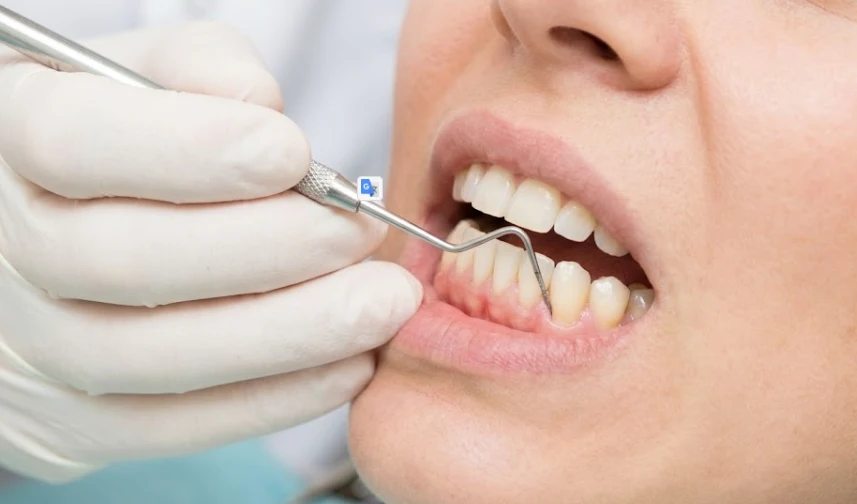
How can your gums recede? First, understand their nutrition. Your gum tissue is supplied with oxygen and immune cells through the network of blood vessels.
Professor Doctor Coşkun Yıldız uses a simple image when explaining the process: trying to imagine what it is like would be like if you stepped on a garden hose. There is no water flowing and the grass at the end of the hose eventually turns brown and dies.
Nicotine tightly controls the width of the blood vessels. No matter if you get it through smoking or vaping a strawberry-flavored e-cigarette, it is the same. Nicotine enters those tiny blood vessels in your gums and literally “chokes” the tissue by being too narrow. The tissue cell lacks the oxygen and nutrients and gradually, the tissue starts to shrink and recede. Your teeth’s root surface is then exposed.
The “False Healthy” Look
Our patients’ pictures show vaping to be really dangerous; it hides the sickness behind the symptoms.
Normally, in cases of gum disease (gingivitis), your gums tend to bleed when you floss. The blood here is a signal that is yelling out to you. However, because vaping limits blood flow, vapers don’t get bleeding at times. Their gums can be easily mistaken for healthy ones when they are actually weak and pale.
Dr. Polen Akkılıç and her associates describe this as “hidden inflammation.” The damage to the bone and gum is extensive, even though you don’t see any symptoms or discomfort. After the gum has receded to a noticeable level, the harm is usually too much to fix.
The Drying Effect: A Breeding Ground for Bacteria
Look a little further. Nicotine alone is not the villain. Vape juice contains propylene glycol and vegetable glycerin as a base, and both are hygroscopic, that is they absorb moisture.
Vaping leads to dry mouth indoors all the time. Saliva is like the mouth’s shower; it cleans up the acids and bacteria. And by vaping, you are shutting down the shower. Bacteria find an ideal environment without saliva to develop and multiply, making a colony at the gum line and munching the connective tissues that fasten the gums to the teeth which leads to the quickening of gum recession.
Comparing the Risks: Vaping vs. Smoking
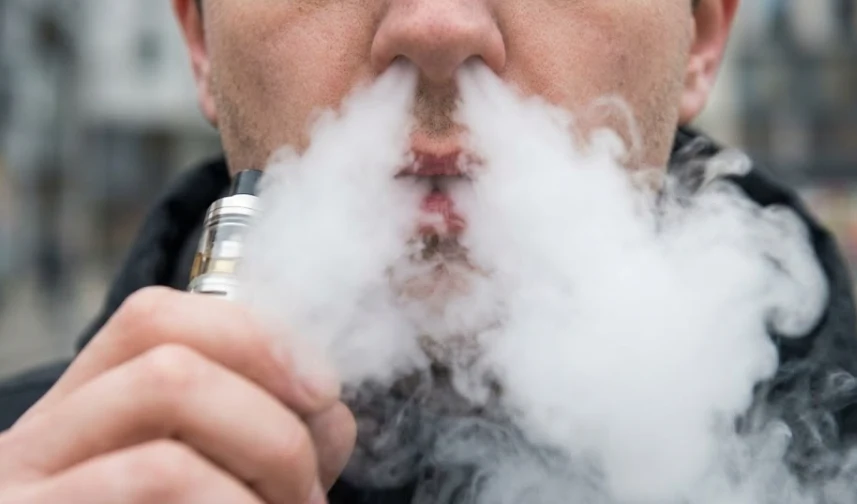
Is vaping better than smoking? In some ways, yes. But for your gums, the difference is negligible.
| Feature | Traditional Cigarettes | E-Cigarettes (Vaping) | Non-Smoker |
| Vasoconstriction | Severe. Cuts blood flow immediately. | Severe. Nicotine delivery is often higher/faster. | None. Healthy flow. |
| Temperature | High heat burns tissue. | Moderate heat can still dry/irritate tissue. | Body temperature. |
| Warning Signs | Staining, smell, tartar buildup. | None. Often “silent” until recession is advanced. | Bleeding if inflamed. |
| Gum Recession Risk | Very High. | High. Due to chemical irritation + nicotine. | Low (dependent on hygiene). |
FAQ: Common Questions About Vaping & Gum Health
“We wish we could say yes, but unfortunately, gum tissue does not regenerate. Once the gum line has receded and the root is exposed, it stays that way permanently. However, quitting stops the progression. At Lema Dental Clinic, we can fix the aesthetic damage with gum grafting or pinhole surgery, but only after you have stopped the habit that caused it.”
“It is safer, but not completely safe. Even without the vasoconstriction of nicotine, you are still subjecting your soft tissue to heated chemicals (flavorings and solvents). These ingredients can cause inflammation and dry mouth, which still contributes to recession, albeit at a slower rate than nicotine products.”
“This is a critical conversation we have with our international patients. Professor Doctor Coşkun Yıldız strongly advises stopping nicotine use at least 2 weeks before and 2 months after implant surgery. Because vaping restricts blood flow, it prevents the bone from healing around the implant, significantly increasing the risk of implant failure.”
“This is the first sign of recession. As the gum pulls back, it exposes the tooth root. Unlike the crown of your tooth, the root doesn’t have enamel armor. It is porous. When cold air from the vape hits that exposed root, it sends a shock wave directly to the nerve. This sensitivity is a red flag that you are losing gum attachment.”
“We can treat the symptom, but not the cause. If we perform a gum graft here in Turkey but you continue to vape, the blood supply to the new graft will be compromised, and it will likely fail or recede again. Successful long-term treatment requires a partnership: we repair the damage, you remove the trigger.”
- Sundar, V. V., et al. (2020). Influence of E-Cigarette on Oral Health: A Review. Journal of International Society of Preventive & Community Dentistry, 10(6), 671–676.
- Javed, F., et al. (2017). Periodontal conditions of electronic cigarette users compared to cigarette smokers and non-smokers. Journal of Periodontology, 88(10), 1052-1057.
- Manger, D., et al. (2020). The effect of electronic cigarette vapor on the oral soft tissues: A systematic review. Quintessence International, 51(5), 382–393.
- Rezk-Lega, F., et al. (2002). The effect of nicotine on the peripheral circulation. Clinical Physiology and Functional Imaging, 22(4), 277–280.
- Wadia, R. (2016). E-cigarettes and periodontal health. British Dental Journal, 221, 453.

