


Identify Ruined Tooth Enamel Early
Teeth are harder than any other part of the human body and are even tougher than bones that carry our weight. However, tooth enamel remains one of the most vulnerable substances. Let’s compare enamel to the reinforced helmet that protects the living part of a tooth. When the protective helmet is broken, the nerves, blood vessels or in fact the life of the tooth are exposed to the outside world.
At Lema Dental Clinic in Turkey, a lot of patients come to us for aesthetic changes but they are unaware that their main problem is not only cosmetic but also structural. Professor Doctor Coşkun Yıldız on many occasions tells our clinical team that a healthy smile should be the first step to a beautiful one. You can’t make a palace out of a broken foundation.
Enamel is scary because it doesn’t have living cells. This is why a broken bone can be fixed by the bone itself and the skin, which is healed by the formation of a scab. Enamel, on the other hand, doesn’t heal. When it is lost, it is lost forever.
It is a fact that signs of damage to teeth are gradual, and it is worth knowing them so you won’t lose your teeth.
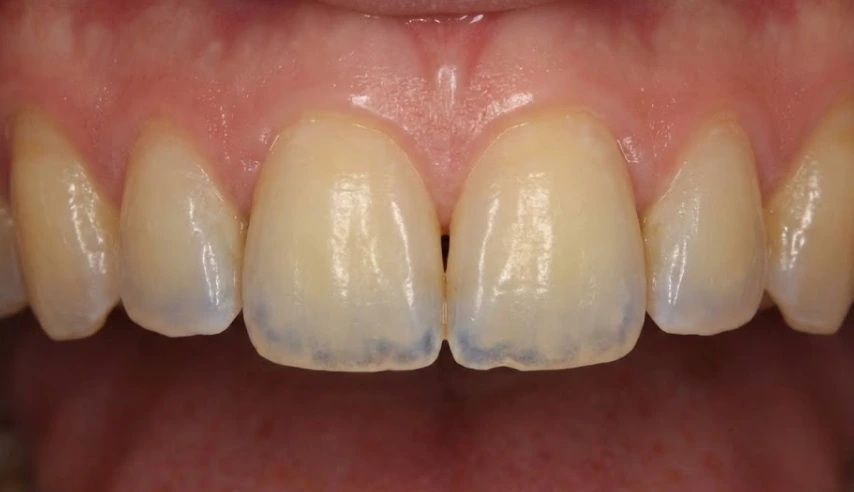
1. The Visual Shift: Color and Translucency
The initial signs are usually very obvious and they are coming from your reflection in the mirror. However, the problem is that, in most cases, people interpret these symptoms as simple stains without giving a closer look.
Normal enamel is a non-transparent, white porcelain–like layer. Dentin that is right under it is yellow. If enamel becomes thinner after being subjected to acid or through very hard brushing, then the white layer will turn into it. It is like looking at something through frosty glass that is being defrosted; a yellow surface behind it is becoming visible.
If you feel your teeth are getting more yellow and whitening toothpaste doesn’t help, what you are witnessing is not the result of surface stains. You are observing your tooth’s structure being changed.
Moreover, observe your front teeth’s tips closely. Are they almost transparent, bluish, or see-through especially under natural light? This “translucent framing” is a very strong indication of advanced erosion, and it means that the enamel edge has been worn away completely.
2. The Sensory Alarm: Sensitivity That Lingers
The visual changes are concerning, but the physical sensations are what usually drive patients into our clinic chairs in Turkey.
Healthy enamel acts as an insulator. When it’s intact, you can drink icy water or hot coffee without a second thought. When it is ruined, that insulation is stripped away. The microscopic tubules in the dentin leading directly to the tooth nerve are left wide open.
For example, the patients in the clinic told us they had a sudden, sharp zing like an electric shock when they ate something cold, hot, sweet, or very acidic (like grapefruit). At the very beginning, the pain disappears almost immediately. If you have completely broken down the enamel, that sensitivity will turn into a dull pain that goes on for a long time after the trigger is gone.
3. Structural Defeat: Cracks, Cupping, and Rounding
In the final stages of enamel destruction, the physical shape of the tooth begins to change. This is mechanical failure.
- Cupping: You may find small dents on the chewing surfaces of your back molars that look like someone had a tiny ice cream scoop and took a bite of a tooth. It happens because the softer dentin below wears away much quicker than the enamel rim left around it.
- Rounding and Cracking: The pointy parts of your front teeth could get worn down or chipped. There may also be very small cracks (craze lines) running from the top to the bottom of the tooth surface which shows that the tooth is being subjected to a great deal of stress.
A Progressive Decline: The Enamel Erosion Timeline
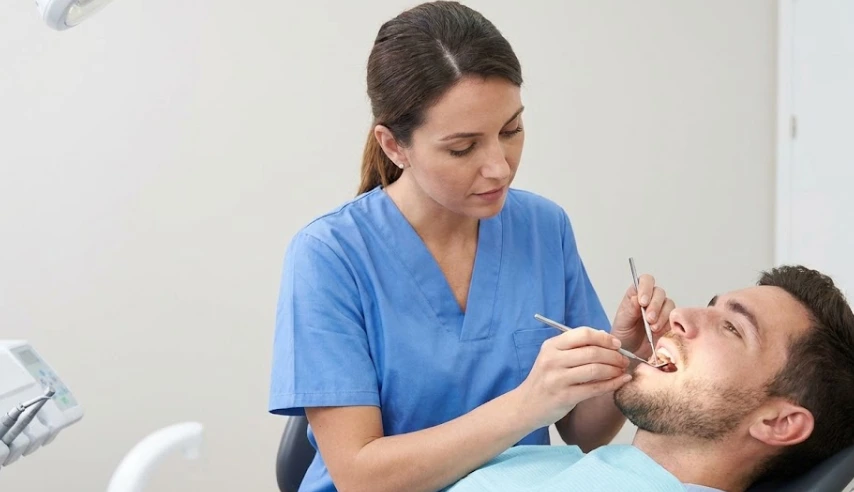
Understanding where you stand is vital. At Lema Dental Clinic, Dentist Polen Akkılıç and her team use a staged approach to diagnose the severity of the damage.
| Stage | Visual Indicators | Sensory Experience | Clinical Action Required |
| Early Erosion | Slight loss of luster; teeth look dull. | Occasional, brief sensitivity to very cold drinks. | Fluoride therapy, dietary changes, specialized toothpaste. |
| Moderate Damage | Distinct yellowing; edges look slightly translucent. | Consistent “zing” with hot/cold/sweets. | Bonding, potential thin veneers to seal tubules. |
| Severe (Ruined) | Significant yellow/brown hue; “cupping” on molars; chipped edges. | Lingering, painful sensitivity; discomfort while chewing. | Full restorative intervention (Crowns or thick veneers) to rebuild structure. |
The Lema Perspective: Moving Forward
If you recognize these signs in your own smile, panic is not the answer. Action is.
The reality is that while we cannot regrow your enamel, modern dental technology allows us to replace it brilliantly. In our clinical experience at Lema Dental Clinic in Turkey, we don’t just patch the problem. We reconstruct the protective layer.
Depending on the extent of the damage, Dentist Polen Akkılıç might suggest the least invasive bonding for very small areas whereas for characteristic widespread damage, she would go for porcelain veneers and zirconia crowns. These restorations are like a new, stronger “helmet” for the tooth that seals off the most sensitive part, restores the white appearance and gives you back the ability to eat without worry.
Do not ignore the warning signs. Your enamel is telling you it needs help.
FAQ: Direct Answers from Your Dental Team
This is very common. Many whitening toothpastes, especially charcoal varieties, are highly abrasive. They work by scrubbing off surface stains like sandpaper. If your enamel is already thin, you are essentially scrubbing away the remaining protective layer, exposing the sensitive dentin underneath. We generally advise patients with erosion to switch to low-abrasion, fluoride-rich toothpaste.
We need to be precise here. You cannot “regrow” the lost enamel structure. However, in the very early stages, you can “remineralize” areas that have softened but not yet worn away. Using high-fluoride products and eliminating acids can harden the remaining enamel surface, stopping the progression of the damage.
Often, it is both. However, the pattern looks different. Acid erosion (from soda, citrus, or reflux) usually leaves a smooth, scooped-out appearance on the inside surfaces or biting tops of teeth. Grinding (bruxism) typically flattens the tips of the teeth like a file, making them look shorter and blunt.
Not if the damage is severe. If the enamel is “ruined,” meaning significant structural loss and constant pain, a veneer might not be enough. A crown covers the entire tooth, providing a 360-degree new protective layer. It is often necessary to save the tooth from eventually fracturing or needing a root canal.
Unfortunately, no. Sugar causes cavities, but acid causes erosion. Diet sodas are just as acidic as regular versions, sometimes more so. The phosphoric and citric acids in these drinks dissolve the calcium in your enamel on contact, regardless of the sugar content.
- Lussi, A., & Carvalho, T. S. (2014). The future of fluorides and other protective agents in erosion prevention. Caries Research, 49(Suppl. 1), 18-29.
- Addy, M., & Shellis, R. P. (2006). Interaction between attrition, abrasion and erosion in tooth wear. Monographs in Oral Science, 20, 17-31.
- Bartlett, D. W., et al. (2013). The prevalence of tooth wear and erosive dietary factors in adults. Journal of Dentistry, 41(12), 1115-1121.
- Donovan, T., et al. (2021). Diagnosis and management of dental erosion. Journal of Esthetic and Restorative Dentistry, 33(1), 76-85.
- Zero, D. T., & Lussi, A. (2005). Erosion—chemical and biological factors of importance to the dental practitioner. International Dental Journal, 55(S4), 285-290.

