


Both are top-tier implants; the best choice depends on the patient’s needs.
You are looking at your treatment plan while sitting in the consultation chair and the first two names leading the global market that you come across are Straumann and Nobel Biocare. A frequent question that we at Lema Dental Clinic get isn’t “Are they good?” It is, “Which one is better?”
Here’s the sincere answer from the clinic: They are both excellent products.
Just like you can’t expect a single response to the question of which is better when you ask a professional race car driver to decide between a Ferrari and a Lamborghini, it’s also very hard to decide which is better here. Both are engineering masterpieces. Both have performance to the highest degree. The decision is not about quality but about the track the car is driven on. Here, the “track” refers to your individual jawbone structure.
We don’t make compromises at our clinic in Turkey, so we partner with both giants in the field. Give me one moment to explain why these two brands are at the top of dental implantology.
The Shared Standard: Excellence Without Compromise
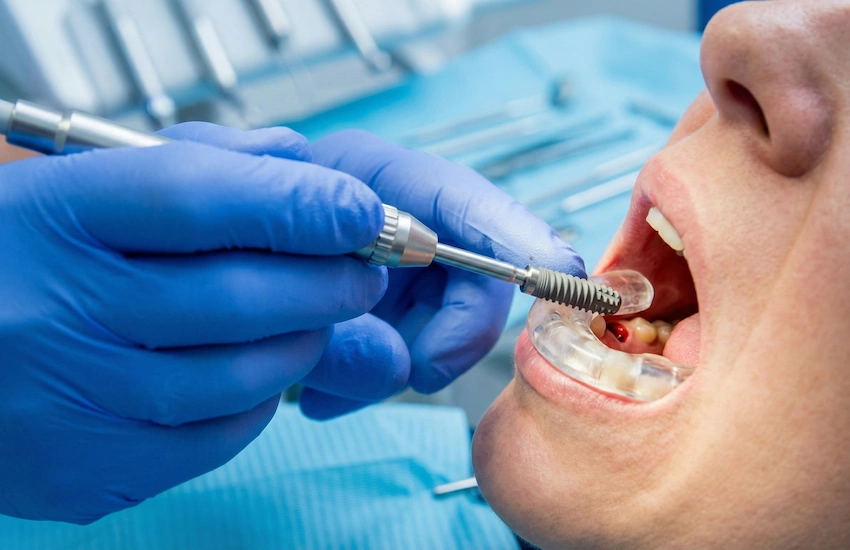
Excellence without compromising It is a fact that the market is flooded with hundreds of cheaper, generic implant manufacturers, but Professor Doctor Coşkun Yıldız refuses to compromise with the best implant brands for a very simple reason: predictability. When restoring a human smile, one cannot gamble with biology. Both of these Swiss-born giants have more than 40 years of clinical research backing them up. They don’t just follow trends; they create them. Whether it’s the purity of the titanium or the microscopic surface technology that attracts your bone cells, both brands deliver a level of trust that is simply unparalleled.
The truth is, if you opt for any of these systems, you are essentially selecting a lifelong solution.
Straumann – The Biological Masterpiece
Perhaps the biggest thing Straumann is known for is its focus on biology. They have created an implant surface that not only stays in the bone but also “talks” to it.
From the way we see it in practice, Straumann implants accelerate healing. The clue is in the name “SLActive®” which conveys that “hydrophilic” means water-loving. This means that as soon as it is in contact with your blood, it attracts healing cells that are pulled directly to the implant surface, thus greatly shortening the time zone for the bone to fuse.
Why it’s a winner:
- Faster Healing: It speeds up the integration of the implant with the bone, which is great for those patients who want to have a fast treatment.
- Strength in Small Packages: Their Roxolid® material (a titanium-zirconium alloy) has such a high strength potential that we can often opt for smaller implants in more constrained spaces, thereby avoiding you undergoing further bone grafting procedures.
Nobel Biocare: The Architect of “Immediate Function”
Nobel Biocare has just as much fame but for a different reason. They are the ones who totally changed the way we think about full-mouth restoration. If you know the “All-on-4” technique, you have Nobel to thank for it.
When Dt. Polen Akkılıç and her team need exceptional primary stability they turn to Nobel Biocare. Nobel implant designs resemble high-performance anchors. The genus of their screws aggressively clamps onto the bone with a firm grip which enables us to actually place temporary teeth on the very day of the surgery (Immediate Function).
Why it’s a winner:
- Versatility: It can perform well even in softer bone, where other implants may fail to find a good grip.
- Aesthetic Focus: Their “TiUnite” surface leads to well-maintained bone levels over a long time, thus helping the gum line around your crown to appear natural for years to come.
The Comparison: Two Paths to the Same Perfection
This is what we observe in the clinic: varied engineering philosophies, the same high-quality results.
| Feature | Straumann (SLActive / Roxolid) | Nobel Biocare (Active / Parallel) |
| Global Reputation | Recognized leader in biological research and surface technology. | Pioneer of “All-on-4” and immediate loading protocols. |
| Material Quality | Premium Titanium-Zirconium alloy. | Premium cold-worked titanium. |
| Success Rate | Exceptional (>98% long-term success). | Exceptional (>98% long-term success). |
| Healing Speed | Engineered for ultra-fast biological integration. | Designed for immediate stability and strong aesthetics. |
| Overall Evaluation | 10/10 Gold Standard. | 10/10 Gold Standard. |
So, How Do We Choose?
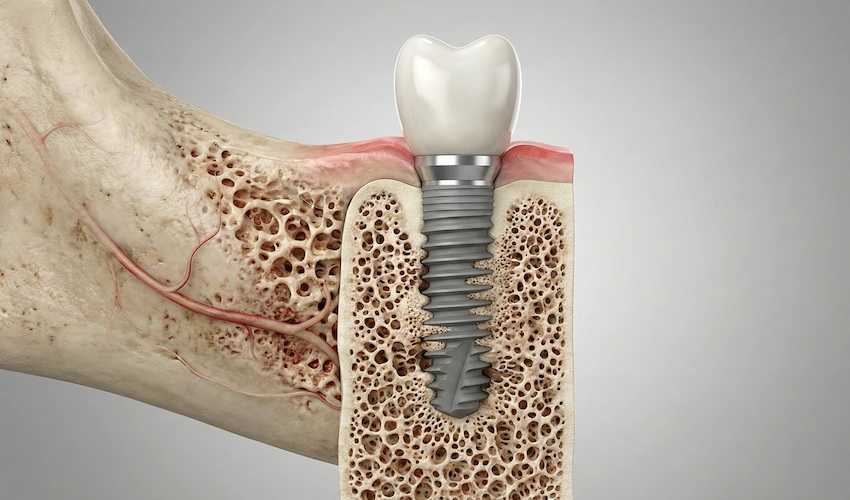
If one is a perfect 10 and the other is a perfect 10 as well, how do we decide which goes into your jaw?
It is a medical decision based on a thorough analysis, not chance. Professor Doctor Coşkun Yıldız studies your 3D tomography scan to assess your bone density, volume, and sinus proximity.
For a hard bone and if the speed is the main factor, the Straumann can be the ideal tool.
Suppose your bone is at a softer level or a full-jaw reconstruction along with immediate anatomical grip is required, then the Nobel Biocare implant may be the right choice at that moment.
The great thing about coming to Lema Dental Clinic is that you don’t even have to make a choice. We have both systems on standby. We can perfectly match the technology to your particular anatomy.
Frequently Asked Questions
Both are pretty much on the same level, so it is not that Straumann is more expensive. Think of them as Apple and Samsung; both are luxury, flagship products. The difference in price of your treatment plan mainly depends on how complicated your surgery is (sinus lifts, bone grafts), rather than how much the two particular screws cost.
Amazingly, we just can’t put our names to it. At least several hundred “copycat” implant brands exist, which cost half the price. But they do not have the decades of long-term data that Straumann and Nobel have. Your health is our good name. We only use implants that we are confident will last a lifetime.
Most likely, you won’t. Both of the implants once the crown is cemented on top are equally like your natural tooth root. It won’t be possible for you to know which brand is under the gum—what you will know is that it feels strong, stable, and solid.
Yes, and that is an important point. Straumann and Nobel Biocare are brands that are most commonly used all over the world. Let’s say, for instance, you are from the UK, USA, or Germany and a screw will need to be tightened 10 years later, a dentist in your city will have the tools for these brands. What you are getting is a global passport for your dental health.
For the one that suits the bone of the patient, obviously, he decides to use that one. He thinks of them as different tools in the same master kit. The final result is always a healthy, lifelong integration. The one that most safely takes you there is the one he chooses.
- Buser, D., Janner, S. F., Wittneben, J. G., Brägger, U., Ramseier, C. A., & Salvi, G. E. (2012). 10-year survival and success rates of 511 titanium implants with a sandblasted and acid-etched surface: A retrospective study in 303 partially edentulous patients. Clinical Implant Dentistry and Related Research, 14(6), 839-851.
- Maló, P., de Araújo Nobre, M., Lopes, A., Moss, S. M., & Molina, G. J. (2011). A longitudinal study of the survival of All-on-4 implants in the mandible with up to 10 years of follow-up. Journal of the American Dental Association, 142(3), 310-320.
- Al-Nawas, B., & Kammerer, P. W. (2011). Rare earth elements in dental implants: A review of the literature. International Journal of Implant Dentistry, 3(1), 1-8.
- Wennerberg, A., & Albrektsson, T. (2009). Effects of titanium surface topography on bone integration: A systematic review. Clinical Oral Implants Research, 20(s4), 172-184.
- Nicolau, P., Guerra, F., Reis, R., & Brägger, U. (2013). 10-year outcomes of Straumann® Dental Implants in partially edentulous patients. Periodontology 2000, 62(1), 123-145.

