


People often ask if herbal tea is bad for the teeth. The best thing is to keep an open mind and systematically explore what the literature says. One has to realize that tea has a significant impact on oral health and along with that, there is a need to understand the precautions one should take to get the benefits and not the disadvantages of tea.
Herbal tea used to be one of the most important counterexamples to “health at the expense of money” type of things, in which it was the ideal lie of a health-conscious, earth-friendly lifestyle instead of common caffeine-based drinks. But what about oral health? The question will still pop up, “Is it habben or not?” The solution does not have to tell the story in quite the way you may expect. It still makes much more sense to drink herbal tea rather than soda or coffee, but you are not wholly informed of the tea impacts on dental health.

What Are Herbal Teas Made Of?
Herbal teas are a blend of leaves, flowers, seeds, or the roots of plants which are different from the tea plant (Camellia sinensis). Some common herbal teas are peppermint, chamomile, ginger, and hibiscus. Even the teas which are very helpful for the health of the person can not avoid to have some side effects for the teeth. The main three factors that will determine the extent of herbal teas’ influence on teeth are acidity, sugar, and tannin levels.
Acidity and Enamel Erosion
One of the main issues that are raised against herbal teas is the acid content of such teas. Acid slowly but surely erodes the enamel, which is the teeth’ protective outer layer and is also the thinnest one. Consequently, when the enamel is weak or is partially removed then the next layer the dental pulp gets less protected and so, the dental decay, sensitivity, and also the discoloration problems are possibilities. Most people will be shocked to learn that some herbal teas such as hibiscus and lemon balm may be so acidic that they might be a source of enamel erosion intoxication, provided of very large quantities, and taken regularly over a long period of time.
Although it is true that herbal teas are normally less acidic than coffee, enamel wear can still be their consequence if the consumer drinks a large quantity or takes small sips over a long period. As a way to avoid enamel erosion, the recommendation is to consume herbal tea moderately and then rinse your mouth with water.
Tannins and Staining

Tannins are one of the many natural ingredients in herbal tea such as chamomile, black tea, and peppermint. These substances are capable of staining your teeth little by little, moreover, if you are a tea lover and used to taking it frequently. Tannins have such an effect on the mouth that they can get attached to proteins which makes the present area to contain residues of the sticky substance that is the result of these binding and can cause your teeth to turn into the color of the tannins.
While it is true that herbal teas are less staining than traditional ones such as coffee and black tea, there still are some herbal blends that are capable of leaving stains, e.g., hibiscus. Thus if you are worried about it, the lightest herbal tea would be the most suitable choice, and to avoid discoloration, do not drink it in large quantities and brush your teeth well after having tea.
Sugar Content and Tooth Decay
If sugar was dissolved in your herbal tea and you were to drink it regularly it is also likely that sugar is going to cause you a severe dental decay problem. In other words, whether you add sugar, honey, or some other sweetener to your herbal tea, you will be one step closer to the development of dental caries. Sugar-eating bacteria in the mouth produce acids from the consumed sugar which acids can weaken enamel and the result can be the appearance of cavities.
To avoid this, tea would taste better without sugars added. If you can’t do without your tea sweet, natural sweeteners like stevia should be the option. Moreover, drinking herbal tea after a meal can make the acids in the mouth neutralize and thus the risk of cavities decreases.
Benefits of Herbal Tea for Oral Health
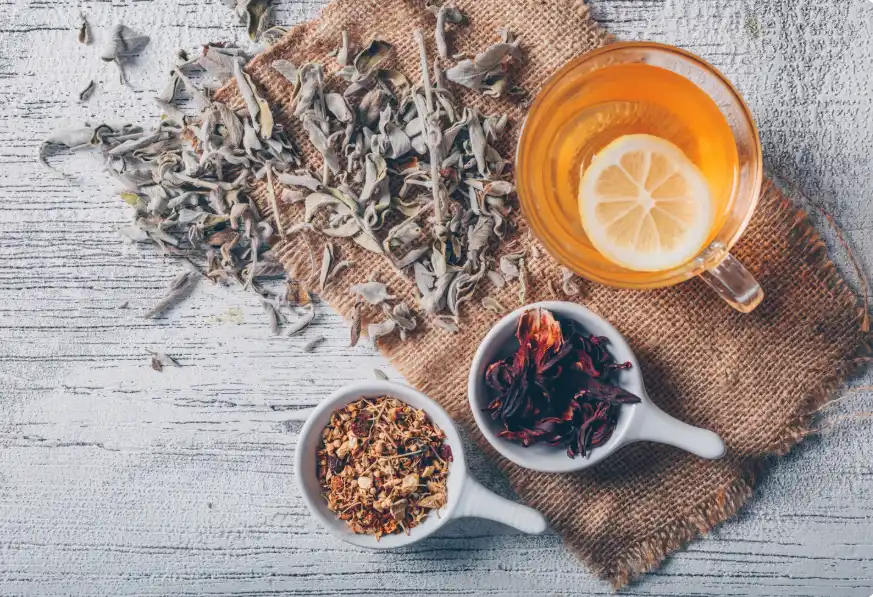
Herbal tea can securely offer some unexpected benefits to one’s oral health in spite of its possible drawbacks. In fact, most herbal tea is loaded with antioxidant, anti-inflammatory, and antimicrobial properties that will not only require the gums to be healthy but also add freshness to the mouth. For instance, along with the ability to breath the mouth peppermint tea is also known to help fight bacteria and with chamomile tea, it is possible to calm irritations of the gums and reduce inflammation.
Herbal tea, if taken in moderation, can be a good remedy for dry mouth as it will keep the stoma open by irritating the production of saliva the usual rinsing of the mouth away of the particles of food and bacteria, which results in good teeth and gums.
Tips for Enjoying Herbal Tea Without Damaging Your Teeth
- Drink in Moderation: In this way you can stop the most frequent tea problem – enamel erosion.
- Rinse with Water: This should be done after every cup of herbal tea.
- Avoid Sugary Additives: By not using sugar or honey for your tea you will be able to protect your teeth.
- Use a Straw: It is very advisable to always have a straw with you when you have an iced herbal tea rather than holding the tea glass.
- Brush Your Teeth: Besides maintaining your oral hygiene, the brushing will also serve as a stain remover from your tea consumption.
Conclusion

Herbal tea is not a direct cause of tooth decay, but the overall impact on your oral health will depend on the way you drink it. Though herbal tea is packed with health virtues, the consumer should be aware of its acidity, tannin, and sugar content. Just following a few easy-to-follow recipes will let you enjoy your favorite herbal teas and keep your teeth shining.
If you want advice about oral hygiene and keeping your teeth white and healthy, then Lema Dental Clinic in Istanbul is the place where you can get the best dental treatments, including smile transformations, dental implants, and veneers. Be the first to get our help so that you can keep your healthy smile for a long time!
References
- American Dental Association (ADA). “Acidic Beverages and Their Impact on Oral Health.” ADA.org.
https://www.ada.org - British Dental Association (BDA). “The Effects of Tannins on Teeth.” BDA.org.
https://www.bda.org - Mayo Clinic. “Herbal Remedies and Your Teeth: What You Need to Know.” MayoClinic.org.
https://www.mayoclinic.org - Harvard T.H. Chan School of Public Health. “The Role of Antioxidants in Oral Health.”
https://www.hsph.harvard.edu - WebMD. “How Drinking Tea Affects Your Teeth.” WebMD.com.
https://www.webmd.com
National Institute of Dental and Craniofacial Research (NIDCR). “Tooth Enamel and Its Importance.” NIDCR.nih.gov.
https://www.nidcr.nih.gov
Frequently Asked Questions About Herbal Tea and Teeth
Herbal tea is generally not harmful to your teeth if consumed in moderation. However, some herbal teas can be acidic or contain tannins, which can erode enamel and cause staining over time. It’s best to drink herbal tea in moderation and rinse your mouth with water afterward to minimize any potential negative effects.
Yes, some herbal teas, especially those that are acidic like hibiscus or lemon balm, can contribute to enamel erosion. Acidity weakens the enamel, which is the protective outer layer of your teeth. To reduce this risk, avoid sipping tea over long periods and rinse your mouth with water afterward.
Yes, herbal teas containing tannins, like chamomile, peppermint, and hibiscus, can cause staining on your teeth. The tannins bind to proteins in your mouth, leaving a residue that can adhere to your teeth. Brushing your teeth regularly can help reduce staining from herbal tea.
Adding sugar to herbal tea can contribute to tooth decay. Sugar feeds bacteria in your mouth, which then produce acids that can damage tooth enamel. It’s best to drink herbal tea without sugar or opt for natural sweeteners like stevia.

