


Wear retainers, follow doctor’s orders.
Congrats, you are done. The brackets are off, the wires are out, and you are staring at the smile you have waited months or even years for. At Lema Dental Clinic in Turkey, we are overjoyed with our patients at that moment. However, the truth is that we always tell the patients before they leave the chair, and it is a bit hard for them to accept: removal of braces is not the end of your orthodontic journey, it is just the beginning of the “retention phase.”
Prof. Dr. Coşkun Yıldız compares teeth to a rubber band that is stretched. Even if you move them to the perfect position, they are still biological “remembering.” Without anything to prevent it, they will naturally return to their original position. This is the orthodontic relapse you hear so much about, but the perfect smile is the silent victim of it.
Biology of “Drifting”
Why do teeth shift? The answer is periodontal ligaments-the small elastic fibers that fix your teeth to the bone of the jaw. When you were treated by Dentist Polen Akkılıç and her team, pressure was applied to stretch and pioneer the remodeling of these fibers.
However, when your braces are removed, these fibers are definitely not yet “cemented” in their new positions. They are still liquid and unstable for quite a few months. If you refuse to wear the retainer, you aren’t just going to have a little movement; you are going to lose the whole treatment.
The Lema Protocol: Your Retention Options
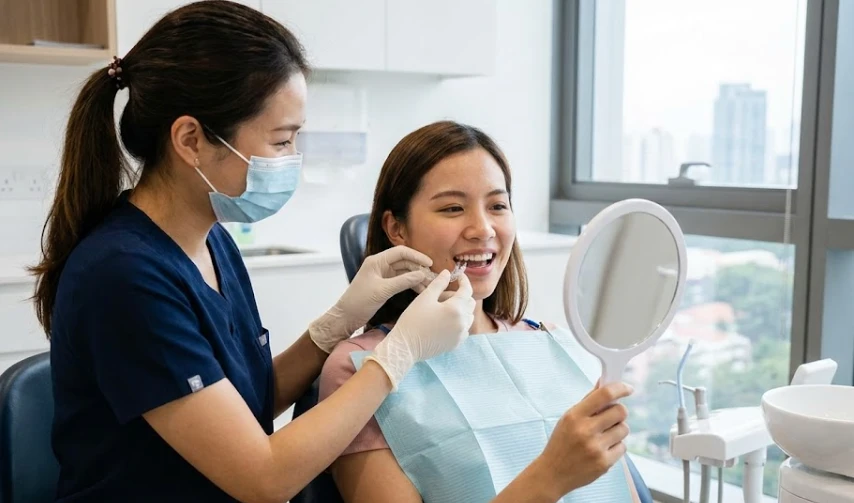
We have not found a “one size fits all” retainer in our clinical experience. We decide on the retainer based on how severe the misalignment was initially and the person’s way of life.
- Fixed retainers (The permanent guard): A very thin wire which is bonded at the back surface of your front teeth. It is invisible and serves as the daily anchor. For, those who had the crowded situation significantly, we highly recommend this one.
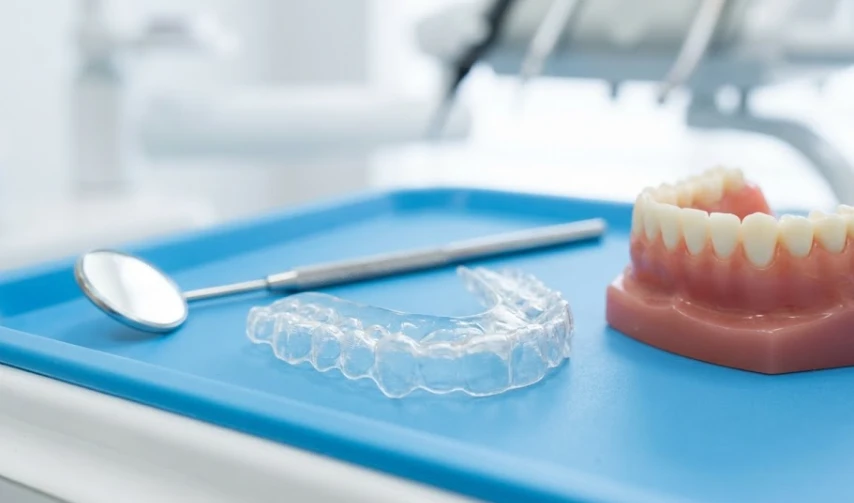
- Essix retainers (The invisible shield): You can say they are like Invisalign aligners—they are the clear plastic trays that just fit over the teeth. These retainers are very effective for the whole arch retention and also, you must be disciplined if you want to see the results.
- Hawley retainers (The classic): These consist of metal and acrylic parts. They are more visible but at the same time, more resistant and they allow the bite to settle in.
| Feature | Fixed (Bonded) Retainer | Essix (Clear) Retainer | Hawley (Wire) Retainer |
| Visibility | Completely Invisible (Behind teeth) | Barely Visible (Clear plastic) | Visible (Metal wire) |
| Durability | High (can last years) | Moderate (may crack/wear) | Very High (lasts decades) |
| Maintenance | Requires floss threaders | Rinse daily, brush gently | Brush daily, soak weekly |
| Compliance | 100% (bonded in place) | Dependent on patient habit | Dependent on patient habit |
| Comfort | High after initial adjustment | High (smooth plastic) | Moderate (acrylic bulk) |
Habits That Sabotage Straightness
The truth is a retainer can only do so much without breaking your daily habits. We often come across clients who unintentionally twist the alignment of their teeth.
Think of tongue thrusting. When you swallow by pressing your tongue against your front teeth, the pressure from this motion—which happens thousands of times in a day—can cause the reopening of spaces between your teeth. In the same way, long-term teeth grinding (bruxism) is a jackhammer constantly hitting your newly straightened bite. If we find evidence of grinding at Lema Dental Clinic, getting a special night guard that also works as a retainer is what we would prescribe.
The “Settling” Period
You may experience minor changes right after the removal of braces. Dentist Polen Akkılıç explains that patients can be reassured as some “settling” is normal and even beneficial. Your top and bottom teeth have to find a comfortable place to chew. Nonetheless, there is a thin margin of error between settling and shifting. That is why our follow-up stays in Turkey retains utmost importance – we keep an eye on these tiny movements so that they are not turned into big problems.
FAQ: Mastering Life After Braces
For the rest of your life. It sounds intense, but it is the golden rule of orthodontics. The first 6–12 months usually require full-time wear (20+ hours a day). After that, if Professor Doctor Coşkun Yıldız approves, you can switch to “night-only” wear. But if you stop completely, your teeth will move.
Call us immediately. Do not wait for your next scheduled check-up. Teeth can begin shifting within days of not wearing a retainer. If you are an international patient who has returned home from Turkey, visit a local orthodontist for a replacement or contact us for guidance on getting a temporary mold made.
This is a controversial topic, but here is what we see: wisdom teeth exert pressure from the back of the mouth. While they may not be the sole cause of crowding, they can contribute to the “squeeze,” especially in the lower jaw. We often recommend a panoramic X-ray to decide if they should be removed to protect your orthodontic results.
Hygiene is the biggest challenge here. Because you can’t thread regular floss between the teeth bonded by the wire, you must use a floss threader or a specialized “superfloss.” Water flossers are also fantastic tools for blasting debris out from under the wire without damaging the bond.
That tightness is your warning signal. It means your teeth have already started to shift. If the retainer still fits (even if it’s snug), wear it full-time for a few days until the tightness subsides. If you cannot force it on, do not try—you could damage your teeth. You likely need a new scan and a new retainer.
- Little, R. M. (1988). Stability and relapse of dental arch alignment. British Journal of Orthodontics, 17(3), 235-241.
- Proffit, W. R., Fields, H. W., & Sarver, D. M. (2018). Contemporary Orthodontics. Elsevier Health Sciences.
- Blake, M., & Bibby, K. (1998). Retention and stability: A review of the literature. American Journal of Orthodontics and Dentofacial Orthopedics, 114(3), 299-306.
- Kaplan, H. (1988). The logic of modern retention procedures. American Journal of Orthodontics and Dentofacial Orthopedics, 93(4), 325-340.
- Zachrisson, B. U. (1996). Clinical experience with direct-bonded orthodontic retainers. American Journal of Orthodontics, 71(4), 440-448.

