


Restore optimal bite alignment and jaw function with advanced care.
Dental occlusion refers to the contact of your upper and lower teeth during activities like biting, chewing, and speaking. Good occlusion facilitates smooth jaw movement, proper force consideration, and continuous oral health support. In cases where the occlusion changes, the teeth receive an uneven press, the jaw muscles become overworked and the joints of the pale receive strain. The outcome of such a state affects chewing ability, tooth enamel wear, and comfort levels, in general, over time.
Correction of dental occlusion comes after a well-established, medically sound approach that emphasizes, among other things, correct diagnosis, minimalistic correction and stability over a long period. Treatments vary for each individual based on their bite, dentition, and functional requirements. The occlusal corrections under the mentorship of highly skilled dentists such as Dentist Polen Akkılıç and her assistant, or Professor Doctor Coşkun Yıldız, the main focus is on achieving synchronization of the teeth, muscles, and joints rather than just suppressing the symptoms.
Understanding Dental Occlusion Problems and Bite Misalignment
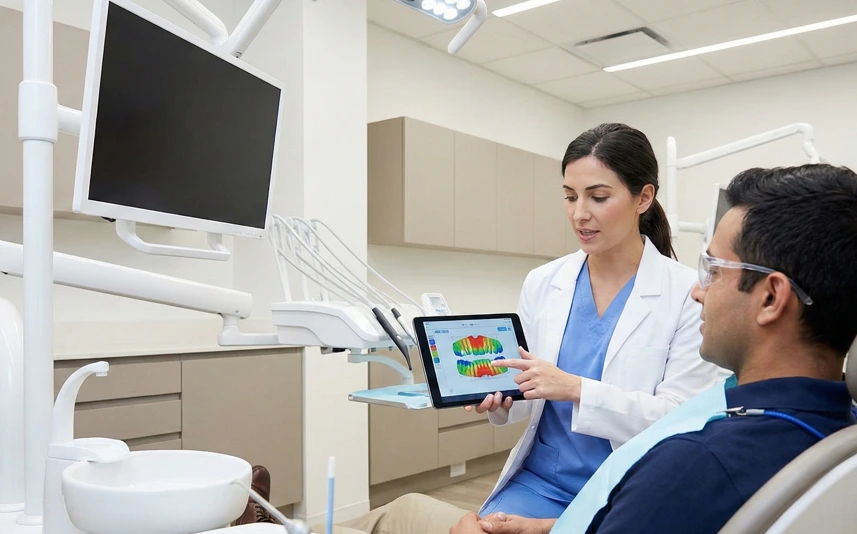
Problems with dental occlusion happen when the teeth fail to line up or make equal contact during function. Deep bite, open bite, crossbite, and edge-to-edge bite are some of the common examples. Each of them changes the direction in which the forces travel through the tooth and the bone. Concentration of such forces in a specific small area will result in speeding up enamel wear as well as stressing the periodontal tissues.
Occlusal problems are mainly caused by tooth loss, drift of teeth, restorations with the wrong heights, or parafunctional habits like clenching and grinding that occur gradually. It is vital to catch them early because in most cases, untreated occlusal problems will become worse over time. The combination of a comprehensive clinical examination with digital bite analysis gives the dental professional a clear idea of the source of the imbalance, allowing him/her to devise the most accurate solution.
Diagnostic Methods to Fix Dental Occlusion Accurately
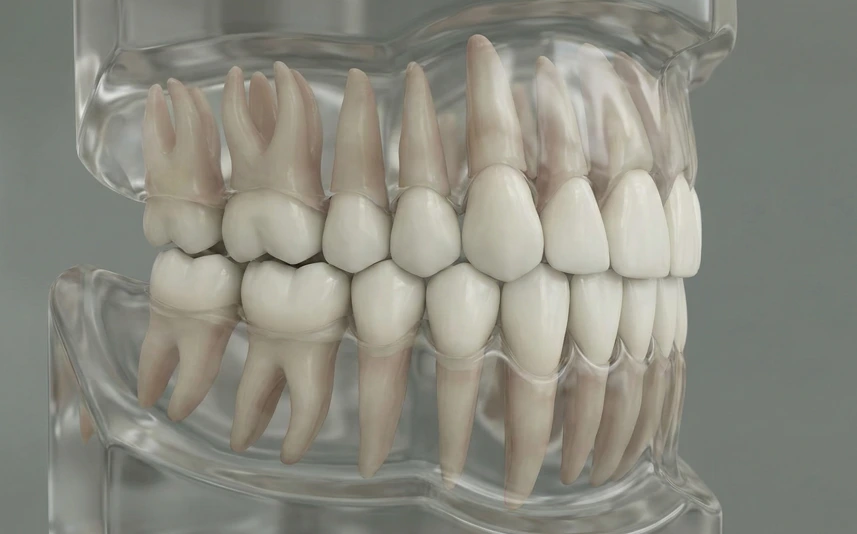
Precise diagnosis is the basis on which successful occlusion therapies are built. Dentists evaluate occlusal relationships during oral examinations through various methods such as articulating paper, digital occlusal analysis, and radiology. These instruments help in detecting early contacts, uneven pressure areas and discrepancies in jaw position.
A further step in diagnosing may include the assessment of the masticatory ramus as well as the disorders of the joint. The goal here is to make sure that the issues arising from both the dental and the functional sides are attended to. An accurate diagnosis means that the patient will not be subjected to excess treatments which, in turn, leads to outcomes that can be confidently predicted. Therefore, dentists can come up with a plan that not only saves their patients’ dentition but also ensures the longevity of the treatment.
Non-Surgical Treatments to Fix Dental Occlusion Safely
Occlusal problems that have arisen during the course of a lifetime may often be resolved with the use of non-invasive conservative methods. One such method is an occlusal adjustment which means the elimination of small, unnecessary enamel projections, creating a micro-mirror of the occlusion. If handled carefully, this procedure is able to enhance both comfort and functionality of the bite without having to sacrifice the tooth structure.
In most cases, orthodontics goes hand in hand with occlusion correction. Clear aligners or fixed braces help move the teeth into proper alignment, the result of which is a balanced contact across the arch. Furthermore, specially made night guards prevent damage caused by an overload of force that results from clenching, as well as allow muscles to relax and at the same time protect the teeth.
Among the most common non-surgical procedures, which are also quite effective, are:
- Occlusal equilibration in case of slight changes in the bite
- Using clear aligners or braces to bring the teeth back to their normal position
- Making occlusal splints or night guards for perfect fitting of teeth
- Replacing lost teeth with such restorations that also restore the proper bite height
Restorative and Surgical Options for Severe Dental Occlusion Problems
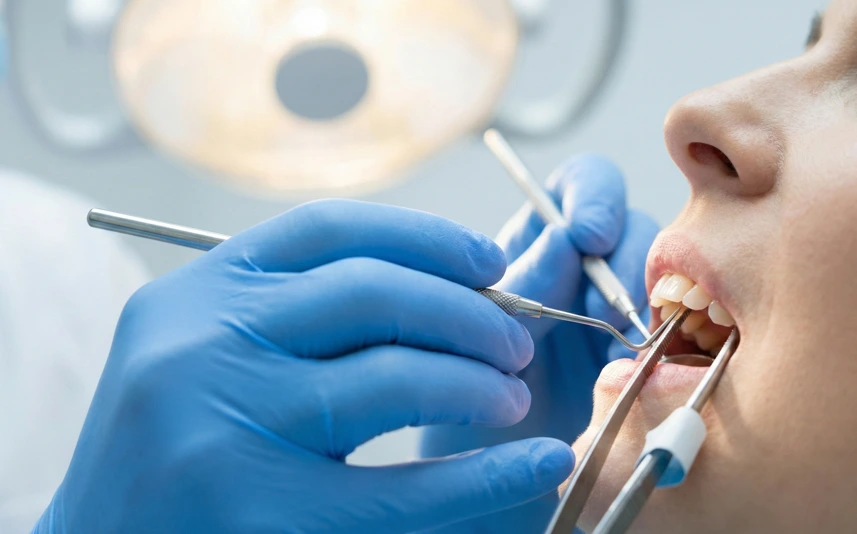
When occlusal problems become so severe that they can no longer be fixed by the use of conservative measures, then restorative or surgical procedures come in handy. Crowns, onlays, and bridges are the usual methods of rebuilding the injured or shortened teeth in order to achieve the right vertical dimension and balanced contact. Full integration of each restoration into the patient’s natural bite is what every dentist aims for.
issues involving the dental bones are the ones that can be solved through orthognathic surgery. This method entails the correction of the jaw alignment from the structural viewpoint and is digitalized for accurate planning. Once the surgical correction is performed by highly skilled teams, it is able to bring back the facial symmetry, chewing efficiency as well as jaw health and this is accompanied by a high rate of successful outcomes.
Long-Term Management and Bite Stability After Occlusion Treatment
The truth of the matter is that correcting dental occlusion should not be regarded as a single event but rather a long-term endeavor. Post Correction maintenance is all about keeping things as they are. Through the periodic reviews, clinicians can ascertain that the wear track, the restoration tissues as well as the muscles are in perfect harmony.
Some decisions and actions of patients can also be quite helpful in the process of keeping the spring correct. Following a good oral care regime, exercising the right kind of habit using the appliance as well as getting rid of the harmful habits will be a source of strength for stability. Long run achievement is a function of not only professional supervision but also personalized care and understanding.
| Treatment Method | Primary Purpose | Best For | Long-Term Benefit |
|---|---|---|---|
| Occlusal adjustment | Balance minor contacts | Mild bite discrepancies | Immediate comfort improvement |
| Orthodontic treatment | Reposition teeth | Crowding, malalignment | Stable, functional alignment |
| Restorative dentistry | Rebuild bite height | Worn or missing teeth | Restored chewing efficiency |
| Occlusal splint | Reduce excessive forces | Clenching or grinding | Joint and muscle protection |
| Orthognathic surgery | Correct skeletal issues | Severe jaw misalignment | Structural and functional harmony |
Frequently Asked Questions About How to Fix Dental Occlusion
Dentists diagnose occlusion using clinical examination, digital bite analysis, and imaging to identify uneven contacts and jaw relationships.
Yes, many occlusion problems improve with orthodontics, occlusal adjustment, or restorative treatments when diagnosed early.
Treatment duration varies based on severity and method, ranging from a single adjustment visit to several months of orthodontic care.
Correcting occlusion balances bite forces and often reduces muscle strain and joint discomfort when properly planned.
Custom night guards protect teeth and joints from excessive forces and support muscle relaxation during sleep.
Properly designed restorations restore correct contact and bite height, improving function and stability.
Orthodontics improves both appearance and function by correcting tooth position and bite relationships.
Untreated occlusion problems can lead to tooth wear, fractures, gum issues, and jaw discomfort over time.
Regular dental visits allow monitoring of bite stability and early correction of any changes.
Complex cases should be managed by experienced clinicians such as Dentist Polen Akkılıç and her team or Professor Doctor Coşkun Yıldız to ensure safe, predictable outcomes.
- Ferrario, V. F., Tartaglia, G. M., Galletta, A., Grassi, G. P., & Sforza, C. (2002). The influence of occlusion on jaw and neck muscle activity: A surface EMG study in healthy young adults. Journal of Oral Rehabilitation, 29(6), 506–513.
- Manfredini, D., Bucci, M. B., Montagna, F., & Guarda-Nardini, L. (2011). Temporomandibular disorders assessment: A comparison of clinical and instrumental approaches. Journal of Oral Rehabilitation, 38(10), 753–760.
- McNamara, J. A., & Brudon, W. L. (2001). Orthodontic and orthopedic treatment in the mixed dentition. Needham Press.
- Okeson, J. P. (2020). Management of temporomandibular disorders and occlusion (8th ed.). Elsevier.
- Palla, S. (2013). Occlusion and temporomandibular disorders: A clinical perspective. Journal of Oral Rehabilitation, 40(2), 78–85.
- Proffit, W. R., Fields, H. W., Larson, B. E., & Sarver, D. M. (2019). Contemporary orthodontics (6th ed.). Elsevier.
- Türp, J. C., & Schindler, H. J. (2012). The dental occlusion as a suspected cause for TMDs: Epidemiological and etiological considerations. Journal of Oral Rehabilitation, 39(7), 502–512.

