


Yes, denture adhesive can cause a sore throat if swallowed too much or if it irritates the mouth.
Many times, we hear patients complaining to us at the clinic that they have had a throat problem that has resulted in a scratchy throat for a long time, while trying to figure out what caused it. When they realize that this symptom is constant, the first thing they do is blame allergen exposure during certain seasons of the year. At this point, if the doctor asks, they also blame the dry air in their bedroom. Well, we want to point out that if you are a denture wearer, the problem might be, essentially, the denture solution sitting on your bathroom counter.
The fact is, denture paste, which is meant to keep your teeth in place,e can be the cause of a sore throat;t, it is that serious. Having crumbs of the denture glue stuck in your throat every day is not only deeply unpleasant but, what is even more worrying, it can harm your health.
Ways in Which Denture Fixatives Can Irritate Your Throat
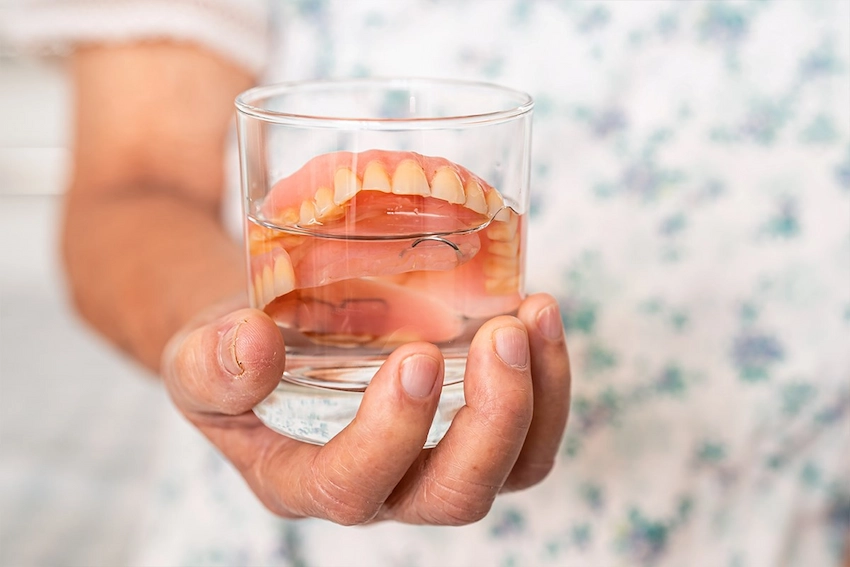
We at Lema Dental Clinic regularly come across various cases of injuries that traditional adhesives cause to the oral mucosa over a long period. To illustrate, consider the soft skin of your throat as a delicate sponge. It is that way, given its natural function, which is to handle natural food and water. Unfortunately, it is highly unlikely that such a fragile mucosa will withstand daily exposure to synthetic plastics, zinc, and fake preservatives.
Whenever talking or chewing causes your dentures to loosen a bit, tiny doses of the adhesive dissolve in your saliva. You are swallowing these doses unknowingly. This continuous drip of chemicals might be resulting in the reddening and swelling of tissues. One of the symptoms that you may get as a result is a sore throat that lasts for a long time, a dry cough, and you may even get astomachachee.
Something to be Wary Of
One of the times that Professor Doctor Coşkun Yıldız raises the point most emphatically is that patients are almost totally unaware of the composition of their denture paste. The excess zinc that you swallow through these preparations does not simply lead to throat pain. Prolonged zinc poisoning leads to nerve damage, tingling sensations in the hands and feet, and accumulation of toxins in the body. Some brands have recently removed zinc from their preparations and thus are safer. However, the paste itself is still a thick chemical that is a harsh intruder to your natural body tissues.
Adhesives versus Permanent Restoration – The Final Decision
That leaves us with the question, ‘if glues are so bad for you, what should you do?’
Most of the patients travelling to us in Turkey are those who want to bid farewell to the past and sore throats forever. Here is a look at your options:
| Dental Solution | Risk to Your Throat | Bite Force & Chewing | Daily Maintenance |
| Traditional Dentures (with glue) | High (Chemicals drip into throat) | Low (Only 15-20% of natural bite) | High (Daily gluing, soaking, cleaning) |
| All-on-4 / All-on-6 Implants | None (No glue needed) | Excellent (Up to 90% of natural bite) | Low (Normal brushing and flossing) |
| Zygomatic Implants | None (Anchored to the cheekbone) | Excellent (Immediate strength) | Low (Functions just like natural teeth) |
Seeking Freedom From Glue in Turkey
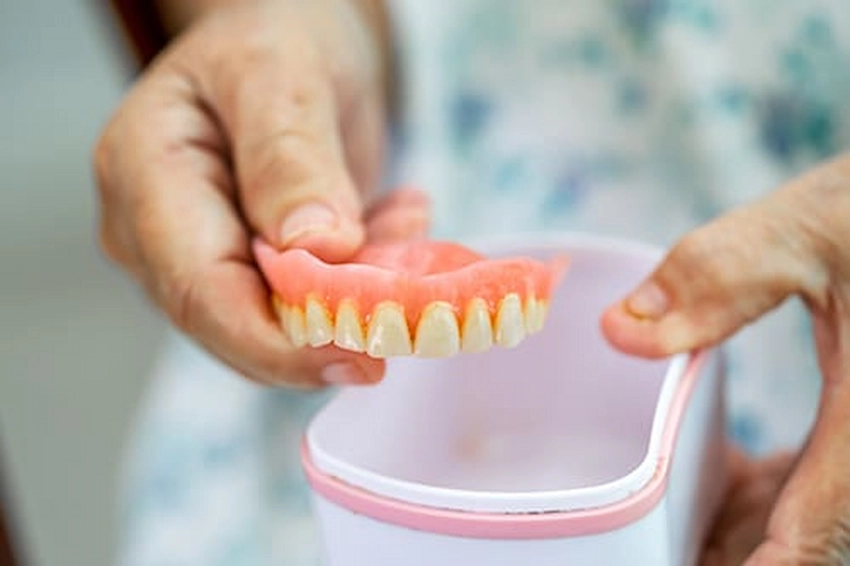
You don’t need to live with throat pain. In fact, dentistry nowadays hardly involves chemicals and pastes at all. Dentist Polen Akkılıç and her team are experienced in helping their patients to switch from the glued dentures that they are used to to a set of permanent teeth.
Permanent implants, like the roots of a solid building, go deep into the jawbone and hold the teeth, not the scrappy dentures on gums, and glue is not used either. That is why the tooth will be in a fixed place; it will never move, and you will be free of adhesive.
Here is a very common thing that takes place at the clinic: the patients who change to implants even wonder if they have to come back for a check-up, as their throat, which has been hurting, no longer does so. More than that, they get their confidence back, and best of all, they are healthy permanently.
Frequently Asked Questions
Can swallowing denture glue make me sick?
It may do. Taking little pieces of glue into your body every day might cause you to have an upset stomach and an irritated throat. The presence of zinc in your glue preparation is a risk factor to be kept in mind, since if you use it for an extended period, you may end up with nerve damage and tingling in your extremities (feet and hands).
Why does my throat feel dry after I put my dentures in?
Adhesives contain strong chemicals that are capable of absorbing moisture so that they can stick to your gums even when they are wet. When these chemicals mix with your saliva and go down your throat, they usually get rid of moisture in the natural tissues, making them feel rough and dried out.
How do I know if my sore throat is from my dentures or a cold?
Experiencing a sore throat over a long period of time with no fever would be an indication that it could be the glue. Try a day without your dentures or using less glue. If your throat improves, the adhesive is probably the culprit.
Are zinc-free glues completely safe for my throat?
They eliminate the danger of being exposed to heavy metals. But apart from the fact that all the ingredients, ts such as synthetic plastics and gums that work together to form a strong bond, leading to the retention of materials, they are also a most adequate source of allergic reactions as well as physical rubbing in the sensitive throat.
What is the best way to stop using denture glue?
An implant-supported denture is the best alternative since you will never require adhesive again. Their new teeth will be securely locked to their jaw because of the systems,s such as All-on-4 or Zygomati,c which we offer in Turkey.
Academic References
- Davenport, J. C., Basker, R. M., Heath, J. R., & Ralph, J. P. (2000). The use of denture adhesives. British Dental Journal, 189(5), 246-247.
- Koymen, R., & Karamese, M. (2018). Cytotoxicity of denture adhesives on human gingival fibroblasts. Journal of Applied Oral Science, 26(1), e20170068.
- Nations, S. P., Boyer, P. J., Love, L. A., Burritt, M. F., Butz, J. A., & Wolfe, G. I. (2008). Denture cream: an unusual source of excess zinc, leading to hypocupremia and neurologic disease. Neurology, 71(9), 639-643.
- Coelho, C. M., Sousa, Y. T., & Daré, A. M. (2004). Denture adhesives: Composition, clinical parameters, and cytotoxicity. Brazilian Dental Journal, 15(2), 142-148.
- Kiat-Amnuay, S., Mekayarajjananonth, T., Salinas, T. J., Zhong, Y., & Epstein, J. B. (2010). Biocompatibility and safety of denture adhesives. Journal of Prosthetic Dentistry, 104(3), 195-200.

