


Yes, denture adhesive can cause mouth sores if it is overused or the dentures fit poorly.
We observe this pattern time and again. A patient gets seated in the dental chair. They have had enough of messy pastes and powders. Then, very usually, they want to know, “So, my denture glue, is it really the source of my mouth soreness?”
In fact, it can be. First of all, denture adhesives are pitched as a handy solution for the problem of loose teeth. However, they are quite often the cause of pain and tissue damage in the long run. Are your gums inflamed, red, or do they have painful ulcers around? If that is the case, your daily use of adhesives might very well be the culprit.
The Mechanical Trap: A Sinking Foundation
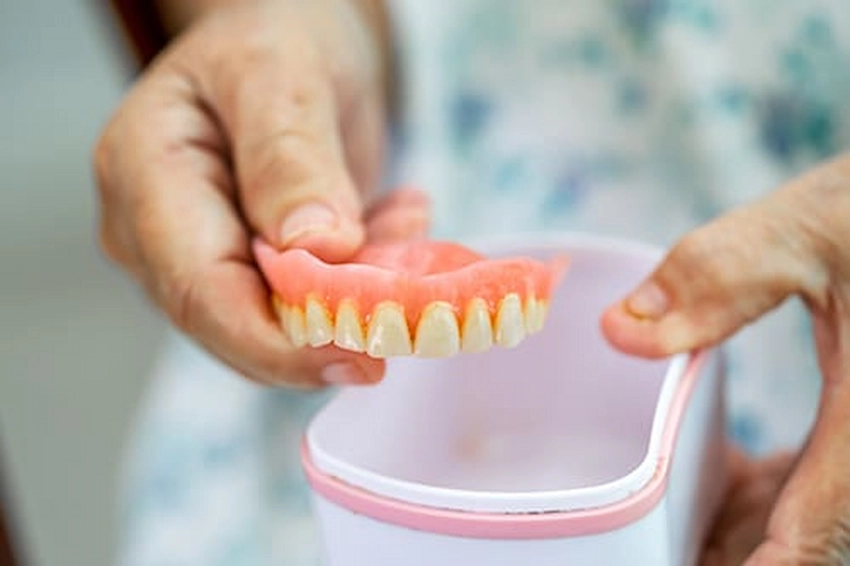
Here’s the thing: Think of the jawbone just like a building foundation. When you lose your teeth, the bone stops being stimulated by chewing. It will then receive less pressure than normal and, as a result, start to shrink.
As the shape of the jaw changes, the fixed denture becomes ill-fitting. At first, it barely moves, but eventually it becomes quite unstable. You can compare it to a rigid hiking boot,t which is a couple of sizes too big. In order to avoid blisters, you put a pair of thick socks inside. In the same way, adhesive is just a substitute for those thick socks. It only briefly fills the gap. Yet, the denture still moves when you bite. That constant rubbing causes the gum tissue to tear. Thus, often the results are deep, painful ulcers.
This is a pattern we regularly observe in our practice. Patients apply ever-increasing quantities of paste. All they want is to prevent their teeth from moving. Unfortunately, they are unaware that they are increasing tissue damage due to friction.
Chemical Irritation and Zinc Dangers
But if we turn our attention to the past itself, what is the actual problem? In a nutshell, physical rubbing accounts for only half of the issue.
Initially, a majority of the adhesives contain a blend of synthetic plastics, preservatives, and heavy metals. These are needed to make a robust, waterproof bond. On the other hand, patients with very sensitive skin who are prone to breakage and who are allergic often trigger an allergic reaction to these chemicals. It is just a case of allergic contact stomatitis that causes the gum tissue to become red, to burn, and to develop ulcers that erupt.
The major problem is exposed only at this stage: zinc poisoning. Some of the strongest adhesives incorporate zinc for enhanced adhesion. Using small amounts once a day should usually be safe. Nevertheless, denture wearers resort to applying huge amounts just to be able to eat a meal. Constantly swallowing the surplus paste on a daily basis is hazardous. Zinc toxicity can cause brain damage, disorientation, and tissue breakdown.
The Clinical Perspective from Turkey
Due to our professional activities at Lema Dental Clinic in Istanbul, Turkey, we observe the detrimental effects of adhesives daily.
Professor Doctor Coşkun Yıldız often writes that patients are suffering for years without anyone feeling pity for them. They restrict their food choices out of pain and survive on remedial routines. Paste, however, cannot stop bone loss. Dentist Polen Akkılıç and her team regularly deal with the reconstruction of their smiles. It’s not a rare sight to find extremely worn down gums that can be traced to the use of a poorly fitted denture plate, buried under glue, which over time slowly and silently destroyed the tissues.
Moving Beyond Paste: Permanent Implants
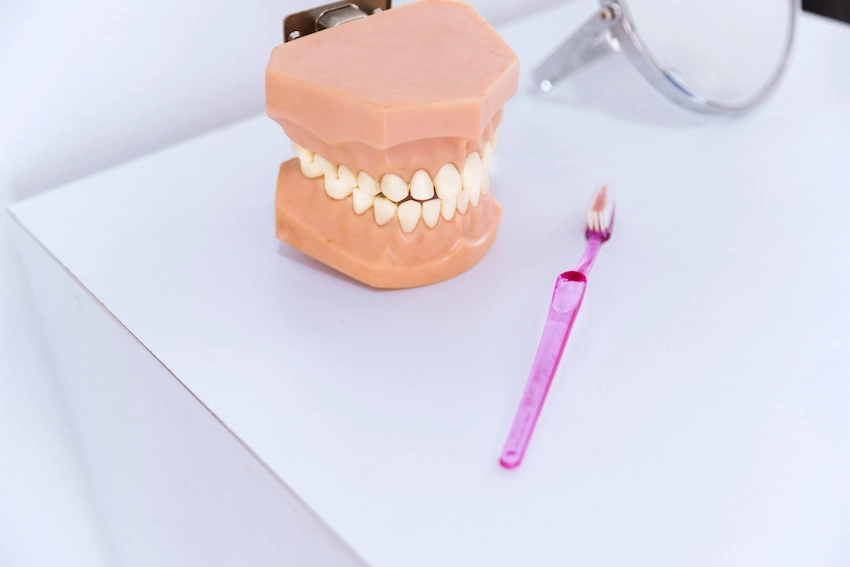
Thus, the problem is put forth by this painful saga: what is the way out? Luckily, it is not so difficult. We simply have to stop wearing false teeth on the gums. By placing the teeth in the jawbones, the rubbing is eliminated. Chemical exposure is completely removed. Adhesive use is done away with for the rest of their lives.
Recently developed implant techniques enable the mounting of a permanent, tailor-made Zirconium fixed bridge. Some of these systems include:
- All-on-4 Implants
- All-on-6 Implants
- Zygomatic Implants (in cases of severe upper jawbone loss)
Treatment Comparison
| Clinical Factor | Dentures + Adhesive | Implant-Supported Bridges |
| Tissue Friction | High (Causes daily sores) | None (Anchored directly to bone) |
| Bone Health | Poor (Bone continues to shrink) | Excellent (Implants keep bone strong) |
| Chewing Power | 20-30% of natural teeth | 90-100% of natural teeth |
| Adhesive Needed | Yes (Messy daily application) | Never |
| Palate Coverage | Full (Blocks your sense of taste) | None (Roof of mouth is open) |
Frequently Asked Questions
Do all denture adhesives cause mouth sores?
No, not necessarily. If your denture fits properly, using a very small amount of adhesive will likely not affect you. The sores form because the denture adhesive is a way to a loose denture. It is the loose plastic that comes in contact with and hurts the gums.
How can I heal a mouth sore right now?
Take your denture out immediately. Your gums need to breathe and heal. Rinse gently with warm salt water a few times a day. Make sure to clean all the sticky paste off your gums every night.
Why did my denture fit fine a year ago, but rub now?
The jawbone is a living structure, a changing one at that. If a tooth root is not present, the bone will gradually diminish. The gums will also reduce together with it. While your mouth keeps on changing, a denture is a fixed piece of hard plastic that remains the same.
Is zinc poisoning from adhesive actually common?
It is rare for most people, but very real for denture wearers who use too much paste. If you use more than one tube of adhesive every few weeks, you are absorbing too much zinc. You need a dentist to adjust your fit immediately.
How fast can I switch from dentures to fixed implants?
Very fast. With modern methods like the All-on-4 system, we can often place the implants and attach a new set of fixed teeth on the very same day. You walk out of Lema Dental Clinic with teeth that do not move, do not hurt, and never need a drop of glue.
Academic References
- Carlsson, G. E. (2014). Responses of the jawbone to pressure. Gerodontology, 31(1), 2-7.
- Felton, D., Cooper, L., Duqum, I., Minsley, G., Guckes, A., Haug, S., … & Sweitzer, T. (2011). Evidence-based guidelines for the care and maintenance of complete dentures: a publication of the American College of Prosthodontists. Journal of Prosthodontics, 20(s1), S1-S12.
- Hedera, P., Gordon, C. E., & Peltier, A. C. (2009). Neurologic clinicopathological syndrome of excess zinc from denture adhesives. Neurology, 73(8), 643-643.
- Pikos, M. A., & Magyar, C. W. (2017). Zygomatic implants: a 10-year clinical and radiographic report. Inside Dentistry, 13(3), 58-64.
- Zarb, G. A., Hobkirk, J., Eckert, S., & Jacob, R. (2013). Prosthodontic treatment for edentulous patients: complete dentures and implant-supported prostheses. Elsevier Health Sciences.

