


It may last for a while, but it fractures much more easily without a crown.
From the symptoms, it certainly looks like you are fresh out of your root canal therapy session. The awful pain that had been keeping you awake is now completely gone, so you can finally take it easy, breathe deeply, and sleep soundly. Just when you didn’t expect it, the doctor seems to be conveying very seriously: ‘You will have to get a crown for this tooth to give it the necessary protection.’
Waiting is definitely a very attractive option. Simply, the tooth is no longer painful. A great number of patients at Lema Dental Clinic in Turkey are asking us the same question: “Isn’t it possible for me to just leave it as it is?”
The plain truth is that a root canal tooth which has not been crowned is akin to a Formula 1 car running on a punctured tire situation. It will certainly continue to operate for some time, but you are definitely heading for a breakdown.
Reasons Why You Should Act Fast
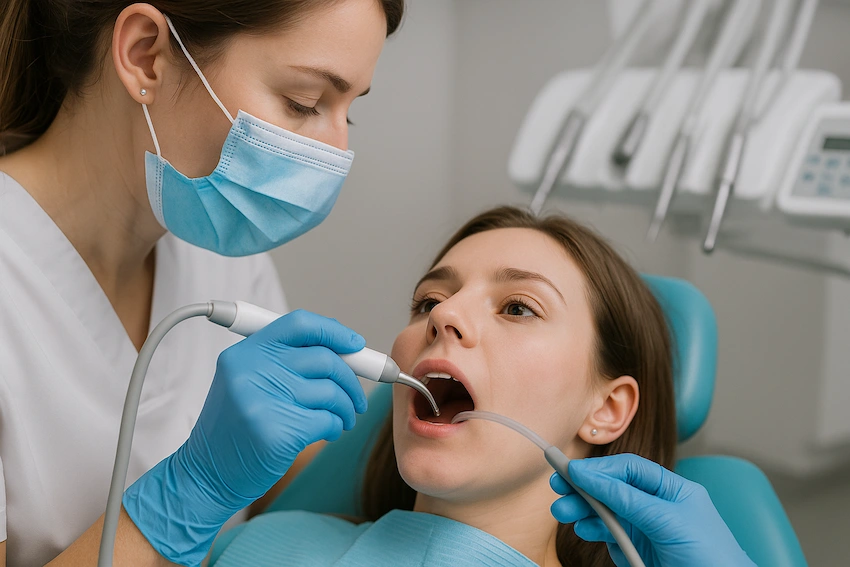
When Professor Doctor Coşkun Yıldız performs a root canal, he isn’t simply taking out the nerve; he is removing the source of infection. Nevertheless, the fact that the tooth’s pulp (which is the tissue inside the tooth and is alive) is taken out leads to the tooth not having any blood supply anymore. It gets to be called “non-vital.”
It is like comparing a green and pliable branch on a tree with a dried-up and brittle twig lying on the floor of a forest. Your tooth is like that twig. If a crown does not provide structural strengthening, then the tooth will be very easily get vertical fractures. Based on what we have seen in our practice, a tooth without a crown might last from several months to a couple of years maximum, but it is definitely a time bomb that is ticking.
The ‘Hollow Shell’ Allegory
In order to grasp the level of jeopardy, just picture a medieval castle. A healthy tooth can be compared to a fortress made of solid stone. A root canal involves us drilling the interior of this fortress to expel the “intruders” (the bacteria). After the treatment has been completed, you are basically left with the exterior of the building as the core support has been taken out.
Dentist Polen Akkılıç and her team point out that a great amount of force is applied when we bite – probably more than 70 pounds of pressure per square inch. In case no crown could help to spread this kind of weight, then in the end, the “walls” of your tooth will give in and break.
The Breakdown: Survival vs. Success
| Factor | Root Canal Only (Temporary Filling) | Root Canal + Permanent Crown |
| Average Lifespan | 3 to 12 months (High risk of failure) | 10 to 15+ years |
| Fracture Risk | Extremely High | Low |
| Bacterial Sealing | Poor (Temporary fillings leak) | Excellent |
| Functionality | Limited chewing | Full restoration |
| Final Outcome | Possible Tooth Extraction | Tooth Preservation |
What if You Keep Putting It Off?
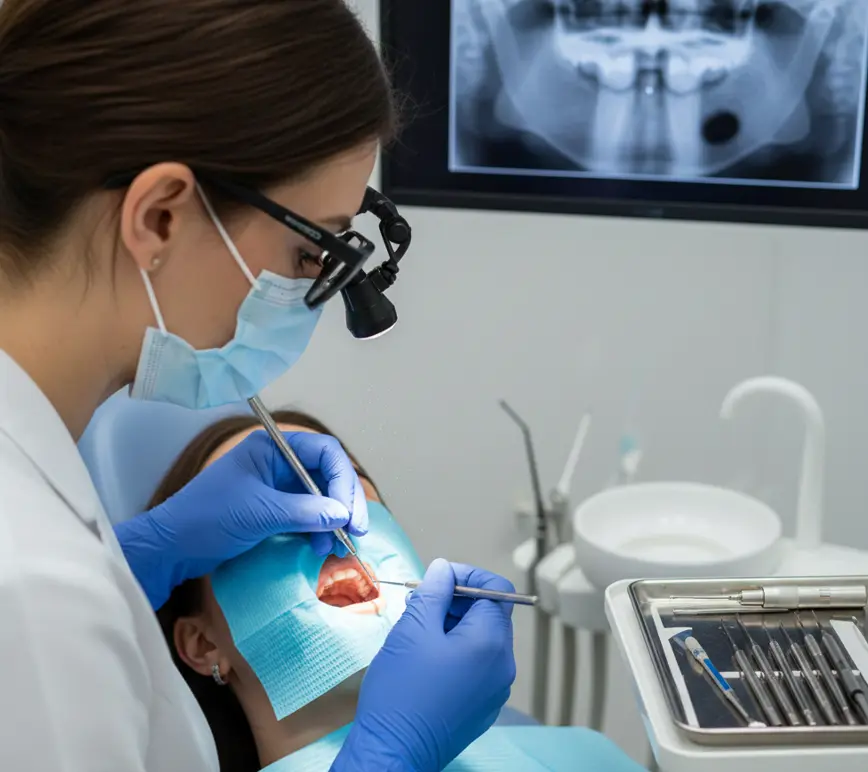
In reality, “waiting and seeing” is most likely to result in what patients dread the most: ultimately losing their tooth.
We explain below what typically happens in our clinic when patients postpone their dental crowns:
- Micro-leakage: Temporary fillings are not completely sealed. As a result, saliva’s bacteria gradually penetrate the root canals through microscopic holes in the temporary filling thus causing infection again.
- Vertical Root Fractures: If the tooth is split all the way to the root, there is no chance of saving it. Even Professor Doctor Coşkun Yıldız, at that point, would have to comply with the patient’s wish for an extraction and a dental implant.
- Shifting Teeth: A broken tooth leaves the neighboring ones free to move into the space and thus your bite will no longer fit correctly because of the tilted teeth.
The Turkish Advantage: Why Patients Choose Lema
Besides being cheaper, the main reason why you would want to finish your dental restoration in Turkey is the speed and the top-notch quality of the technology. At Lema Dental Clinic, we strongly believe in advanced CAD/CAM technology to make ultra-precise crowns that go over your root canal-treated tooth like a “helmet”.
This not only guarantees an extremely tight seal but also makes the crown visually indistinguishable from your natural teeth in terms of color and texture.
Frequently Asked Questions (From the Doctor’s Desk)
Not absolutely every time, but in about 95% of cases with the molars that the crown is necessary. In case of an anterior tooth, if there is still enough natural structure, a composite resin might be used. However, for molars that bear the main force of chewing, a crown is undoubtedly needed for the long term.
We usually advise our patients not to postpone it for more than 2 to 4 weeks. If the “temporary” stage remains for a long time, it is more likely that the temporary filling will fall out or the tooth might break due to pressure.
Actually, no. The tooth has no capacity to feel pain after the root canal as the nerve inside that tooth has been removed. Also, the procedure of fixing the crown is a very comfortable and easy one.
A fracture. Practically it is breaking the physical structure. A lot of times patients don’t realize how much force they put on their teeth until they suddenly hear the “pop” while biting a piece of toast.
A big filling cannot provide”circumferential support”. It is placed inside the tooth and often behaves like a wedge that will eventually split the tooth apart. On the other hand, a crown is positioned over the tooth and therefore the tooth is kept together.
- Aquilino, S. A., & Caplan, D. J. (2002). Relationship between crown placement and the survival of endodontically treated teeth. The Journal of Prosthetic Dentistry, 87(3), 227-231.
- Salehrabi, R., & Rotstein, I. (2004). Endodontic treatment outcomes in a large patient population in the USA: an epidemiological study. Journal of Endodontics, 30(12), 846-850.
- Pratt, I., Ames, A. J., & Curtis, N. J. (2016). Survival Rates of Teeth Treated with Endodontic Therapy With and Without Full Coverage Restorations. Journal of Clinical Dentistry.
- Siqueira, J. F. (2001). Aetiology of treatment Rathe-failure: why do endodontic treatments fail? International Endodontic Journal, 34(1), 1-10.
- Yee, K., et al. (2007). Survival rates of teeth with primary endodontic treatment: a retrospective study. Oral Surgery, Oral Medicine, Oral Pathology, Oral Radiology, and Endodontology.

