


Composite bonding is a form of dental treatment that is very popular and can change your smile’s looks in only one visit. But the question that many people raise is if will it be able to work on the crooked teeth. The answer is “Yes,” but it needs to be elaborated further. So while this new treatment is very efficient for th beautification of a smile, a couple of conditions have to be considered. These include the kind and degree of the teeth as well as your overall oral health.
If the teeth are slightly crowded, small gaps, or slightly uneven edges, composite bonding can allow you to achieve the cosmetic result you want. This method also has the advantage of increasing confidence and giving your teeth a more uniform and attractive look. The current article shall cover which information is the most relevant in the field of composite bonding for crooked teeth, including the benefits, limitations, and aftercare.
Understanding the Composite Bonding Technique

The process of composite bonding is the use of dental resin that is tooth-colored over the areas of the teeth to solve the problem of the teeth being chipped, having gaps, stains, or minor misalignment. The dentist uses the resin to reconstruct the natural size and the shape of the teeth. A special curing light is then used to harden the material, making the finish smooth, durable, and of a natural look.
In case the teeth just happen to be slightly crooked, bonding can be used to persuade others that you actually have a more aligned smile. It is not a tool for the physical straightening of the teeth. However, it helps to visually correct minor misalignments, thus, a neat, organized, and aesthetically pleasing smile is what one can get to have.
Who Is a Good Candidate for Composite Bonding on Crooked Teeth?
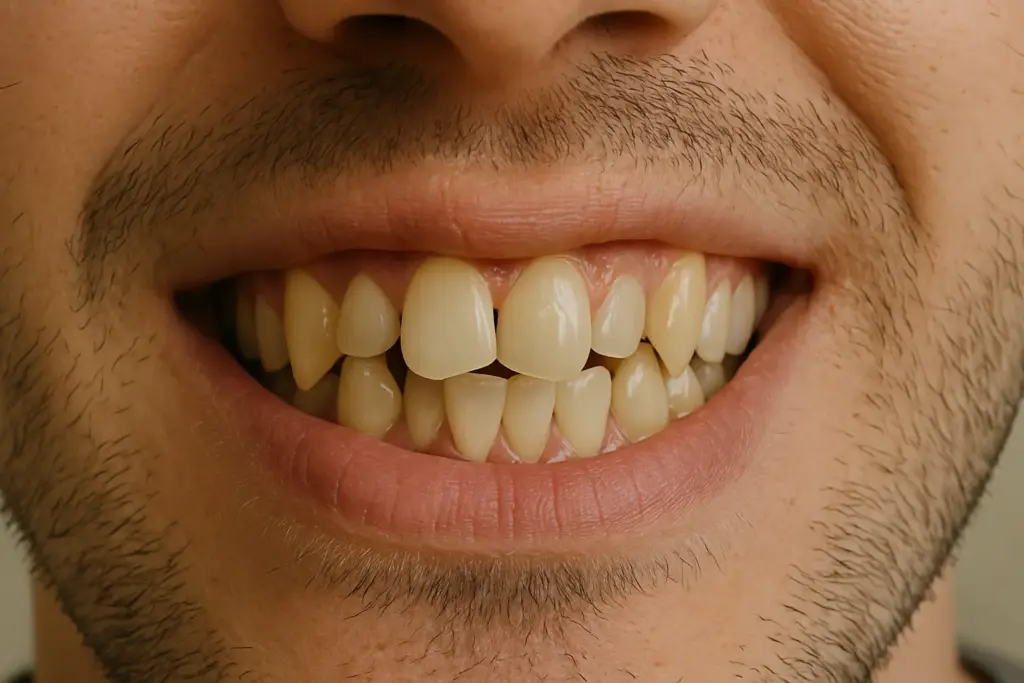
Composite bonding is the most suitable procedure for patients who have:
- Mild crowding or small gaps
- Minor uneven edges
- Desire for quick cosmetic enhancement
This treatment is definitely not a replacement for orthodontic care. Those with extreme misalignment may require braces or Invisalign first to achieve the correct positioning. After proper alignment, composite bonding can be the cosmetic highlight that finalizes the flawless smile.
Benefits of Composite Bonding on Crooked Teeth
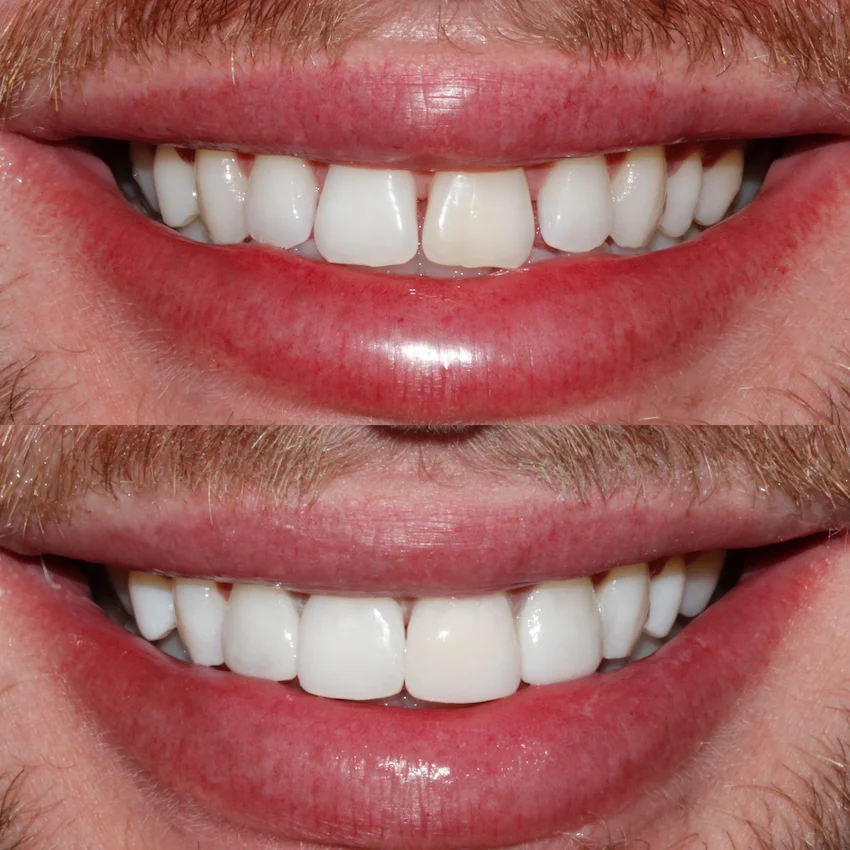
1. Minimally Invasive and Quick:
Generally, bonding is done in a single appointment, with the least possible removal of the tooth part, thus making it a fast and easy solution.
2. Fully Customizable:
Composite resins match the color of your natural teeth. Dentists can mold the product to achieve a well-balanced, straight smile that suits your facial features.
3. Instant Smile Transformation:
The minute the imperfections are hidden, you get a more confident and polished smile.
4. Cost-Effective:
In comparison to veneers or the long duration of orthodontics, bonding is less expensive, and the number of appointments is lower, making it suitable for those with a limited budget.
5. Easy to Repair:
If bonding is broken or worn out, your dentist will only do the necessary repair on the area that is affected without the complete removal of the restoration.
Limitations Of Composite Bonding
1. Durability:
Typically, bonding is kept for 5–10 years. It is not as powerful as porcelain veneers or dental crowns and thus the patient may have to come for touch-ups after some time.
2. Unfit for a Large Deviation:
Orthodontic treatment has to be the first step taken if the teeth were severely misaligned or in case of significant bite issues, only then bonding can be considered.
3. Coloration:
The composite resin used in bonding is more absorbent than the natural enamel of the teeth and, therefore, is prone to staining. Good oral hygiene with brushing, flossing, and dental check-ups is a must.
4. Keeping up With It Over Time:
Dental visits are not only to make sure the dental hygiene is good but also to check the degree of wear and the aesthetic of the teeth that have been bonded.
References
Effectiveness of Composite Bonding
Peumans, M., De Munck, J., & Van Meerbeek, B. (2005). A review of the longevity and performance of direct composite restorations. Dental Materials, 21(6), 542–559. https://doi.org/10.1016/j.dental.2004.11.003
Patient Comfort and Sensitivity
Clark, D., & Smith, R. (2018). Clinical evaluation of patient-reported discomfort during composite resin bonding procedures. Journal of Esthetic and Restorative Dentistry, 30(4), 345–352. https://doi.org/10.1111/jerd.12425
Safety and Minimally Invasive Techniques
Perdigão, J. (2017). Patient-centered approaches in adhesive dentistry: Minimizing discomfort during procedures. Operative Dentistry, 42(3), 234–245. https://doi.org/10.2341/16-083-L
Yes, for minor misalignments. Severe crookedness may require orthodontic treatment first.
No, the procedure is minimally invasive and usually requires little to no anesthesia.
With proper care, it can last 5–10 years, depending on wear and oral hygiene.
Yes, the dentist can remove or reshape composite resin without significant damage to natural teeth.
Bonding is typically recommended for adults, as teeth and jaws are still developing in younger patients.

