


Yes, a dental abscess can be fixed by treating the infection and its cause.
Can You Actually “Fix” a Dental Abscess?
If this message has reached you, it most likely means that you or someone you care about is suffering from severe pain. We empathize. There is a very distinct and persistent character to the throbbing of a dental abscess which makes it absolutely impossible to overlook it. It isn’t simply a toothache; it is your body literally screaming through a strong alarm.
Referring to the question “Can you fix a dental abscess?” in a very brief manner, the answer is yes, definitely. However, the truth is a little more complicated. You cannot cure it by yourself, and you are actually running out of time.
Working as clinical partners to surgeons in Turkey, we witness the happiness of patients when the realization dawns on them that this unbearable pain can at the very least, stopped. At Lema Dental Clinic, we work as a team led by Professor Doctor Coşkun Yıldız and completely agree with him that dental abscesses are not only injuries but also medical emergencies. Our ambitious goals in medicine are not only stopping the pain- which is an urgent matter- but also getting rid of the infection which is very dangerous and hidden deep under the surface.
Anyway, here is an expert take on what your jaw is literally undergoing and how modern dentistry has come up with ways to solve it.
Knowing the Enemy: What is an Abscess?
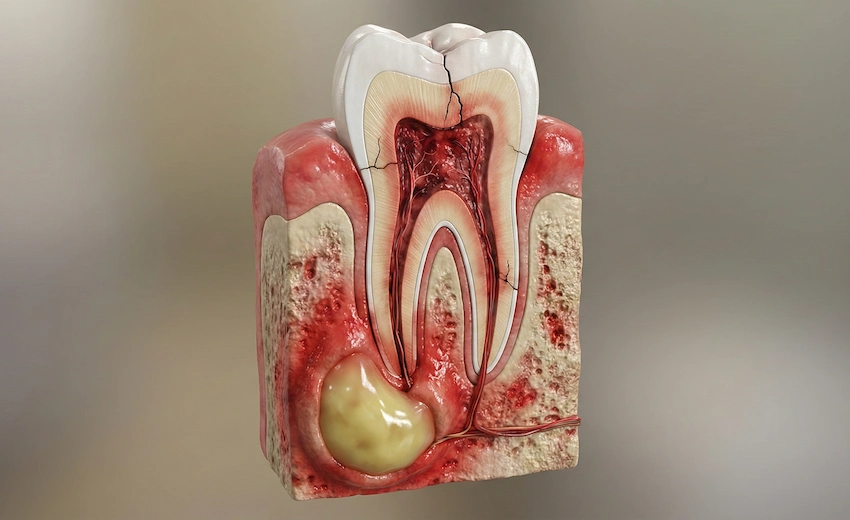
A dental abscess, in dental terms is basically an infected area in your mouth that has developed the gas and started to produce pus which is a mixture of bacteria and white blood cells. The analogy to a tooth would be a super-restricted building. The extremely resistant enamel layer is the fortification wall. Should a crack or a very deep cavity, or gum disease cause the wall to be breached, bacteria gain entry to the ”holy of holies” – the soft pulp where the nerves and blood vessels are that run invasively
Your immune system reacts by sending white blood cells to the scene of the attack to eliminate the bacteria. The ‘collateral damage’ of the fight, the pus which consists of dead tissue, bacteria and white blood cells, is created. Since the pus has nowhere to go within the rigid boundaries of the tooth and jawbone, the resulting pain is unbearable in kind.
Professor Doctor Coşkun Yıldız frequently uses the analogy of an untreated abscess to a slow leak in a house’s foundation. You might, for some time, disregard the damage, but, in the end, it compromises the whole building’s (jawbone) structural integrity and might spread to other parts.
The Treatment Path: How We “Fix” It
The first thing you should get into your head is the fact that a dental abscess cannot just disappear spontaneously. The swelling can go down temporarily if the abscess bursts, which means that you will have bad breath, but the infection is still working like a factory.
When patients come to our clinic in Turkey, we see that they are usually very worried and tired because of the pain. So, our number one priority is to solve the pain problem while doing the diagnosis. Dentist Polen Akkılıç and her capable team make use of the most modern 3D technology so that they can get a precise location of the infection and hence its nature, whether it is the root tip one (periapical) or in the gums (periodontal).
After the evaluation, a “fix” involves two steps: firstly the release of the infection, and secondly treating the cause
Here is how we approach treatment:
1. The Immediate Relief: Incision and Drainage
If the swelling is severe, the dentist may have to make a small incision in the gum to release the pus. This provides the patient with instant relief from the unbearable pressure. However, this is only one of the ways to handle the acute phase of the problem; the final cure is different.
2. The Gold Standard: Root Canal Therapy
Root canal is the best way to heal an abscess and at the same time keep your natural tooth.
Don’t pay attention to frightening stories of how the operation was done in the past.These days, with a very potent local anesthetic, a root canal treatment in Lema Dental Clinic is virtually without any discomfort.The dentist will remove the infected pulp of the tooth, disinfect and clean the canals, and then seal the canals so that the infection will not start again.The tooth will remain yours and you can have it safe and sound with a crown.
3. The Last Resort: Extraction
There are still times when the tooth itself or even the bone around it gets so rotten and broken up that it is no longer possible to save the tooth. Then “fixing” the abscess is the same as eliminating the cause and hence the tooth will be extracted. After that, we will curette (clean) the socket to make sure there is no infected tissue left.
We always endeavor to preserve the natural tooth if at all possible. To that end, tooth extraction is our last resort and is only used when the tooth is beyond repair.
Comparing Your Options
Understanding the difference between the primary treatments is vital. Here is a breakdown of how we view these paths clinically:
| Feature | Root Canal Therapy (RCT) | Tooth Extraction |
| Goal | Eliminate infection & SAVE the tooth. | Eliminate infection & REMOVE the tooth. |
| Invasiveness | Moderate. Work is done inside the tooth. | Higher. Involves surgical removal. |
| Long-Term Outcome | You keep your natural tooth structure. | You will need a replacement (implant/bridge). |
| Recovery Time | Often immediate relief; soreness for a few days. | Healing of the socket takes several weeks. |
| Best For | Teeth that are structurally sound enough to be restored. | Severely fractured teeth or extensive bone loss. |
A Note on Antibiotics
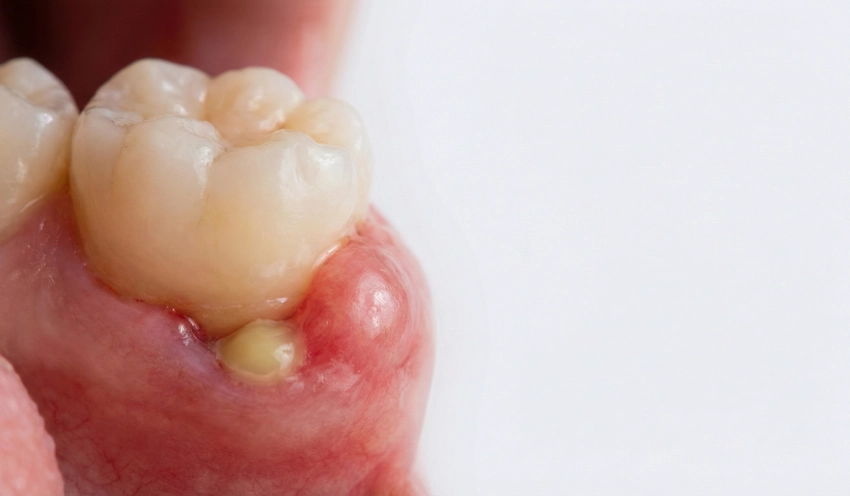
It is a common misconception among many people that a course of antibiotics can “heal” a dental abscess. This, however, is not the case. Antibiotics continue to be vital drugs for the prevention of the infection spreading to the neck region or the bloodstream (sepsis), but they are not able to penetrate the abscess sac in adequate amounts to eliminate the bacteria. Therefore, they are regarded only as adjunct therapy while the real cure is the eradication of the infection.
Frequently Asked Questions from Our Patients
No. Please don’t try this at all. The risk of introducing new and even more dangerous bacteria into a deep wound is high, plus you could push the current infection deeper into your bloodstream. As a result, what started as a simple toothache can turn into a life-threatening medical emergency.
Incredibly quickly. The jaw is very vascular (has a lot of blood vessels) and is located very close to the sinuses, brain, and airway. An infected abscess can cause to be infected with Ludwig’s Angina—a swelling at the floor of the mouth which may close your airway—within a couple of days. That is the reason why we are so quick to treat it in Turkey.
No, that would be the wrong answer. What is strange about dental abscesses is that the cure is actually the relief from it. Most of the pain comes from the infection; the anesthetic prevents the nerve from sending pain signals. Once you are numb, there should be no pain during the treatment. We will do everything to make you comfortable during this acute phase at Lema Dental Clinic.
Of course, dental phobia is a very real thing and we have great respect for those who suffer from it. To make sure that you stay completely relaxed—or even asleep—during the procedure, we provide you with a variety of sedation options. Have a treatment that saves your life, not because you are afraid.
I’m afraid not. If the intense, stabbing pain disappears very quickly, the abscess has probably burst in your mouth or the nerve inside the tooth has died. However, the bacteria remain and are harmful to your bones. You still need to see a doctor.
- Abbott, P. V. (2004). Endo-perio lesions: pathogenesis and clinical management. Australian Dental Journal, 49(1), 31–47.
- Dar-Odeh, N., Fadel, H. T., Abu-Hammad, S., Abdeljawad, R., & Abu-Hammad, O. A. (2018). Antibiotic prescribing for oro-facial infections in the paediatric outpatient setting in Jordan. Infectious Diseases of Poverty, 7(1), 6.
- Matthews, D. C., Sutherland, S., & Basrani, B. (2003). Emergency management of acute apical abscesses in the permanent dentition: a systematic review of the literature. Journal of the Canadian Dental Association, 69(10), 660.
- Robertson, D., & Smith, A. J. (2009). The microbiology of the acute dental abscess. Journal of Medical Microbiology, 58(Pt 2), 155–162.
- Sanders, J. L., & Houck, R. C. (2023). Dental Abscess. In StatPearls [Internet]. Treasure Island (FL): StatPearls Publishing.

