


What Is a Tooth Abscess?
Tooth abscess is an excruciatingly painful condition, which in most cases relates to the abscess at the root of the tooth or that between the gum and the tooth. Generally, the abscess is the outcome of a diseased tooth, diseased gums, or an injury to the teeth, and the bacteria have reached the most sensitive part of the tooth. Eventually, these bacteria multiply, and hence pus begins to accumulate, which is the source of a very painful condition and swelling.
Upon a patient’s abscess presentation, Dentist Polen Akkılıç together with her staff performs a thorough examination of the condition determining the infection degree. The abscess is an emergency that must be solved immediately, as it can become the cause of serious problems like bone loss or systemic infection if the abscess is not removed in time. Abscess, which is left without treatment, may be the cause of the affected tooth and the tissues around it leading to the extent of permanent damage.
Symptoms Most Frequently Caused by Tooth Abscess:
- Severe tooth pain: Usually the pain originates as a dull ache and later as a consequence of the pain increasing becomes a sharp, stabbing pain located on the tooth that is used neither for chewing nor touching.
- Swelling can be a part of the body that is associated with the infected tooth, and the color of the redness may be seen in the inflamed and swollen gums surrounding the infected tooth.
- Sensitivity to temperature: When a tooth is affected, it is the one that will be sensitive to food or drinks that are hot or cold. In such situations, the pain is usually sharp and sudden and occurs when eating or drinking things of a different temperature.
- Foul taste or odor: A bad taste in the mouth and an offensive smell caused by the pus from the abscess may be noticed especially when the abscess ruptures.
- Fever:Fever is a symptom that appears first and is a signal to the body that there is an infection or inflammation. It is the general response of the body.
- Difficulty opening that mouth: The patient will not be able to open his mouth fully due to the swelling and pain, and it will be especially during chewing and talking that the mouth will be only slightly open.
- Tenderness in the jaw, neck or ear: The inflammation may result in swelling and hurting of the tissues of the jaw, neck, or ear that are close to the infected area. The part that is most heavily impacted is very sensitive to being pressed, and it is painful if you press there.
The Healing Process of an Inflamed Tooth

The discomfort subsiding period due to the inflamed tooth relies on the moment when the patient is checked by the dentist. Dr. Polen Akkılıç and her team usually perform the abscess drainage as the first step of the treatment, which involves draining the part of the body full of pus and infected tissue, so they make it possible for the healing to take place. Sometimes, it is necessary to do a root canal to remove the infection inside the tooth and close it. Antibiotics’ usage might be only in a few cases and would be a vehicle to get rid of the last bacteria so the infection would be eliminated.
The hard time will be from several days to two weeks at the most and it is dependent on the local infection if the infection is treated in time and properly. Nevertheless, Prof. Dr. Coşkun Yıldız thinks that if the infection gets severe and goes to the bone, the time for the wound to heal will be longer, and there may be a necessity for more treatments.
Can a Tooth Abscess Heal on Its Own?
One of the most misunderstood ideas people have is that an abscessed tooth will just get better on its own. In reality, the chance of such an event is almost negligible. A dental abscess is a very painful situation that results from an infection, and as a general rule, infected parts of the body do not heal by themselves. Therefore, Dr. Polen Akkılıç and her team say that it may happen that the abscess becomes smaller and the pain disappears for a short time, but the infection is still there. When bacteria are left to multiply in the area, the infection will become more severe and, as a result, there will be serious complications.
Besides, if this kind of condition is kept there, it may spread even to the closest parts and the bone may be influenced as well. Time and proper treatment like that of Prof. Dr. Coşkun Yıldız is the only way to prevent the infection from increasing and also rescue the tooth and the rest of the body’s health.
Complications of an Untreated Tooth Abscess
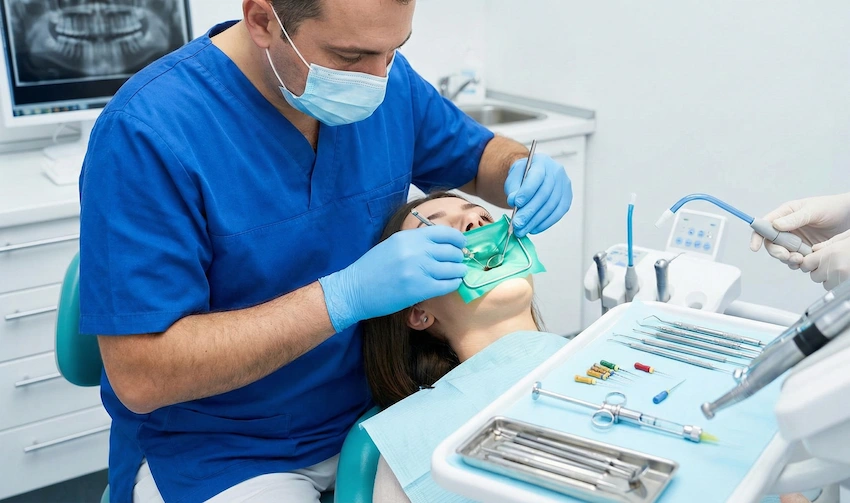
In case an abscessed tooth is not treated, a person may at some point go through a series of complications that may lead to their life being in danger. In fact, the infection can spread to different parts of the face and head, the jawbone can be weakened and other teeth can also be damaged, dentist Polen Akkılıç and her team point out. After that, bacteria may combine with the bloodstream, thus causing sepsis – a very alarming condition which may lead to the failure of some organs.
On top of that, abscesses that are not given any attention can inflict unbearable pain and swelling on the patient for a long time, and they can also infect the tissues around the abscess region, leading to cellulitis. Professor Doctor Coşkun Yıldız points out the danger of losing teeth and having to undergo more surgical operations if the abscess is not taken care of in time and therefore, urges the patients to visit a dentist as soon as possible.
Dental Infection Processes: With and Without Treatment
| Process | With Treatment (by Dentist Polen Akkılıç and her team) | Without Treatment |
| Abscess Drainage | One of the methods used to treat the abscess is to drain it which involves the removal of pus and infected tissue, thus reducing pain and stopping the infection. | The abscess keeps expanding, thus it is more painful and there is more pressure. |
| Infection Control | The infection is limited to antibiotics and root canal treatment, so it is not allowed to spread. | The infection continues to spread and may eventually involve the bone, jaw, and even the bloodstream. |
| Tooth Preservation | Usually, that kind of tooth can be saved through a treatment process that is dependent on time such as root canals or other restorative procedures. | As a consequence of the infection, the tooth might eventually be removed from the mouth due to the damage being very extensive. |
| Healing Time | The time for the injury to mend is from a few days to two weeks, the treatment method decides the exact time. | Recovery is slow, and the infection frequently becomes chronic. |
| Risk of Spread | Infections that are handled quickly, won’t go to the tissues or organs that are near. | The infection can spread, thereby, it can bring about very serious problems like sepsis. |
| Complications | Very few complications could occur if the intervention is carried out early, for instance, a temporary discomfort. | Serious health effects such as the loss of bones, teeth and sepsis. |
Factors Affecting Your Healing Time
Dental abscess healing time is a variable that depends on numerous factors. The severity of the abscess is one of the most significant factors. Smaller abscesses that are detected early can heal in a short period of time, while larger ones, and those that are more infected, may need a longer and more complicated treatment procedure, hence the healing process could take more time. Doctor Polen Akkılıç and her team point out that patients receiving early treatment are more likely to have a faster recovery.
Further to that, the person’s overall health condition is also a major factor in the time the healing process will take. Individuals with compromised immune systems, for example, diabetics or people with other kinds of chronic diseases, may have a longer recovery time. Moreover, the healing time is very much dependent on care after the operation, hence the importance of attending the appointments regularly and taking the prescribed medication.
How Does Your Dentist Stop the Infection? Home Remedies

When pus is drained from the abscess, your dentist will be able to stop the infection. Moreover, if there is any area of tissue that has been infected, it will be torn out. In some cases, a root canal operation may be necessary to remove the infection that is located inside the tooth. Professor Doctor Coşkun Yıldız may also give a prescription for antibiotics to ensure that the infection is entirely cured. Such steps are very important in the prevention of the infection from exacerbating.
However, saltwater rinses, pain relief medications that can be bought without a prescription, and cold compresses are examples of home remedies that may provide temporary relief but they do not eliminate the source of the infection. The only treatment that is able to stop the infection and avert serious complications is professional dental care.
FAQ: How Long to Fix a Dental Abscess?
Treatment typically takes a few days to two weeks, depending on the severity of the abscess and the treatment required. Dentist Polen Akkılıç and her team will guide you through the healing process.
Tooth abscesses are often caused by untreated cavities, gum disease, or dental trauma that allows bacteria to enter the tooth’s root or surrounding tissue. Professor Doctor Coşkun Yıldız explains that maintaining good oral hygiene can help prevent abscesses.
A tooth abscess cannot heal on its own and requires professional care to treat the infection and prevent complications.
If left untreated, a tooth abscess can lead to severe complications, including infection spreading to other areas of the body, tooth loss, and sepsis.
Treatment typically involves draining the abscess, removing infected tissue, and possibly performing a root canal. Dentist Polen Akkılıç and her team ensure comprehensive care to resolve the infection.
Swelling can last from a few days to a week, depending on the severity of the abscess and the effectiveness of the treatment.
While saltwater rinses and pain relief medications can help manage symptoms temporarily, professional dental care is essential to fully treat the infection and avoid further complications.
- American Dental Association. (2021). Tooth abscess.
- Mayo Clinic. (2020). Tooth abscess: Symptoms and causes. Mayo Foundation for Medical Education and Research.
- National Institute of Dental and Craniofacial Research. (2019). Dental abscess. National Institutes of Health.
- Li, X., & Liu, X. (2018). Management of dental abscesses: Treatment options and their outcomes. Journal of Clinical Dentistry, 29(3), 182-188.
- Harris, R., & Jacobs, D. (2020). Oral infections and their systemic implications. Dental Research Journal, 58(2), 67-74.

