


Oral piercings could be considered part of the “stylish and edgy” category, but would you be willing to scratch below the surface and ask yourself if they can harm your teeth? It is a fact that piercings are often committed to individuality at any cost; however, these must be accompanied by health risks of a dental nature. Besides loss of enamel, among others, the person who has been impacted may be unaware of the problem until he or she has suffered considerable harm to the tissue.
The story that many teenagers tell themselves is that they have flourished smiles and that they are stronger inside, although it may look different from the outside. To be sure, teeth are quite robust but far from being indestructible. Constant rubbing of jewelry on them can cause their surfaces to become dull, and the mouth’s normal bacteria-filled environment only makes infections develop faster. Similarly, knowing the dangers of oral piercings is the first milestone to saving the yin and yang of your person, health, and style. As they say, “despair is for the elderly and hope is for the youth”– thus modern dentistry, with an emphasis on Lema Dental Clinic, is always there to pick you up and rock along with you to the spot where your radiant smile becomes a Hollywood Smile.
The Popularity of Oral Piercings Today
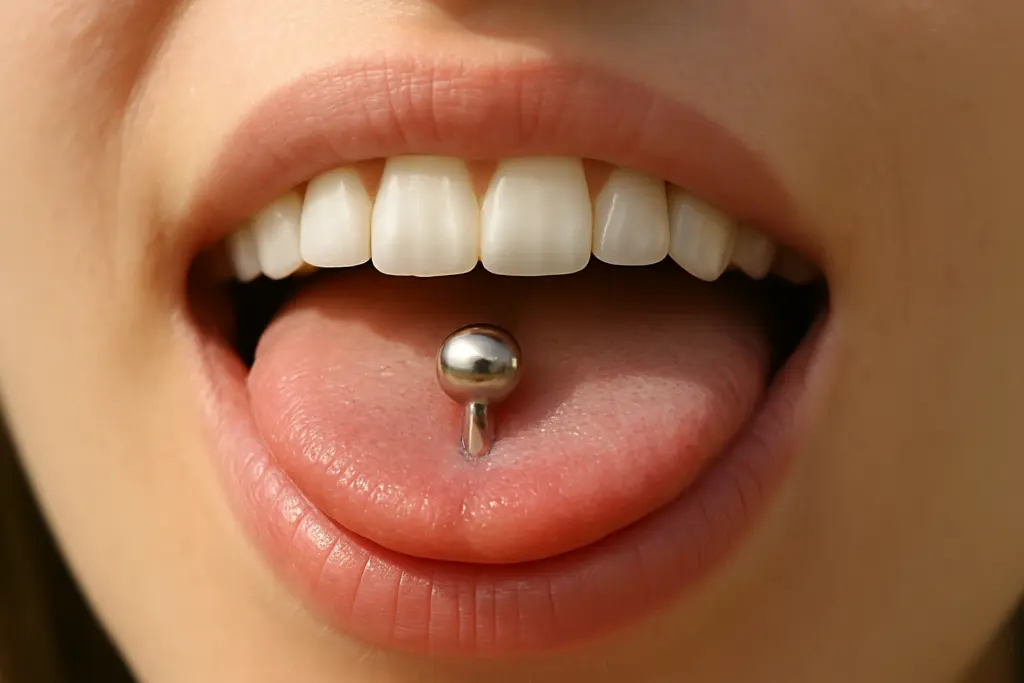
Oral piercings were not so big a deal some 20 years ago, but now they are almost like a fashion staple. Along with celebrities and influencers, everyday people also wear tongue studs, lip rings, and cheek piercings not only for their looks but also as an expression of their uniqueness. For a lot of people, those piercings cease to be mere adornments and become style, personal qualities, and even signs of revolt that they report.
Nonetheless, popularity is often accompanied by problems. Dentists are receiving an increasing number of patients with health issues caused by the wearing of piercings. Although a lip ring or tongue stud may look innocent, it is the regular contact with teeth and gums that can make you suffer long-term effects. Just because your piercings are fashionable doesn’t mean that they are completely safe for your dental health.
How Oral Piercings Affect Teeth and Gums
The mouth is a very fragile and sensitive place where a minor change can make a huge difference. Oral piercings are always in contact with your teeth, gums, and tongue. Every time you talk, chew, or swallow, the piercing moves; sometimes it scratches the enamel or pushes the gum with it. This friction, although it might appear very minimal, over time, it can lead to microscopic fissures in the teeth and an inflammation of the gum tissues around the area.
One more issue is that of gum recession. The jewelry by the gums that the piece rests on, while pushing the tooth slowly, exposing the roots of the tooth. After the recession of gums, they are not restored naturally, which leaves teeth more prone to sensitivity, cavities, and, in the worst case, tooth loss. This shows that oral piercings are not just more stylized accessories—they can be the unspoken cause of serious dental injury.
Common Dental Issues Caused by Piercings
Amongst the various problems that may arise due to oral piercings, the most frequent one is that the teeth become chipped. A lot of people with pierced tongues do it (not on purpose) while talking and hitting the jewelry against their teeth, and in this way, the enamel wears out. Just one unintentional bite on a piercing can be enough to make a crack visible.
Are gum injuries less serious? Not really. A piercing that is in constant contact with the gum tissue there leads to an inflammation and recession, and this, on the one hand, is an ugly look, and on the other hand, can make teeth loose. Along with that, piercings can result in tooth fractures, decay, and uneven wear at a level that requires costly dental treatments. The jewelry piece that has started with a small size of the body might result in a much bigger dental repair problem later on.
Infection Risks and Oral Hygiene Challenges
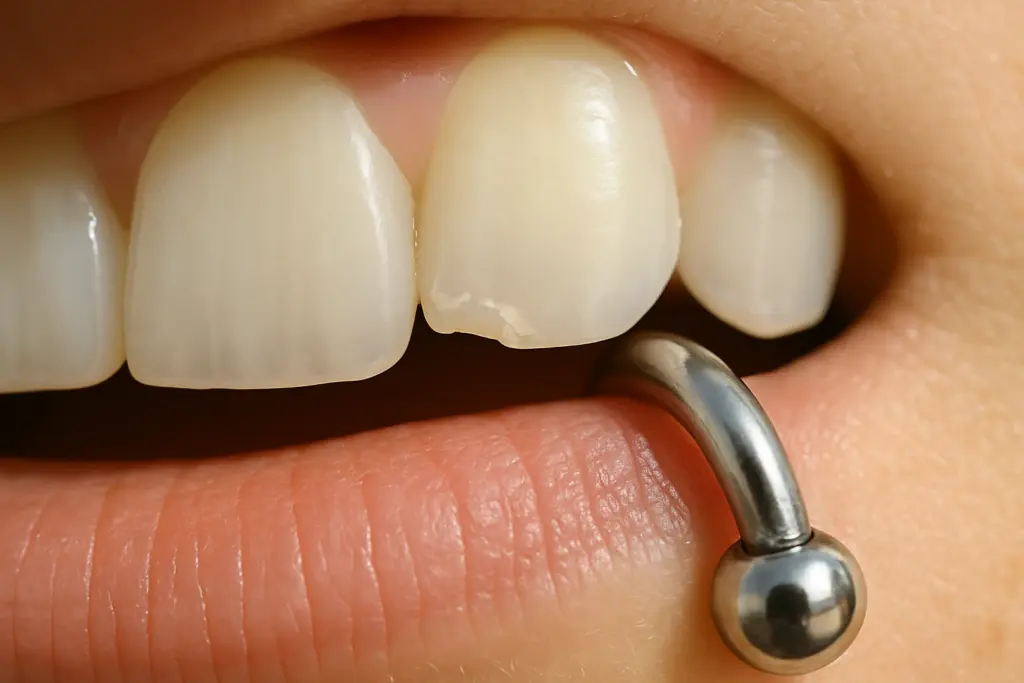
There is a large number of bacteria that live in the mouth, and, therefore, oral piercings are more prone to infection. A fresh piercing is just an open wound, and if bacteria are allowed to enter through improper cleaning, there may be swelling, pain, and discharge. In very severe cases, infections may even go further than the mouth and cause terrible health complications.
Oral piercings still negatively impact oral hygiene after they have healed. Tiny pieces of food that are not easily cleaned can get trapped around the jewelry, which can lead to plaque growth and halitosis. Brushing and flossing turn out to be less effective, and dental caries and periodontal diseases can grow rapidly if the person doesn’t have regular professional hygienic treatments. Good hygiene and constant awareness are required for caring for a piercing.
Preventive Measures for People with Piercings
In case you have an oral piercing already, you can take steps to lower the dangers. The first step is to pick the right jewelry. Jewelry made of materials like surgical steel, titanium, or bioplast is more reliable as it is less likely to rust or cause allergic reactions. A piece of jewelry of good quality also reduces the number of small areas in which it is easy to get an abrasion of your gums or enamel.
The importance of this, too, is that you should have a routine in the form of good habits. Do not touch the piercing with your fingers or tap it with the tip of your mouth. These little things you do without even realizing that eventually ruin the most. Also, you must visit your dentist on a regular basis so that he can find, in the early stages, wear of the enamel, gum damage, or infection. Preventive care can turn the tide between caring for your piercing properly and experiencing the worst dental problems in your mouth.
When to Consult a Dentist Regarding Piercing-Related Harm
There are times when problems happen even if you try your best. When you feel pain, notice swelling or bleeding gums, or find your teeth are chipped, the time to get a dental check-up is now. Dentists can figure out if there is going to be damage in advance and recommend the right treatments before things go out of control.
It depends a lot on the condition; the solutions may be bonded, veneers, or crowns to repair broken teeth. For gingival recession, some qualified therapies can be used to rejuvenate the area with new tissue. In the case of infection, the use of antibiotics and other medical interventions may be necessary. The main thing is that you should not wait—early help stops small problems from turning into permanent damage.
FAQ
Yes, tongue piercings often hit the teeth while talking or chewing, which can cause chips or cracks over time.
Absolutely. Lip piercings press against the gums and can push them back, leading to gum loss.
They make cleaning harder because food and bacteria can get trapped around the jewelry, increasing the risk of bad breath and cavities.
Yes, piercings placed farther from teeth, like some cheek piercings, may be less damaging than tongue or lip piercings.
Yes, dentists can fix chips and cracks with treatments like veneers, crowns, or implants, depending on the severity.

