


Dental retainers are safe, but poor cleaning can allow bacteria to cause health issues.
Perhaps you have spent months—maybe even years—going to orthodontic appointments, undergoing various treatments, and after all those sessions you get to proudly say – here I am with “my perfect smile”. The very day when the crowns and wires are removed is indeed a milestone. But a retainer comes after it; this is the tiny piece of wire and plastic that is meant to stop your teeth from shifting into the old positions.
One of the most common questions we hear at Lema Dental Clinic in Turkey is: “Can that little piece of plastic make me sick?”
The short answer is: A retainer is essentially a chemically non-reactive and harmless material. However, the story changes entirely inthe case of the microorganisms inhabiting the retainer. If you don’t look after it and keep the microbial population in check, your retainer will be contaminated with bacteria, yeast, and fungi.
The Unseen Tenant: What Is Biofilm?
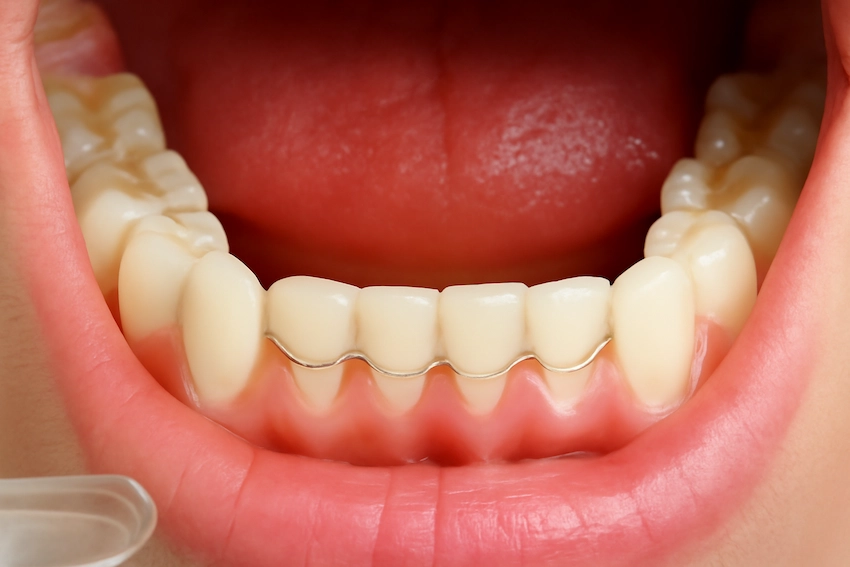
Imagine your retainer to be a sponge that you leave next to the kitchen sink. When you rinse it and let it dry, it remains fresh. But if it stays wet and you put it into a dark container without washing it thoroughly, it will become a habitat. We use the term biofilm in the clinic to describe this soap scum.
Coşkun Yıldız, Professor and Doctor, perpetually accentuates that the mouth is an ecosystem. By placing a retainer, you supply a bacterial colony with a new “living space”. Should the retainer be left unwashed, the bacteria could enter the bloodstream through the minute lesions of the gums or be inhaled into the lungs.
Some Health Risks
The truth is, a filthy retainer neglected is definitely more than just “disgusting” – it also has the potential to be a fuse for certain medical conditions:
- Oral Candidiasis (Thrush): This is a fungal infection caused by Candida albicans and it is usually expressed as white patches on the tongue or the roof of the mouth.
- Respiratory Problems: On very rare occasions, bacteria like Staphylococcus aureus might grow on a retainer. Such bacteria if inhaled can cause inflammation of the respiratory tract.
- Systemic Inflammation: When your gums are continuously irritated because of a dirty retainer, your immune system will be constantly activated. We consider the mouth as a gateway to the entire body; if the gateway is dirty then the whole house will feel it.
A Comparative Look: Retainer Hygiene vs. Risk
Here is what we see in the clinic regarding different retainer types and their “hygiene hurdles.”
| Retainer Type | Difficulty in Cleaning | Primary Risk Factor | Recommended Care |
| Essix (Clear Plastic) | Moderate | Traps saliva and bacteria against teeth. | Daily brushing with non-abrasive soap. |
| Hawley (Metal/Acrylic) | Easy | Porous acrylic can harbor deep-seated fungi. | Ultrasonic cleaning and soaking. |
| Permanent (Bonded Wire) | Hard | Calculus (tartar) buildup around the wire. | Professional cleaning and water flossing. |
The Lema Approach: Prevention Over Cure
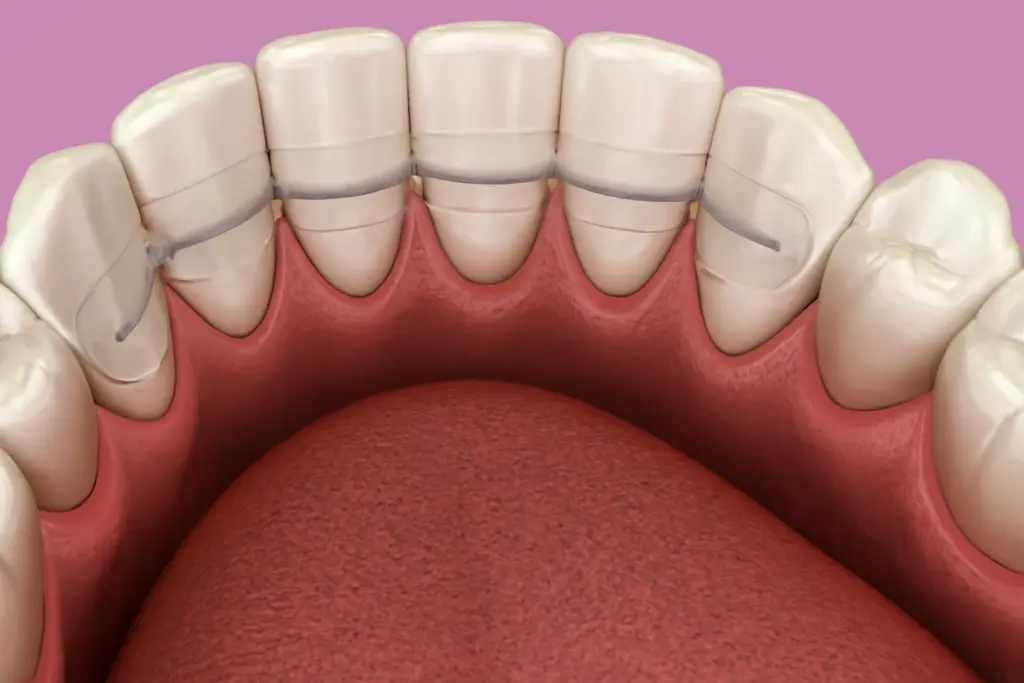
Lema Dental Clinic would never just hand you a retainer and tell you to go. Dr. Polen Akkılıç and her team heavily promote a preventive approach to dental health through the “biological maintenance” method. The retainer is not seen as a passive tool in this sense, but as a living part of your mouth that, like your natural teeth, demands attention and care.
In fact, the body gives signals when things go wrong. For example, if you experience a metallic taste, continuous bad breath, or redness where the retainer touches your palate, you should realize that your body is alerting you. They are not just the “wearing a retainer” side effects; they indicate that there has been a shift in the bacterial balance.
How to Keep Your Retainer (and Yourself) Healthy
But the question is, how do you prevent your retainer from being a cause of health problems?
- Don’t use Toothpaste: The major part of toothpaste is abrasive. They make tiny scratches on the plastic surface – basically, they create little valleys where bacteria hide from the brush. Choose a mild, unscented dish soap or specialized retainer cleaners instead.
- Follow the “Dry Out” Rule: Bacteria multiply in a moist environment. Once you take your retainer out of your mouth, it has to be cleaned first and then left to dry in the air before you put it in its case.
Frequent Check-ups: When you visit us in Turkey, we check for any cracks. A broken retainer is similar to a broken founda
FAQ: Direct Answers from the Clinical Team
Yes, it’s one of the possibilities. If a heavily contaminated retainer is the source of Streptococcus, for instance, it may cause local throat inflammation or recurrent tonsillitis. In case of a sore throat that does not go away and wearing of a retainer, the best guess is that deep cleaning the device is a top priority.
Do not bleach it ever. Besides the fact that bleach is too harsh and can damage the materials of your retainer, it will also harm the delicate tissues in the mouth. You can compare the situation to using a sledgehammer to hang a picture frame – the damage goes way beyond the good. Effervescent tablets specially made for that purpose are your best option.
In most cases, that means that a biofilm has turned into tartar. Once it becomes hard, a normal toothbrush won’t be able to remove it at all. To get rid of that “armor, you will have to use a professional ultrasonic cleaner or a specially made dip.
Based on our clinical observation, clear Essix retainers are ideally changed between 6 and 12 months when the signs of usage or discoloration start to appear. Loads of Hawley retainers can be habitual for years; however, only when the surface of the acrylic stays smooth and without deposits.
Sure it is, but then the hygiene has to be impeccable at the same time. Basically, you are putting the germs back into your mouth. A deep disinfectant soak is highly advised every morning for the whole period until your recovery.
- Ateiera, M., et al. (2022). Microbial Contamination of Orthodontic Retainers and Its Clinical Implications. Journal of Clinical Orthodontics.
- Lowlow, R. J., & Miller, C. H. (2021). Biofilm Formation on Dental Materials: A Review of Pathogenic Risks. International Journal of Oral Science.
- Sultan, A. S., et al. (2019). Oral Candida Albicans Colonization in Patients Wearing Removable Orthodontic Appliances. American Journal of Orthodontics and Dentofacial Orthopedics.
- Verran, J., & Maryan, C. J. (1997). Retention of Candida albicans on Acrylic Resin and Silicone of Different Surface Roughness. Journal of Dentistry.
- Bollen, A. M. (2017). Effects of Orthodontic Retainers on Periodontal Health. Seminars in Orthodontics.

