


Antibiotics cannot cure dental abscesses.
That is quite a dire situation. It’s 2 in the morning, your face is swollen, and your jaw’s throbbing so much that it seems to beat like your heart. At such a moment, an antibiotic prescription is like a rope thrown to you. You get the medication and in two days the swelling disappears and the pain lessens. You might be thinking along the lines, “It was the antibiotics that killed the infection, what a relief!“
Nevertheless, here is the reality that we tell our patients at Lema Dental Clinic every day: Antibiotics are not the cure for a tooth abscess.
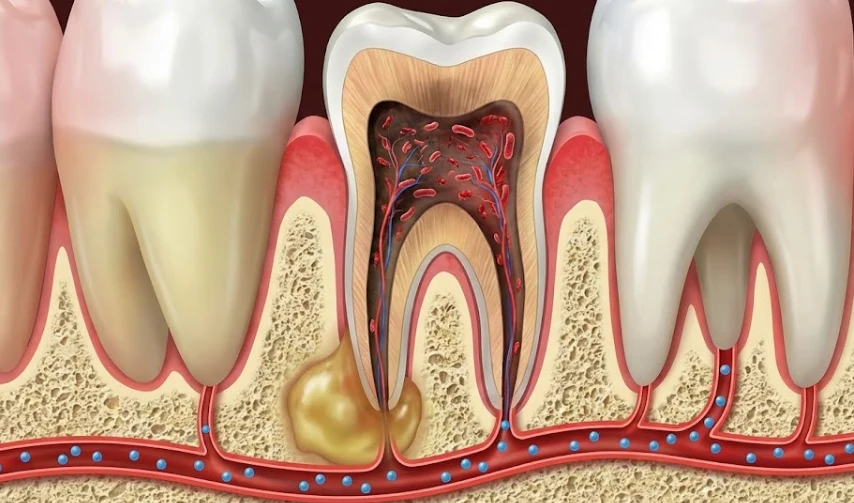
They only work as a temporary measure, not a final solution. Although they can prevent the infection from spreading to your neck or bloodstream and give you time, they still can’t accomplish that problem. The infection is still there, concealed in your tooth and waiting for the right moment to erupt again—this time with higher force.
We would like to take you through the biological reasons why a medicine cannot solve a dental problem and why only physical treatment can be a permanent solution.
The “Bunker” Analogy: Why Pills Fail
You need to understand what a dying tooth is like in order to get the fact that antibiotics do not work.
Once the tooth is infected, the nerve tissue (pulp) inside the tooth dies. When tissue is dead, the blood supply inside a tooth is also cut off. This is what makes it a crucial element in understanding the case.
Antibiotics get into your body using your blood as a vehicle. They “travel” through your vascular network to the infection site where the medicine is needed most. The route however, stops at the root tip as the tooth that is dead does not provide any blood flow. Thus, the medicine will be able to kill bacteria only in the areas where blood is circulating such as gums and bone but it definitely cannot get into the tooth which is the main source of the infection.
Professor Doctor Coşkun Yıldız often resorts to this metaphor to explain the concept “You could imagine bacteria as if they were in a concrete bunker and antibiotics being rain. The rain can wash away the soldiers outside the bunker but the remaining ones inside are perfectly dry and safe”.
The Dangerous “Relief Phase”
The greatest danger we find is not in the infection itself but rather in the delusion of security that antibiotics cause.
When you take the drug, the pressure level drops and you feel well. Many patients then simply decide to erase from their calendar the flight to Turkey or the appointment for the consultation with Dentist Polen Akkılıç because of the better symptoms.
Here is where you are wrong. Pain is not an indicator of infection any more therebut the bacteria in the tooth are still there, sharing the same harmful elements. These acids are constantly leaking through the root into your bone and without your awareness, the destruction is occurring. We term this as “the destruction in silence”. Then, it is too late, again the pain comes back but this time the bone destruction is so significant that the tooth no longer remains a candidate for saving and must be extracted.
Antibiotics vs. Physical Treatment: A Comparative Analysis
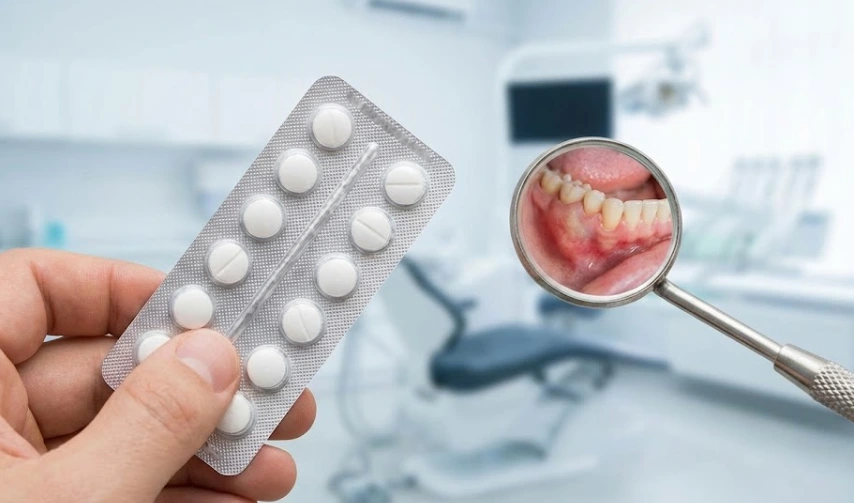
Lema Dental Clinic is where we encourage our patients to make choices based on knowledge. Here you will see why pills are only symptom management and physical treatment is essentially the cure.
| Feature | Antibiotics (Medication) | Definitive Dental Treatment (Root Canal/Extraction) |
| Mechanism | Chemical suppression of bacteria in blood/tissue. | Physical removal of the infection source. |
| Reach | Systemic (entire body) but misses inside the tooth. | Targeted (inside the canal or socket). |
| Pain Relief | Slow (24–48 hours to take effect). | Immediate relief from pressure once accessed. |
| Outcome | Temporary suppression (High recurrence rate). | Permanent Cure. |
| Risk | Antibiotic resistance, gut health issues. | Minimal (Standard dental risks). |
How We Handle Abscess Cases in Turkey
Our main objective is to drain your abscess when you come with one to our clinic in Istanbul. We are required to relieve the pressure.
Depending on the situation, either Dentist Polen Akkılıç or the rest of the staff will carry out two different methods:
- Root Canal Treatment: We drill a tiny hole on the surface of the tooth in order to remove bacteria and dead nerve tissue. This is running the wash “bunker” that we previously referred to.
- Extraction: We take out the tooth if it is broken or heavily damaged so that there is no more bacterial source.
The doctor often gives the antibiotic medicine in addition to the treatments to help the healing of the body, but never instead of them.
FAQ: Your Questions Answered by the Experts
No, and this is dangerous. Overusing antibiotics leads to antibiotic resistance, meaning the bacteria learn to survive the drugs. Eventually, the pills will stop working entirely, leaving you with a super-infection that is very difficult to treat. Antibiotics are a short-term bridge, not a long-term strategy.
Yes, absolutely. The pain stopped because the antibiotics reduced the swelling pressing on your nerves, or because the nerve inside the tooth has completely died. The source of the infection—the dead tissue—is still rotting inside the tooth. Without treatment, it will turn into a chronic abscess or a cyst in your jawbone.
Yes. A dental abscess is a localized infection that can become systemic. If the bacteria breach the jawbone, they can spread to the floor of the mouth, the neck (restricting breathing), or even the heart valves (endocarditis). In rare cases, untreated dental abscesses can lead to sepsis, which is life-threatening.
No. In Turkey, antibiotics are strictly regulated and can only be purchased with a prescription from a licensed doctor or dentist. You cannot walk into a pharmacy and buy Amoxicillin or Augmentin without seeing a professional first. If you are in pain, contact Lema Dental Clinic immediately so we can assist you.
The most common “first-line” defense is Amoxicillin, often combined with Clavulanic Acid (Augmentin) for stronger infections. For patients allergic to penicillin, we typically prescribe Clindamycin. However, the “best” antibiotic depends on your medical history and the specific type of bacteria, which is why self-medicating is risky.
- American Dental Association (ADA). (2019). Antibiotic Use for the Urgent Management of Dental Pain and Intra-oral Swelling. Clinical Practice Guidelines.
- Lockhart, P. B., et al. (2019). “Evidence-based clinical practice guideline on antibiotic use for the urgent management of pulpal- and periapical-related dental pain and intraoral swelling.” Journal of the American Dental Association, 150(11), 906-921.
- Matthews, D. C., et al. (2003). “Systemic antibiotic prophylaxis for apical surgery: A review.” International Endodontic Journal, 36(9), 604-616.
- Segura-Egea, J. J., et al. (2017). “Worldwide pattern of antibiotic prescription in endodontic infections.” International Dental Journal, 67(4), 197-205.
- Siqueira Jr, J. F., & Rôças, I. N. (2013). “Microbiology and treatment of acute apical abscesses.” Clinical Microbiology Reviews, 26(2), 255-273.

