


Looseness, cracks, or discomfort can mean a dental bridge needs renewal.
Lema Dental Clinic in Turkey is a place where patients with dental restorations from different parts of the world come. Professor Doctor Coşkun Yıldız has observed that bridges being strong can’t be laid down and forgotten for a lifetime. With the progression of biological changes in your jaw and gums, it becomes necessary to get a clinical intervention to protect your overall health.
1. The “Shadow” at the Gumline
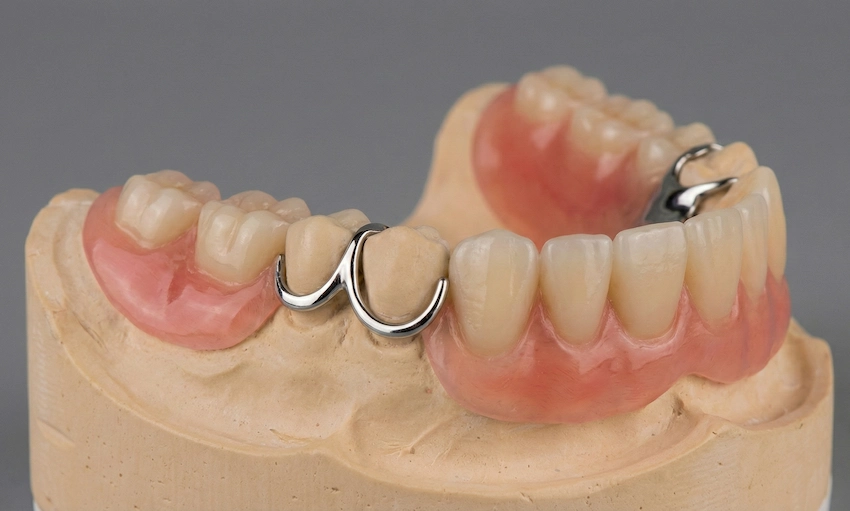
One of the most frequently encountered aesthetic problems by patients is the formation of a dark, grayish line at the gum area where the dental bridge is attached. It is almost like the foundation of a house being visible after the soil has been washed away for a number of years.
This typically occurs due to two things: gum recession or the oxidation of a metal-porcelain framework. Dentist Polen Akkılıç and her team usually convert these old PFM (Porcelain-Fused-to-Metal) bridges into high-translucency zirconia. Zirconia behaves naturally with how light gets reflected off the enamel, so even if the gum moves a bit over the years, you won’t have that obvious “artificial” shadow that you are seeing right now.
2. Persistent Sensitivity or “Ghost” Pain
When the tissues enclosed by a dental bridge are inflamed and the sensitivity of the nerve inside the tooth is increased, the patient starts feeling pain. The means by which a bridge signals that it’s time for repair isn’t exactly clear until you look at both the bridge and the abutment teeth underneath it.
Recurrent decay can occur in the direct neighboring teeth of those that are used as abutments and over which the bridge is cemented. It is similar to a wooden support beam of a house getting rotten inside the wall because nobody knows that for sure. In case bacteria have taken the path under the crown, the restoration should be removed to preserve the natural tooth.
3. A Feeling of “Micro-Movement.”
A well-fitted bridge is an inseparable and integral part of your oral cavity. You might be quite close to equality if you have even a slight “click,” or feel the bridge is moving when you chew or speak. The breaching of the seal by cement is considered to be likely in this case.
When the seal fails, the bridge provides a perfect sanctuary for the accumulation of food and the subsequent growth of bacteria. Professor Doctor Coşkun Yıldız stresses that if a bridge is loose and yet ignored, then it becomes a risk game that might even result in the loss of the teeth that serve as supports. In most cases, if the problem is recognized early, the doctor can successfully restore the abutment teeth. The difficulty of the case at Lema Dental Clinic progressively increases if the restoration starts to get loosened because then an implant-supported prosthesis has to be considered.
4. Visible Fractures or “Pitting” on the Porcelain
You might want to have a detailed look at the bridge with the help of a dental mirror that has magnification. Is the porcelain showing any signs of cracking or “pitting” that you can spot?
Porcelain has high strength but is also quite delicate. Your tooth surface can be weakened and remolded into different features such as pits only after prolonged grinding (bruxism) or being hit by a foreign object. After the once smooth surface has been damaged it doesn’t take much time for plaque to get attached there and your tongue and cheeks may get irritated as a result.
5. Chronic Halitosis (Bad Breath) That Won’t Go Away
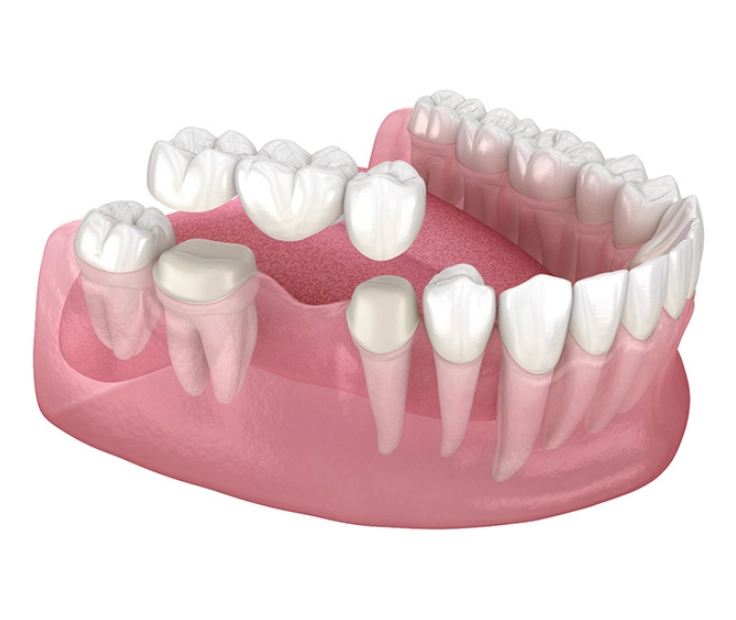
Some individuals still experience bad breath after regularly brushing their teeth, using dental floss, and mouthwash. This can result in patients being ignored by their loved ones or having their bad breath misunderstood. What a pity! This is a medical clue.
When a dental bridge no longer fits snugly against the gumline, “micro-pockets” are formed.
These pockets are out of the reach of a toothbrush. Bacteria trapped deep within the pockets produce sulfur compounds causing constant halitosis. At Lema Dental Clinic, the use of digital scanning allows us to create a perfectly sealed restoration that does not give bacteria any hiding spots.
Traditional Bridge vs. Modern Renewal Options
| Feature | Traditional PFM Bridge | Modern Zirconia Bridge | Implant-Supported Bridge |
| Aesthetics | Visible metal margins over time | High translucency; natural look | Most natural appearance |
| Durability | 5–10 years | 12–15+ years | 25+ years (lifetime) |
| Bone Health | Possible bone loss under the pontic | Possible bone loss under the pontic | Prevents bone resorption |
| Procedure | Requires shaving healthy teeth | Requires shaving healthy teeth | No damage to adjacent teeth |
Frequently Asked Questions (From the Desk of the Doctor)
“Not at all. We ensure the area is completely numb. The process involves carefully sectioning the old bridge to ‘pop’ it off without putting pressure on the anchor teeth. Most patients find it much easier than the initial preparation.” — Dentist Polen Akkılıç.
“Only if the bridge is perfectly intact and the teeth underneath are 100% healthy. Usually, if a bridge comes off, it’s because something—either the tooth or the cement—has changed. We always perform a digital X-ray first to check the ‘hidden’ health of the anchors.”
The reality is the technology. At Lema, we use in-house CAD/CAM labs. We aren’t just giving you a bridge; we are designing a custom-engineered prosthetic that fits your bite mechanics perfectly, often at a fraction of the cost of labs in the UK or US.
Typically, we can complete a full renewal in 3 to 5 days. This includes the initial consultation, digital scanning, and the final fitment of your new zirconia restoration.
“This is a conversation I have daily. If you have enough bone density, an implant is often the superior long-term choice because it doesn’t rely on your other teeth for support. We evaluate this using 3D Tomography during your visit.” — Professor Doctor Coşkun Yıldız.
- Anusavice, K. J. (2012). Phillips’ Science of Dental Materials. Elsevier Health Sciences.
- Pjetursson, B. E., et al. (2015). A systematic review of the survival and complication rates of fixed partial dentures (FPDs). Journal of Clinical Periodontology.
- Sailer, I., et al. (2018). A systematic review of the survival and complication rates of all-ceramic and metal-ceramic reconstructions. Clinical Oral Implants Research.
- Goodacre, C. J., et al. (2003). Clinical complications in fixed prosthodontics. The Journal of Prosthetic Dentistry.
- Mizrahi, B. (2008). The dark line around restorations: Etiology and management. Dental Update.

