


Wearing aligners 20+ hours daily keeps treatment on track.
It sounds like a tall order. You receive your new set of clear aligners, excited for that Hollywood smile, only to hear the golden rule: wear them for 20 to 22 hours every single day.
This figure really makes no sense to a lot of patients who come to us here in Turkey. How much more difference does 20 hours make than 18, really? Can’t you just “make up” the time on the weekend?
The truth is that the explanation is purely biological, not psychological. At Lema Dental Clinic, it is our experience that patients understand and therefore comply better when we explain how the teeth move biologically. It’s not about obedience; it’s about getting into a groove.
The Pushing a Car Analogy
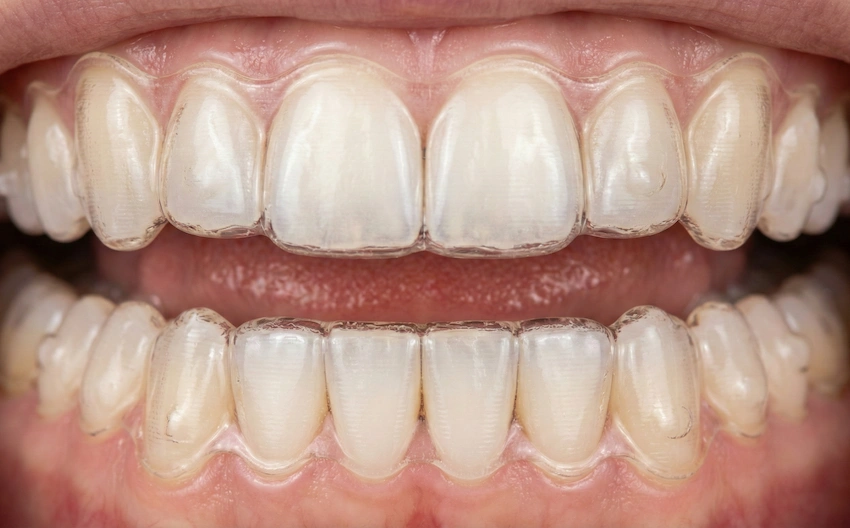
Moving a tooth can be compared to trying to push a very heavy car that is in neutral gear. At first, you have to work hard because the car is as if it is not going at all. Once the car starts moving, less force is needed to keep it going.
What if you stop pushing momentarily? The car comes to a stop and you have to start over with a big initial force to get it moving again.
This is the exact thing that happens to your teeth when you extend your aligner-free time.
- Continuous Force: If you have the aligner on, it exerts a constant pressure.
- The Pause: You use the long noon break to remove it and the pressure goes away.
- The Rebound: If the pause is too long, the tissues supporting your teeth actually begin to tighten back up, resisting the next movement.
Professor Doctor Coşkun Yıldız frequently refers to those patients who get below 20 hours as not just pausing their treatment, but often resetting their daily progress.
Biology 101: Osteoclasts and Osteoblasts
When we talk about bone remodeling process, it’s not only about the mechanical aspects of orthodontics but also about the biological process happening inside bones.
When an aligner presses a tooth, blood vessels on the side where the pressure is greatest are squeezed. This causes the release of ”cleanup cells” – osteoclasts, the function of which is to break down the bone tissue in the area.
In this kind of remodeling, the bone on the side of the tooth that is being pushed is resorbed by osteoclasts, and on the other side, the bone is formed by osteoblasts to fill the gap. Dentist Polen Akkılıç along with her team and their patients emphasize that this cellular activity requires constant signaling.
If the aligners are removed for 4-5 hours once the blood flow returns to normal, the chemical signal ceases, and the “construction crew” that was working on your teeth goes home. Re-activating them takes time.
The Risks of “Part-Time” Wear
When patients treat their aligners as a “night-time only” device, we see the following specific complications:
- Tracking Issues: The aligner stops fitting over the teeth because the teeth haven’t moved enough to match the plastic tray.
- Increased Pain: Every time you put the trays back in after a long break, you re-trigger the inflammatory phase. Consistency actually hurts less.
- Root Resorption: In rare cases, the stop-start jiggling motion can shorten the roots of the teeth.
Compliance Impact Table
The table below illustrates the direct correlation between daily wear time and your treatment timeline.
| Daily Wear Time | Clinical Impact | Expected Outcome |
| 22 Hours | Optimal continuous orthodontic force; high cellular activity in the periodontal ligament. | Treatment progresses on schedule or may finish earlier. |
| 20 Hours | Adequate force; minor biological delay in bone remodeling. | Treatment continues without significant delay. |
| 16–18 Hours | Suboptimal force; tooth movement may lag behind the aligner design. | Tracking errors may occur; refinement aligners may be required. |
| Less Than 12 Hours | Inconsistent force disrupts tooth movement and periodontal response. | Treatment stalls; teeth may not move properly or may become temporarily mobile. |
Handling the 22-Hour Lifestyle
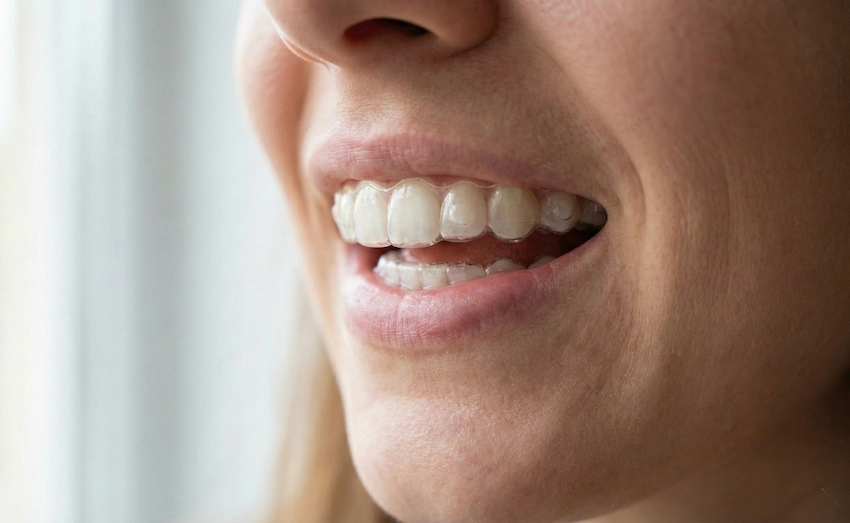
It is necessary to be in the right stage with your aligners. In use, they are not just a plastic that you wear; you are undergoing a medical treatment.
The idea is to be very quick about it. So, when you eat, just take them out, eat, brush, and put them right back in. Besides, don’t let them stay on the table whilst you chit-chat after dinner for an hour.
At Lema Dental Clinic, we utilize the latest scanning instruments to guarantee the aligner fits your teeth perfectly, thus making it so comfortable that you will probably forget you are even wearing them. However, the self-control has to come from you.
Frequently Asked Questions
No, regrettably, it is not the way it works. It is not like a math equation where you can simply exchange hours for months. Suppose you only wear them at night (8 hours), in the remaining 16 hours when you are awake, your teeth may actually move away from the aligner. You require the continuous pressure to be able to go against the bone resistance.
Stuff happens! For example, if you have a day when you only wear your aligners for 12 or 14 hours because of a wedding or a big presentation, your smile will not be completely ruined. Next day, just be a little more disciplined and maybe hold on to that current tray for an extra day or two before going to the next one.
That is referred to as the ‘rebound’ effect. It happens if you neglect to wear your aligners the ligaments surrounding your teeth will start to pull your tooth back to its original spot. It’s literally a shock to those ligaments every time you push the aligner back in. By wearing them, the ligaments remain stretched and relaxed.
Typically, we advise patients against consuming hot beverages as they have the potential to warp the plastic. Additionally, sugary or acidic beverages that come into contact with the enamel can lead to tooth decay. On the other hand, if it’s iced coffee through a straw and without any sugar, you could probably be allowed to do it once in a while—just make sure to rinse thoroughly after that!
The biggest giveaway is ‘air gaps’. When you wear your aligner, take a close look at the margin of your teeth. If you can see an empty spot between the tooth and the underside of the clear tray, your teeth are moving back. Most of the time, this is a sign that you should go on with your wear time right away.
- Moyers, R. E. (1988). Handbook of Orthodontics. Year Book Medical Publishers.
- Proffit, W. R., Fields, H. W., & Sarver, D. M. (2018). Contemporary Orthodontics. Elsevier Health Sciences.
- Krishnan, V., & Davidovitch, Z. (2006). Cellular, molecular, and tissue-level reactions to orthodontic force. American Journal of Orthodontics and Dentofacial Orthopedics, 129(4), 469-e1.
- Womack, W. R. (2016). The psychology of compliance in orthodontics. Journal of Clinical Orthodontics.
- Drake, C. T., et al. (2012). Patient compliance with clear aligners. American Journal of Orthodontics, 142(3), 334-343.

